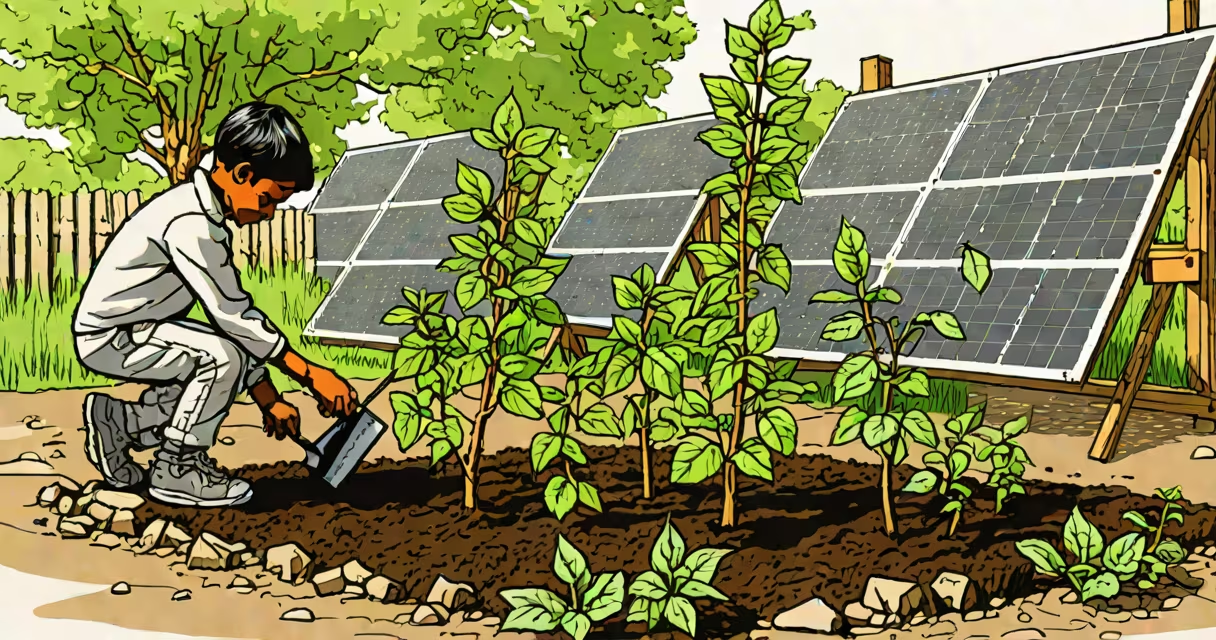
Sustainability helps natural resources, ecosystems, and social systems remain viable for future human populations by balancing environmental protection, economic development, and social well-being across time.
Future generations inherit the planet shaped by today's choices. Sustainability prevents irreversible damage to air, water, soil, and biodiversity-resources essential for survival. Without it, rising temperatures, species extinction, and resource scarcity threaten food, clean water, and stable climates. The United Nations Intergovernmental Panel on Climate Change (IPCC) states that limiting global warming to 1.5°C requires immediate, large-scale reductions in greenhouse gas emissions-actions rooted in sustainable practices.
At its core, sustainability means meeting current needs without compromising the ability of future people to meet theirs. This principle applies to energy, agriculture, urban design, and waste management. For example, replacing fossil fuels with solar and wind power reduces carbon emissions while maintaining energy access. A 2023 study by the World Resources Institute found that transitioning to renewable energy could prevent 1.5 million premature deaths annually by 2050 due to reduced air pollution.
Sustainability operates through interconnected systems: ecological balance, economic resilience, and social equity. These elements form the triple bottom line-people, planet, profit-used by organizations to measure long-term success.
Ecological sustainability involves preserving ecosystems. Overfishing depletes fish stocks faster than they can recover. In 2022, the Food and Agriculture Organization reported that 36% of global fish stocks were overexploited. Sustainable fishing limits catch sizes and enforces seasonal closures, allowing populations to rebound. Norway's cod fishery, managed under strict quotas since the 1990s, now supports healthy stocks and stable livelihoods.
Economic sustainability focuses on long-term viability. Companies that invest in energy efficiency reduce costs and avoid future regulatory penalties. Unilever's Sustainable Living Plan cut its carbon footprint by 65% between 2008 and 2020 while growing revenue. This model shows that profitability and environmental responsibility are not mutually exclusive.
Sustainability manifests in distinct domains, each addressing different aspects of long-term well-being.
| Type | Focus Area | Example |
|---|---|---|
| Environmental | Resource conservation, pollution reduction | Reforestation projects in Costa Rica restored 25% of forest cover between 1983 and 2013. |
| Economic | Long-term business models, green jobs | Germany's Energiewende policy created over 300,000 jobs in renewables by 2022. |
| Social | Equitable access, education, health | Community-led water management in Rajasthan, India, reduced drought vulnerability by 40% over ten years. |
A common misunderstanding is equating sustainability with recycling alone. While recycling matters, it's a downstream fix. True sustainability begins with reducing consumption and designing products for reuse. The Ellen MacArthur Foundation estimates that circular economy models could reduce global material use by 32% by 2030-far more impactful than end-of-life handling.
Some assume sustainability slows progress or increases costs. Data contradicts this. A 2021 McKinsey report found that companies with high sustainability performance outperformed peers in stock returns by 5.8% annually over five years. Sustainability is not a trade-off-it's a structure for enduring value.
Another error is thinking sustainability applies only to nature. It extends to infrastructure, cities, and supply chains. The city of Copenhagen plans to be carbon neutral by 2025 through district heating, cycling infrastructure, and green roofs. These measures improve public health, lower energy demand, and increase urban resilience-all benefits passed to future residents.
I once visited a school in Portland, Oregon, where students designed a zero-waste cafeteria using compost bins, reusable trays, and meal planning based on local harvests. Over one academic year, the school diverted 92% of food waste from landfills. This project wasn't just about trash-it taught students how their daily choices affect regional ecosystems and long-term resource availability.
Climate change projections show that without intervention, sea levels could rise by 1 meter by 2100, displacing 200 million people globally. Rising temperatures also intensify droughts and wildfires. The 2020 California fire season burned over 4 million acres-double the previous record. Sustainable land use, such as controlled burns and fire-resistant building codes, reduces risk and preserves habitable space.
Food security depends on sustainable agriculture. Monoculture farming degrades soil and increases pesticide use. The Rodale Institute's 30-year trial showed regenerative farming methods increased yields by 40% while improving soil carbon storage. Healthy soils support nutrition and resilience against climate shocks-critical for children born today who will face more extreme weather.
When we act sustainably, we pass on not just resources but stability. The Global Footprint Network calculates that humanity currently uses 1.7 Earths' worth of biocapacity annually. That deficit means we're borrowing from future generations' ecological credit. Reversing this trend requires systemic changes in production, consumption, and governance.