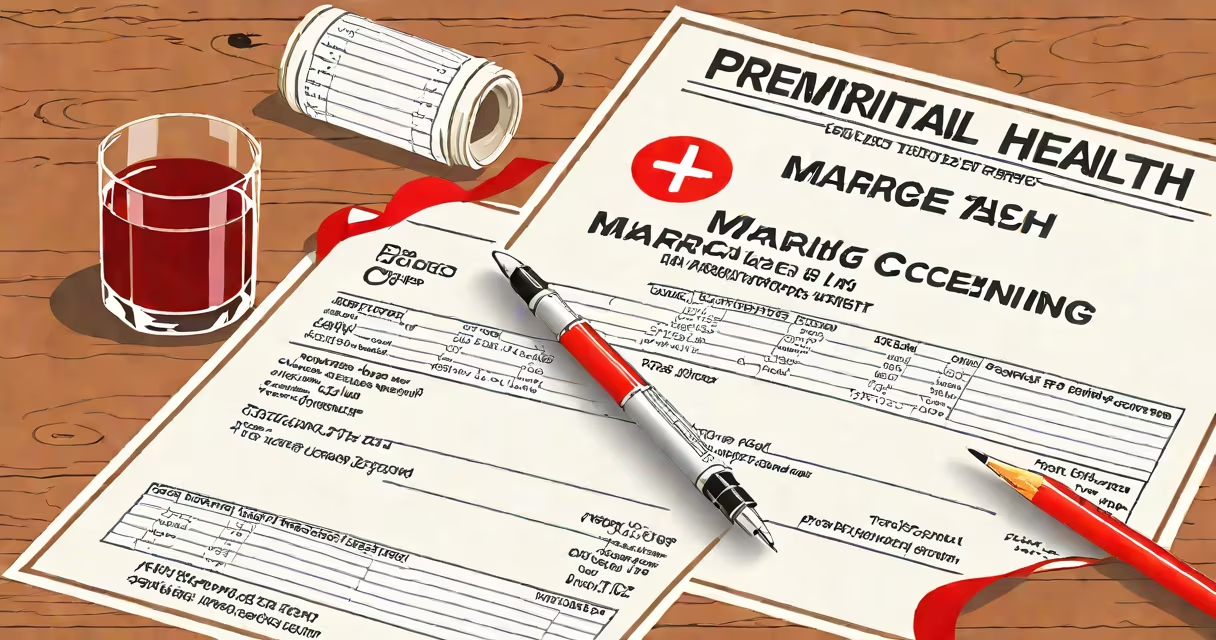
Blood tests for marriage were state-mandated medical screenings in the United States from the 1950s through the 1990s, primarily to detect syphilis and other communicable diseases before couples married. These tests were intended to protect public health by preventing the transmission of infections into families and communities.
The requirement emerged during a period of rising concern over sexually transmitted infections, especially syphilis, which was linked to severe neurological and developmental complications. By the mid-20th century, several states began enforcing premarital blood tests as part of their marriage licensing process. The goal was not to prevent marriage outright but to identify individuals who might pose a risk to their partners' health.
States such as New York, California, and Pennsylvania required blood tests for syphilis and, in some cases, gonorrhea. Results were often kept confidential between the couple and the physician, though records were sometimes maintained by local health departments. The practice declined sharply after the 1990s due to advances in treatment, changing attitudes toward privacy, and concerns about stigma and discrimination.
Couples applying for a marriage license were directed to a county health department or approved clinic for a blood draw. The sample was tested for antibodies indicating past or current infection with syphilis, using the Wassermann reaction or later, the Rapid Plasma Reagin (RPR) test. A positive result triggered counseling and, in some cases, referral to treatment programs.
If a person tested positive, they were typically advised to seek treatment before marrying. Some states allowed marriages to proceed if both partners consented and were informed of the risk. Others required treatment completion before issuing a license. The process was not punitive but aimed at reducing disease transmission within intimate relationships.
Testing for other conditions was limited. While some states explored adding tests for HIV, hepatitis B, or sickle cell anemia, these additions were rare and often controversial. The focus remained on curable or treatable infections rather than permanent genetic disorders.
Only a few conditions were routinely screened for in premarital blood tests. Syphilis was the most common target. According to the Centers for Disease Control and Prevention (CDC), syphilis rates peaked in the U.S. in the 1940s and 1950s, prompting widespread public health campaigns. By 1960, over 30 states had laws requiring premarital testing for syphilis.
Some states also tested for rubella immunity, particularly in women of childbearing age, to prevent congenital rubella syndrome. This was less common and usually applied only to female applicants. Genetic screening for conditions like Tay-Sachs disease was introduced in high-risk populations-such as Ashkenazi Jews-but was not part of standard premarital testing.
| Condition | Test Type | Prevalence in U.S. (1950s-1980s) | State Requirement |
|---|---|---|---|
| Syphilis | RPR or VDRL | ~100,000 cases annually | 30+ states |
| Gonorrhea | Urine or swab culture | ~50,000 cases annually | 5 states (limited) |
| Rubella immunity | Antibody titer | High in women aged 15-35 | 10 states (selective) |
| HIV | ELISA (later Western blot) | Emerging in 1980s | None in premarital context |
By the 1990s, HIV became a major public health issue, but premarital blood tests did not include HIV screening. The CDC notes that mandatory HIV testing for marriage was never adopted in any U.S. state due to ethical concerns and the potential for coercion. Instead, voluntary testing became the norm.
By 2000, most U.S. states had repealed mandatory premarital blood tests. The shift was driven by multiple factors: improved treatments for syphilis and other STIs, greater awareness of patient privacy rights, and the recognition that testing created barriers to marriage for vulnerable populations.
A 1999 study published in the journal *Public Health Reports* found that premarital testing led to increased anxiety and social stigma, particularly among young adults. The report noted that some couples avoided marriage altogether due to fear of a positive result, even when treatment was available.
Legal challenges also played a role. In 1972, the U.S. Supreme Court ruled in *Skinner v. Oklahoma* that compulsory sterilization violated constitutional rights. Although this case involved eugenics-era policies, it helped set a precedent against state-mandated medical procedures without informed consent. By the 1990s, courts increasingly viewed mandatory blood tests as violations of bodily autonomy.
Many people assume premarital blood tests were designed to prevent genetic disorders like cystic fibrosis or Down syndrome. This is incorrect. These conditions were not screened for in routine premarital testing. Genetic screening was rare and only offered in specific high-risk groups.
Another misconception is that blood tests were used to deny marriage licenses. In reality, a positive result did not automatically bar marriage. Most states allowed couples to proceed with counseling and treatment. The intent was preventive, not punitive.
One non-obvious fact: Some states required blood tests only for the bride, not the groom. This gender disparity reflected outdated views on reproductive responsibility and contributed to unequal access to health information. A 1978 report by the American Public Health Association highlighted this imbalance as a barrier to equitable care.
Today, premarital health assessments are voluntary. Couples may choose to undergo blood tests for HIV, syphilis, hepatitis B and C, and rubella immunity through private clinics or primary care providers. These tests are often recommended during pre-pregnancy planning, not marriage licensing.
I once observed a 1950s-era marriage application form at a historical archive in Philadelphia. The form included a box labeled "Syphilis Test Result" with columns for "Positive," "Negative," and "Pending." The signature line read: "I understand that a positive result may delay my marriage until treatment is completed." That document captured the era's blend of public health urgency and personal consequence.
While blood tests for marriage are no longer required in the U.S., their legacy persists in public health policy. They reflect a time when medicine intersected closely with social norms, and when prevention took precedence over individual choice. Today, the focus has shifted to informed consent, voluntary screening, and patient-centered care.