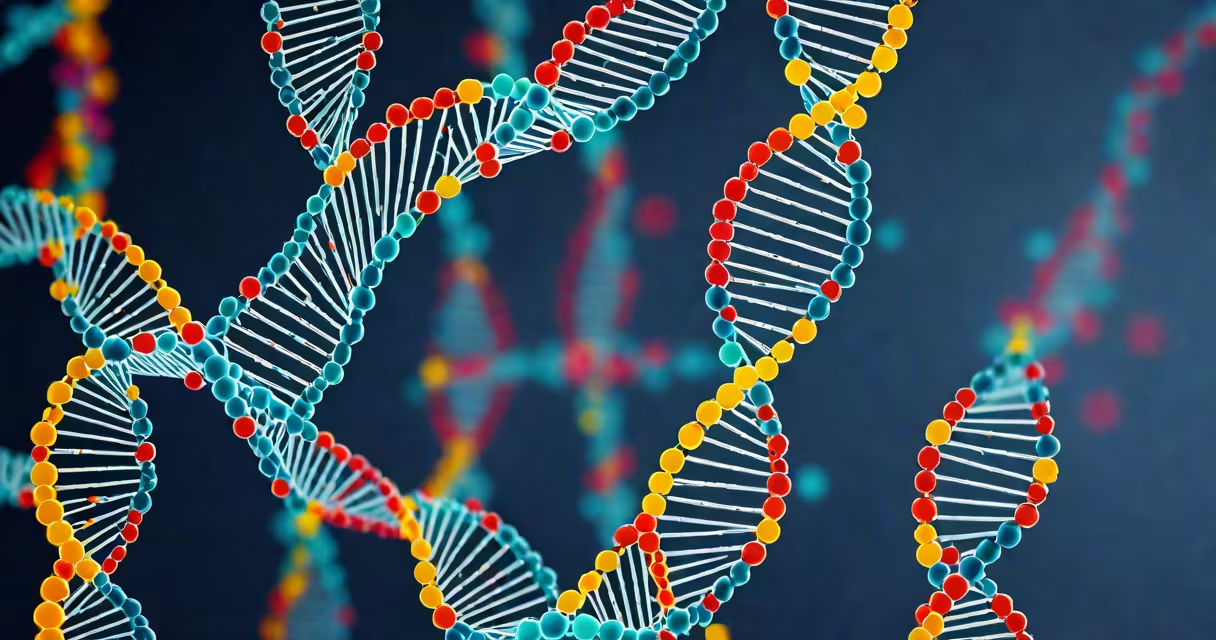
Biological data science is the interdisciplinary field that applies statistical modeling, machine learning, and computational tools to large-scale biological datasets-such as genomic sequences, protein structures, and cellular imaging-to uncover patterns linked to health, disease, and evolution.
This discipline emerged from the convergence of molecular biology, computer science, and advanced analytics. It enables researchers to move beyond hypothesis-driven experiments toward data-driven discovery. For example, identifying genetic markers associated with Alzheimer's disease requires analyzing millions of DNA variants across thousands of patient samples-tasks only feasible through biological data science.
Unlike traditional biology, which often relies on controlled lab experiments, biological data science handles unstructured, noisy, and high-dimensional data. It uses algorithms to detect subtle signals buried in noise-such as rare mutations that increase cancer risk-or to predict how proteins fold into functional shapes.
Biological data science begins with data acquisition. Genomic sequencing machines generate terabytes of raw nucleotide sequences per run. These sequences are then cleaned, aligned to reference genomes, and annotated using databases like Ensembl or NCBI's RefSeq.
Next, statistical models identify associations. A researcher studying diabetes might use logistic regression to correlate single-nucleotide polymorphisms (SNPs) with disease onset across a cohort of 10,000 individuals. Machine learning models such as random forests or neural networks can go further-predicting disease progression based on gene expression profiles.
Finally, results are visualized and validated. Tools like R's ggplot2 or Python's Matplotlib create plots showing gene activity across time points in a cell cycle. Validation happens through independent experiments-such as CRISPR editing to confirm a gene's role in a pathway.
The foundation of biological data science lies in three pillars: data handling, algorithmic analysis, and domain expertise. Data handling involves managing formats like FASTA (for sequences), BAM (aligned reads), and HDF5 (multi-dimensional arrays). These require specialized software such as BioPython, Samtools, or Bioconductor packages.
Common analytical techniques include:
A non-obvious distinction: biological data science is not synonymous with bioinformatics. While both deal with biological data, bioinformatics focuses on developing tools and pipelines. Biological data science emphasizes extracting actionable insights from those tools. One can be a bioinformatician without doing data science; conversely, a biologist using machine learning to analyze microbiome data is practicing biological data science-even without coding fluency.
Biological data science powers breakthroughs in medicine, agriculture, and environmental science. In oncology, it identifies driver mutations in tumors. The Cancer Genome Atlas (TCGA) project analyzed over 11,000 samples across 33 cancer types, revealing recurrent mutations that led to targeted therapies like imatinib for chronic myeloid leukemia.
In public health, it tracks pathogen spread. During the early phase of the SARS-CoV-2 pandemic, researchers used genomic surveillance to trace viral lineages. By comparing spike protein mutations across global samples, they predicted the emergence of variants like Delta and Omicron-guiding vaccine updates.
Environmental applications include monitoring biodiversity. A 2023 study in Science used environmental DNA (eDNA) from water samples to detect invasive species in freshwater ecosystems. Machine learning models achieved 89% detection accuracy, enabling early intervention.
One real-world example: the Human Cell Atlas initiative. This international effort aims to map every human cell type. Using single-cell RNA sequencing and clustering algorithms, researchers have cataloged over 100 distinct cell states in the lung and liver. These maps now inform regenerative medicine strategies.
Many assume biological data science requires advanced programming skills. While proficiency in Python or R helps, many workflows are accessible via graphical interfaces. Tools like Galaxy or BioStar allow biologists to run complex analyses without writing code-though understanding the underlying logic remains essential.
Another misconception: all biological data science leads to immediate clinical outcomes. Not true. Many projects produce exploratory findings. For instance, a 2021 study identified a correlation between gut microbiome diversity and depression severity-but no causal mechanism was established. Such results still advance science by generating testable hypotheses.
Also, biological data science is not interchangeable with artificial intelligence. AI refers to systems that mimic human cognition. Biological data science may use AI methods-but only as tools. The goal is scientific insight, not autonomous decision-making. An AI model predicting drug response is useful only if clinicians understand its assumptions and limitations.
Consider a family with three children affected by a rare neurodevelopmental disorder. Standard genetic testing failed to find a cause. Researchers turned to whole-exome sequencing-capturing all protein-coding regions of the genome.
Raw data was processed through a pipeline: alignment to the GRCh38 reference, variant calling with GATK, and annotation using ClinVar and gnomAD. Variants were filtered for rarity (frequency < 0.001 in population databases), predicted pathogenicity (using PolyPhen-2 and SIFT), and inheritance pattern (autosomal recessive).
Only one variant remained: a homozygous missense mutation in the SLC13A5 gene. This matched known literature on seizures and developmental delay. Functional validation confirmed disrupted calcium transport in cell lines.
Diagnosis was confirmed. The family received targeted counseling and access to experimental treatments. This case illustrates how biological data science integrates multiple layers-sequencing, filtering, prediction, and validation-to solve real medical puzzles.
It overlaps with behavioral data science when studying how genes influence behavior. For example, genome-wide association studies (GWAS) link SNPs to traits like aggression or anxiety. But interpreting these links requires understanding both genetics and psychological mechanisms.
Understanding biological data science isn't optional for modern life sciences. It's central to advancing precision medicine, improving diagnostics, and accelerating drug discovery. As sequencing costs drop below $100 per genome, the volume of data will grow exponentially-making analytical rigor more critical than ever.
Computer scientist, mastering biological data science opens doors to solving problems that were once invisible. The next breakthrough in treating Parkinson's, preventing antibiotic resistance, or restoring damaged tissues may come from a dataset you've learned to read.