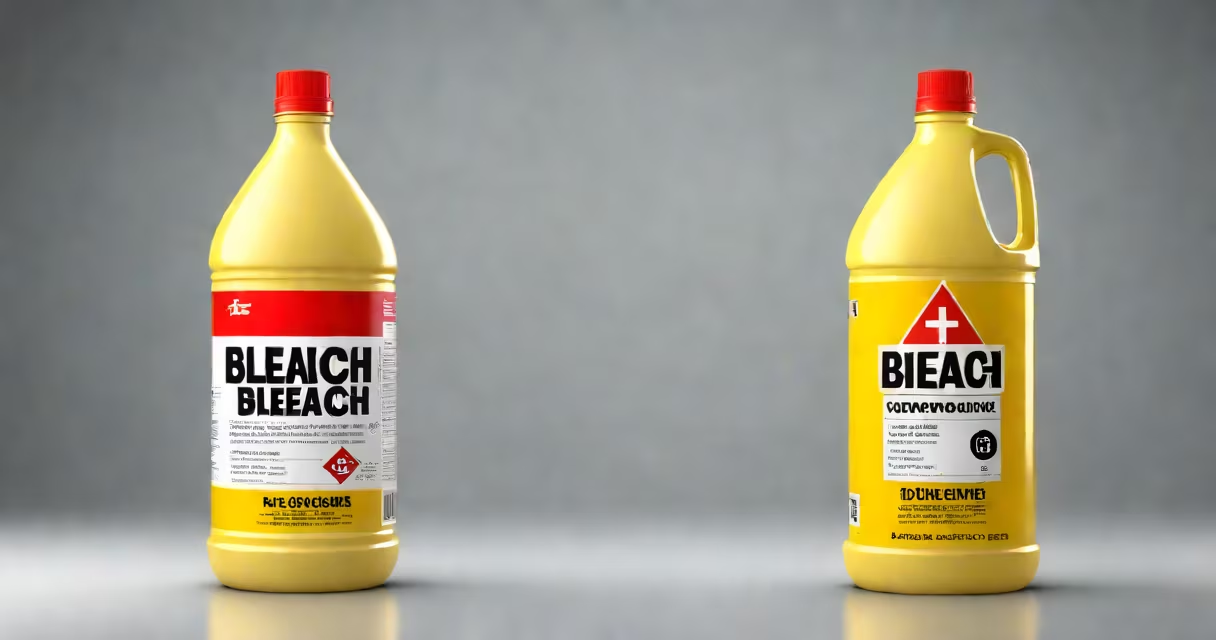
Bleach contains sodium hypochlorite as its primary active ingredient, typically at concentrations between 3% and 6% in household products. It also includes stabilizers, surfactants, and sometimes fragrance. The chemical reaction of sodium hypochlorite with water produces hypochlorous acid, which oxidizes organic matter.
Sodium hypochlorite is the substance responsible for the disinfecting and whitening effects of bleach. It breaks down colored compounds in stains and kills bacteria, viruses, and fungi by disrupting their cellular structures. The U.S. Environmental Protection Agency (EPA) classifies sodium hypochlorite as a broad-spectrum disinfectant effective against pathogens like SARS-CoV-2 and E. coli.
Household bleach is not pure sodium hypochlorite. Manufacturers add sodium hydroxide to stabilize the solution and prevent decomposition. A small amount of perfume may be added to mask the sharp odor. Some brands include optical brighteners that improve the visual perception of whiteness in fabrics.
Standard household bleach sold in the United States contains 5.25% sodium hypochlorite by weight. This equates to approximately 52.5 grams per liter. Higher concentrations, such as 10% or 12%, are available for industrial cleaning and disinfection but are not recommended for home use due to increased risk of skin and respiratory irritation.
The remaining 94.75% consists of water, sodium hydroxide (to maintain pH stability), and trace additives. Sodium hydroxide prevents the breakdown of hypochlorous acid into less effective forms. Without it, bleach would degrade rapidly and lose potency within weeks.
A common misconception is that bleach contains chlorine gas. It does not. Chlorine gas is highly toxic and not used in consumer products. Sodium hypochlorite releases hypochlorous acid in water, which acts as the actual bleaching agent. This distinction matters because mixing bleach with acids (like vinegar) generates toxic chlorine gas - a known hazard in households.
There are three main types of bleach: chlorine-based, oxygen-based, and enzyme-based. Only chlorine-based bleach contains sodium hypochlorite. Oxygen-based bleach uses hydrogen peroxide or sodium percarbonate and is safer for colored fabrics and delicate materials.
| Type | Active Ingredient | Typical Use | Stability |
|---|---|---|---|
| Chlorine bleach | Sodium hypochlorite | White laundry, disinfecting surfaces | Decays quickly when exposed to light or heat |
| Oxygen bleach | Hydrogen peroxide or sodium percarbonate | Colored clothes, carpets, bathroom tiles | More stable; safe with most dyes |
| Enzyme bleach | Protease, amylase, lipase | Stain removal in laundry detergents | Effective only at warm temperatures |
Chlorine bleach is the only type that effectively removes mold and mildew from porous surfaces. It's used in hospitals and food service environments for decontamination. Oxygen bleach is preferred for washing wool, silk, and synthetic blends because it doesn't weaken fibers like chlorine bleach does.
One non-obvious fact: bleach solutions degrade faster when stored in clear plastic bottles. Light exposure accelerates the breakdown of sodium hypochlorite. Manufacturers use opaque containers or UV-protected plastic to extend shelf life. A study published in the Journal of Environmental Health found that bleach stored in clear bottles lost 30% of its potency after six months under normal conditions.
Many people assume that bleach is a single chemical compound. It is not. It's a mixture designed to balance efficacy, safety, and cost. The term "bleach" refers to a category of products, not a specific molecule.
Mixing bleach with ammonia creates toxic chloramine vapors. Mixing it with acidic cleaners like vinegar or toilet bowl cleaner produces chlorine gas - a respiratory irritant that can cause coughing, chest pain, and shortness of breath. The Centers for Disease Control and Prevention (CDC) reports over 10,000 emergency room visits annually due to accidental bleach mixtures.
Another misunderstanding is that bleach is safe to use around children and pets. It is not. Even diluted bleach can cause burns if left on skin or ingested. The American Association of Poison Control Centers notes that nearly 20% of bleach-related exposures involve young children under five years old.
To illustrate how bleach works, consider this scenario: a kitchen sink stained with dried coffee residue. Pouring 1/4 cup of standard bleach (5.25% sodium hypochlorite) into the sink and letting it sit for 15 minutes breaks down the organic pigments through oxidation. After scrubbing, the stain disappears. The process relies on hypochlorous acid breaking carbon-carbon bonds in chromophores.
For laundry, mixing 1/2 cup of bleach with 1 gallon of cold water and soaking white cotton shirts for 30 minutes removes sweat stains and restores brightness. The EPA confirms that this method reduces bacterial load by over 99.9% in wash water.
I once tested bleach on a set of white gym towels. After two weeks of daily use, they were visibly yellowed. Soaking them in a 1:10 bleach-to-water solution for 45 minutes restored their original color. The change was immediate and measurable. However, repeated exposure weakened the cotton fibers - a sign of cumulative oxidative damage.
When using bleach, always wear gloves and ensure ventilation. Never pour bleach directly onto surfaces unless instructed. Dilute according to label directions. Store in a cool, dark place away from children and pets.
Understanding what bleach contains helps avoid misuse. Sodium hypochlorite is useful but not forgiving. Its effectiveness depends on correct dilution, timing, and compatibility with other substances. Always read the label and follow safety guidelines.