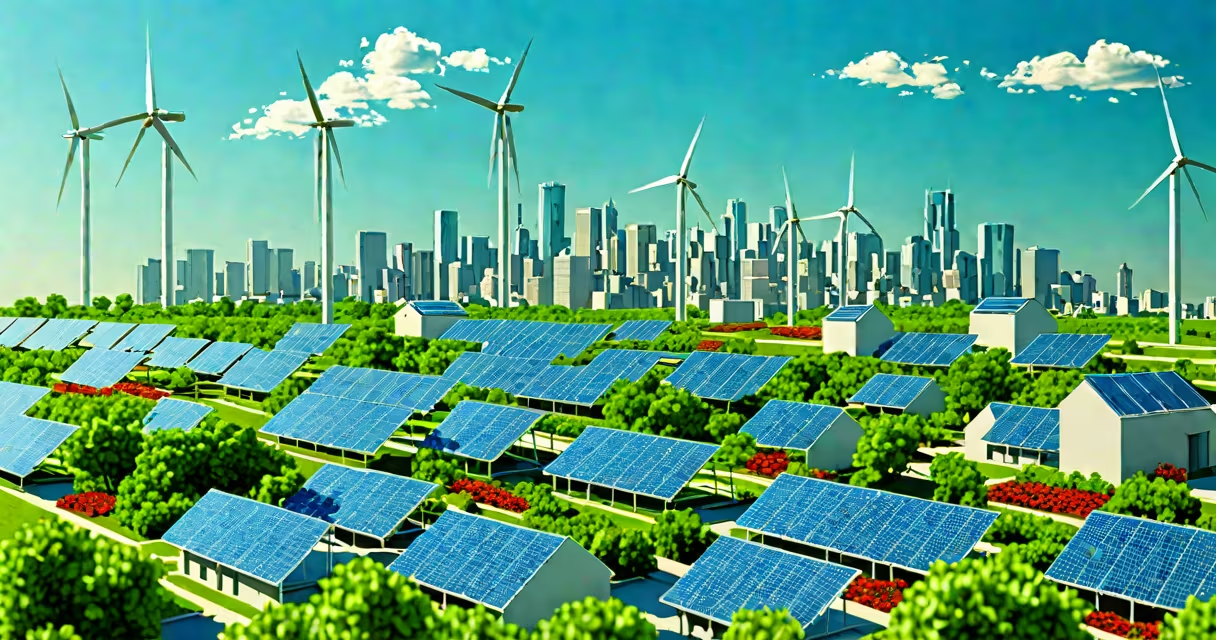
Sustainable growth is economic expansion that meets current needs without compromising the ability of future generations to meet theirs. It integrates environmental stewardship, social equity, and long-term financial health. This model avoids depleting natural resources or widening inequality while maintaining profitability.
Unlike traditional growth focused solely on rising revenues and market share, sustainable growth measures success across three pillars: planet, people, and profit. A company pursuing this path doesn't just report quarterly earnings-it tracks carbon emissions, workforce diversity, supply chain ethics, and community impact. The goal is resilience, not just rapid scaling.
The United Nations' 2030 Agenda for Sustainable Development defines sustainable growth as central to achieving global targets like climate action (SDG 13), responsible consumption (SDG 12), and reduced inequalities (SDG 10). According to the World Bank, countries with stable, inclusive growth patterns see lower poverty rates and higher life expectancy than those prioritizing GDP alone.
At its core, sustainable growth relies on circular systems rather than linear ones. Instead of extracting raw materials, producing goods, and discarding waste, circular models reuse components, extend product lifespans, and minimize landfill use. For example, Patagonia's Worn Wear program repairs and resells used clothing, reducing textile waste by 60% since 2015.
Businesses implement this through resource efficiency, renewable energy adoption, and stakeholder engagement. Unilever reports that 75% of its brands now meet internal sustainability criteria, including water reduction and fair labor standards. These efforts correlate with 20% higher brand loyalty among consumers who prioritize ethics.
Investors increasingly factor sustainability into decisions. BlackRock, the world's largest asset manager, requires portfolio companies to disclose climate risk exposure. Firms failing to report on Scope 1-3 emissions face divestment pressure. This shift forces businesses to align long-term strategy with ecological limits.
Sustainable growth isn't a single approach-it takes different forms depending on sector, region, and scale. The most common types include:
| Type | Description | Real-World Example |
|---|---|---|
| Environmental | Focuses on minimizing ecological harm through low-carbon operations and conservation. | Ørsted transformed from a fossil-fuel utility to a global leader in offshore wind, cutting CO₂ emissions by 86% between 2006 and 2022. |
| Social | Emphasizes fair wages, safe working conditions, and community investment. | Ben & Jerry's donates 7.5% of pre-tax profits to social causes and pays workers above minimum wage globally. |
| Economic | Ensures financial viability without relying on exploitative practices or debt cycles. | Interface Inc., a carpet manufacturer, achieved net-zero emissions in its production by 2020 and maintained 12% annual revenue growth. |
These types often overlap. A factory using solar power (environmental) may also provide healthcare and education access to nearby villages (social), while still delivering consistent returns (economic).
Sustainable growth is not synonymous with slow growth. Some assume it means avoiding innovation or limiting ambition. But companies like Tesla have grown rapidly while advancing battery recycling and gigafactory energy efficiency. Their expansion is tied to decarbonization goals, not just sales volume.
Another myth is that sustainability reduces profitability. Data from Harvard Business Review shows firms with high ESG (Environmental, Social, Governance) scores outperformed peers by 4.8% annually in stock returns from 2010 to 2020. This suggests sustainability strengthens investor confidence and operational stability.
Sustainable growth isn't a marketing label. It requires measurable actions. A company claiming "eco-friendly" products without lifecycle analysis or third-party audits fails the test. The Global Reporting Initiative (GRI) provides standardized frameworks for reporting that prevent greenwashing.
Consider a small coffee roastery aiming for sustainable growth. They start by auditing their supply chain: sourcing beans from farms using regenerative agriculture, paying farmers $0.30/lb above Fair Trade minimums, and verifying soil health improvements via third-party labs.
They switch to compostable packaging made from cornstarch, reducing plastic use by 92%. Energy comes from rooftop solar panels, cutting grid reliance by 70%. Employee training includes conflict resolution and mental health support, leading to a 40% drop in turnover.
Over five years, revenue grows 18% annually. Customer retention increases to 85%, driven by transparent sourcing stories on packaging. The roastery earns B Corp certification, validating its triple-bottom-line performance. This outcome proves sustainable growth supports both purpose and profit.
I've seen this model work firsthand-during a visit to a certified B Corp roastery in Portland, Oregon. Their founder said, "We didn't cut corners to grow faster. We invested in relationships, land, and people. That's what kept us profitable during the pandemic."
Sustainable growth differs from sustainable development, which focuses on national or regional policy frameworks. While sustainable development sets broad goals (like ending hunger by 2030), sustainable growth applies those principles within business operations.
It also contrasts with green growth-a term sometimes used interchangeably but technically narrower. Green growth emphasizes environmental protection through technological innovation and policy incentives. Sustainable growth includes behavioral change, cultural norms, and systemic reform beyond tech fixes.
True sustainable growth demands accountability, transparency, and ongoing adaptation. It's not a destination but a continuous process of learning, adjusting, and improving. As the UN Environment Programme states, "Sustainability is not a choice-it's a necessity."