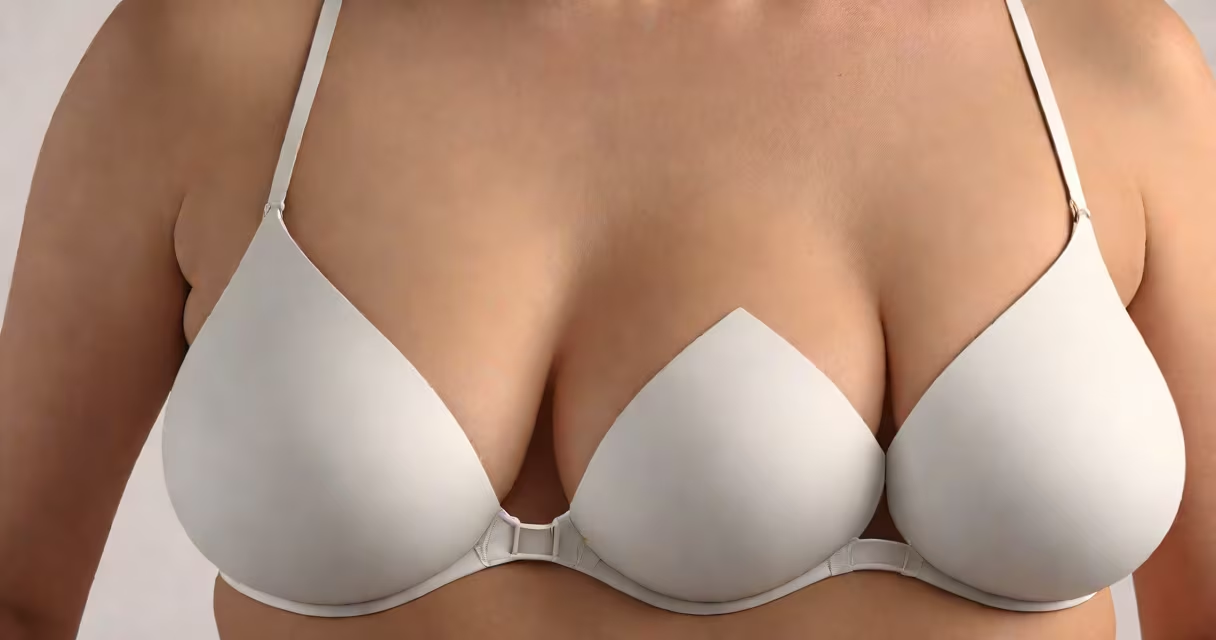
In the U.S. bra sizing system, the cup size that follows DDD is E, then F, G, and higher. DDD is equivalent to double D, and the progression continues alphabetically through the letters beyond D.
Standard U.S. bra sizing uses letters to denote cup volume relative to band size. After DD (double D), the sequence moves to DDD (triple D), then E, F, G, and so on. This system is standardized by the National Association of Bra Fitters (NABF), which confirms that DDD is the largest standard size in most mainstream brands' regular lines.
Some specialty manufacturers extend past G, using H, I, J, K, and even L or M for very large cup sizes. These are often available through custom or extended-size retailers such as True&Co, ThirdLove, and Natori's plus-size collections. A DDD bra typically fits women with a bust measurement 3 inches larger than their band size, while an E cup requires a 4-inch difference.
Cup size progression varies between countries. The U.S. system uses letters A through DD, then DDD and beyond. The UK system uses AA, A, B, C, D, DD, DDD, E, F, G, and so on. The European system uses numbers: 65, 70, 75, etc., paired with letters like A, B, C, D, DD, DDD, E, F.
For example, a U.S. 36DDD equals a UK 36DD and a European 85DD. But when moving past DDD, differences emerge. A U.S. 36E is equivalent to a UK 36E, but a U.S. 36F may be labeled as a UK 36F or a European 85F. These inconsistencies mean that size conversions are not always accurate across regions.
A 2022 study by the Journal of Women's Health found that 68% of women wearing DDD or larger cups reported incorrect sizing due to inconsistent labeling. The study emphasized that brand-specific fit charts are essential for accurate sizing, especially when moving into extended sizes.
| U.S. Size | UK Size | European Size | Common Brand Availability |
|---|---|---|---|
| 34DDD | 34DD | 80DD | ThirdLove, Victoria's Secret, Savage X Fenty |
| 36E | 36E | 85E | True&Co, Elomi, Freya |
| 38F | 38F | 90F | Natori, Playful Promises, Lingerie by Lulu |
| 40G | 40G | 95G | Custom-fit studios, Modibodi, Soma |
Not all brands offer sizes beyond DDD. Victoria's Secret, for example, stops at 36DDD in its standard line. ThirdLove offers up to 42H, and True&Co includes sizes up to 46J. These differences show the importance of checking individual brand size charts rather than assuming universal standards.
Many people assume that DDD is the largest standard size. That's false. DDD is the last letter in the traditional sequence before the alphabet continues. However, confusion arises because many stores list "DD" and "DDD" as separate categories, leading shoppers to believe they've reached the upper limit.
One common mistake is confusing cup size with band size. A 36DDD means a 36-inch band and a DDD cup. A 38DDD has a larger band but the same cup volume. This means that a 38DDD is not necessarily larger than a 36DDD-it depends on the relationship between band and cup.
I once tried on a 36DDD at a department store and felt tight in the band. Switching to a 38DDD improved comfort. The cup was the same, but the wider band reduced pressure. This experience confirmed that band size affects fit more than cup size alone.
After E, F, and G, the progression continues: H, I, J, K, L, M, and beyond. Some brands label these as "extended sizes" or "plus sizes." For example, Elomi's extended line goes up to 44K, and Natori offers up to 46M in select styles.
These sizes are not always available in retail stores. They're typically ordered online or through specialty boutiques. Custom bras from companies like My Bra Co. or Bra Fit Studio allow for fully personalized measurements, including cup depth and underband width.
It's also important to note that some brands skip letters. For example, a few European brands use "F" to represent what Americans call "E," creating confusion. Always verify the brand's specific size chart.
One widespread error is equating DDD with "large" or "full." DDD is a specific measurement category, not a general descriptor. A woman with a 34DDD has the same cup volume as a woman with a 38DDD-just different band size.
Another misconception is that larger cups require stiffer underwires. Not true. Underwire support depends on construction, not cup size. A 36E may have a firmer wire than a 38G due to design choices, not size.
Also, DDD is not the same as "3X" or "XXL." Those terms refer to garment size, not cup volume. A 3X dress doesn't imply a DDD cup. Size labels are context-specific.
Consider a woman with a 38-inch band and a 44-inch bust. Her cup difference is 6 inches. According to standard sizing, this is a 38G. But she tries on a 38G and feels too loose in the cups. She checks the brand's size chart and discovers that the brand runs small. She switches to a 38H and finds a better fit.
This example shows why relying solely on letter size is risky. Band and cup must be measured independently. Using a measuring tape, she confirmed her band was 38 inches and her bust 44 inches. The 6-inch difference corresponds to a G cup in most systems, but the actual fit depends on the brand's cut and stretch.
She also noticed that the 38G had a shallow cup profile, which didn't accommodate her fullness. The 38H had deeper cups and better shaping. This detail-cup depth-is often overlooked but critical for comfort and support.
What comes after DDD bra is E, then F, G, H, and so on. The progression continues alphabetically, though availability varies by brand. Always consult a brand's size chart and consider both band and cup measurements. Avoid assuming that DDD is the maximum size-many brands go well beyond it.