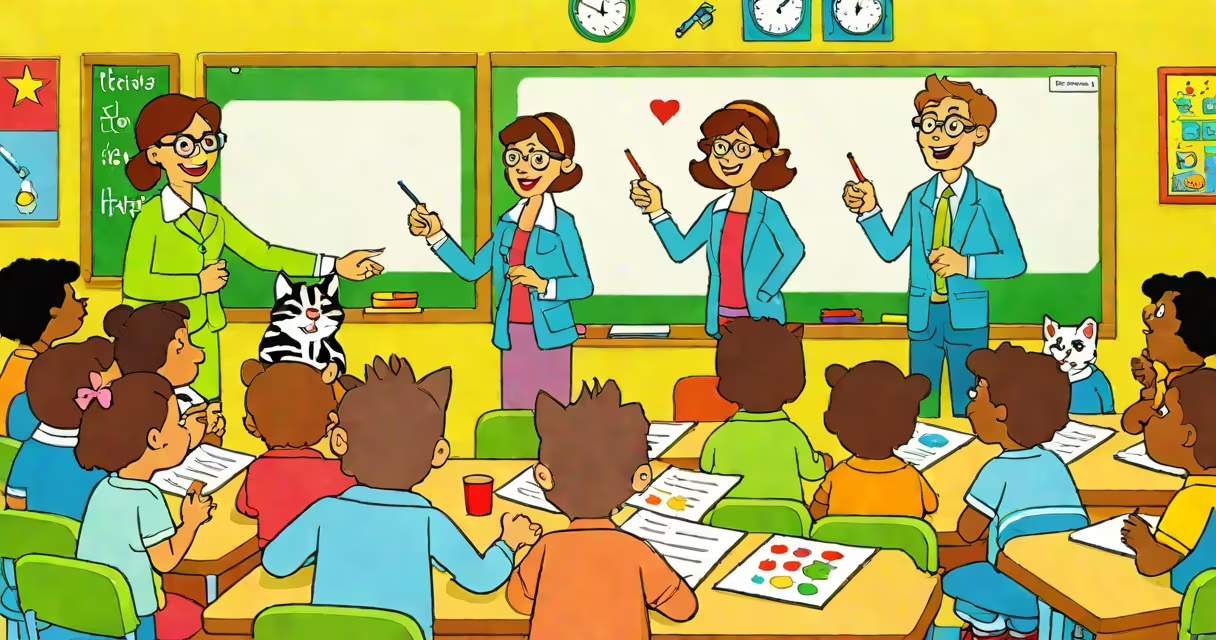
Easy sentences for kindergarten are short, structured phrases using common words and simple grammar to help young children recognize patterns in language, build confidence in reading, and develop early literacy skills. These sentences typically include one subject, one verb, and a basic object or location, often repeated with visual support.
Children in kindergarten (ages 5-6) are beginning to decode words and understand how sentences work. Easy sentences provide a scaffolded entry point. They use high-frequency vocabulary-words like "cat," "run," "see," "big," and "red"-that appear frequently in early books and daily conversation. Sentences are usually under ten words long and follow a consistent subject-verb-object pattern.
For example: "The dog runs." "I see a bird." "The ball is red." These structures avoid complex grammar such as past tense verbs or conditional clauses. Instead, they focus on present-tense actions and observable objects. This consistency reduces cognitive load and allows children to predict and internalize sentence flow.
These sentences function as building blocks for reading fluency. Each sentence introduces a predictable pattern: subject + verb + complement. Children learn to associate sounds with letters, track left-to-right movement, and recognize punctuation. Repeated exposure strengthens neural pathways linked to word recognition and comprehension.
Research from the National Reading Panel (2000) confirms that systematic phonics instruction combined with meaningful sentence practice improves early reading outcomes. Children who engage with simple, repetitive sentences show faster progress in decoding and sight-word retention than those exposed to random or overly complex phrasing.
A practical example: A teacher shows a child a card with the sentence "The sun shines." The child points to each word while saying it aloud. The teacher then asks, "Where does the sun shine?" The child responds, "Outside." This interaction reinforces vocabulary, syntax, and oral expression-all within a single, manageable sentence.
There are four core types of easy sentences used in kindergarten classrooms:
| Type | Pattern | Example | Use Case |
|---|---|---|---|
| Subject-Verb | Subject + Verb | The boy jumps. | Introduces action and subject identity. |
| Subject-Verb-Object | Subject + Verb + Object | The girl eats an apple. | Teaches direct relationships between actors and actions. |
| Subject-Verb-Location | Subject + Verb + Place | The duck swims in the pond. | Builds spatial awareness and preposition understanding. |
| Simple Descriptions | Subject + Is + Adjective | The flower is yellow. | Develops color, size, and emotion vocabulary. |
Each type serves a distinct developmental purpose. Subject-verb sentences help children identify who is doing something. Adding an object or location increases complexity slightly while still staying within grasp. Descriptive sentences introduce adjectives and sensory language, which are essential for expressive writing later on.
Teachers often pair these sentences with matching images or manipulatives. For instance, a sentence card saying "The bear sleeps" might be paired with a picture of a bear curled up in a cave. This multisensory approach supports memory and engagement, especially for children learning English as a second language.
One frequent error is assuming that simplicity equals low value. Some educators believe that short sentences are only for beginners and don't promote deeper thinking. But research from the Center for Early Literacy Learning (2021) shows that well-designed simple sentences improve both decoding accuracy and comprehension in children aged 4-6.
Another misconception is that all easy sentences must be about animals or toys. While these topics are popular, effective sentences can involve everyday routines: "I brush my teeth." "We eat lunch at noon." "The door opens." Real-world context enhances relevance and retention.
A less obvious issue is overusing passive voice. Sentences like "The cookie was eaten by me" confuse young learners because they reverse the expected subject-verb order. Active voice remains critical in early writing. Always start with the doer of the action.
In a typical kindergarten classroom, teachers use easy sentences during morning circle time. One activity involves sentence strips with pictures. Students match the sentence "The car drives fast" to a photo of a red car speeding down a road. After pairing, they read the sentence aloud together.
During guided reading, a teacher holds up a card with "The baby cries." She asks students to point to the word "baby" and act out crying. Then she says, "Now say the whole sentence." The class repeats it three times. This routine builds fluency, pronunciation, and confidence.
I once observed a student who struggled with verbal expression suddenly speak after mastering five simple sentences. He had been silent during group time. Once he could say "I see a butterfly," he began to participate. That moment confirmed how small linguistic steps lead to big gains in communication.
When selecting easy sentences for kindergarten, prioritize repetition, visual cues, and real-life connection. Avoid abstract concepts like "happiness" or "freedom" unless paired with tangible examples. Focus on what children can see, touch, or do.
Easy sentences for kindergarten are not just practice-they are the foundation of lifelong reading and writing ability. With consistent exposure, correct structure, and supportive context, even the youngest learners gain control over language.