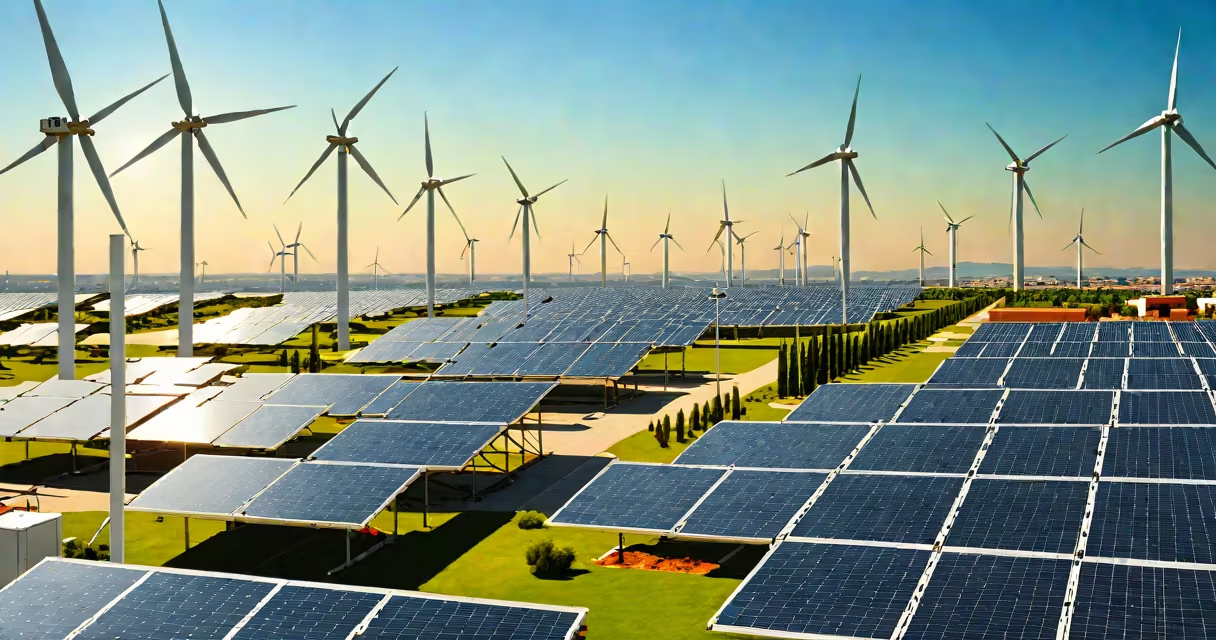
Electricity itself is neither renewable nor nonrenewable-it is a form of energy delivery. Whether electricity is renewable or nonrenewable depends entirely on the source used to generate it. Solar and wind power produce renewable electricity; coal and natural gas produce nonrenewable electricity.
Electricity flows through wires and powers devices, but it must be generated from a primary energy source. That source determines the classification. For example, electricity from a solar farm comes from sunlight-a naturally replenishing resource-and is therefore renewable. Electricity from a coal-fired plant comes from burning finite fossil fuels and is classified as nonrenewable.
The U.S. Energy Information Administration (EIA) defines renewable energy as "energy derived from natural resources that are replenished on a human timescale." Nonrenewable energy comes from sources that take millions of years to form and deplete when used. This distinction applies directly to electricity generation.
Renewable electricity is produced using sources that regenerate faster than they are consumed. These include solar, wind, hydropower, geothermal, and biomass. Nonrenewable electricity comes from fossil fuels-coal, oil, and natural gas-as well as nuclear fission, which relies on uranium mined from the earth.
Solar panels convert sunlight into direct current, which inverters then turn into usable alternating current. Sunlight is available daily and will continue for billions of years. Wind turbines use air movement driven by solar heating of the atmosphere. Both systems require infrastructure but do not consume finite materials during operation.
In contrast, fossil fuel plants burn carbon-rich materials. A single coal-fired power station can emit over 1 million metric tons of CO₂ annually. These emissions contribute to climate change and cannot be reversed. Once burned, the fuel is gone forever. The EIA reports that in 2023, fossil fuels still supplied 60% of U.S. electricity, while renewables accounted for 22%.
Not all renewable sources are equally consistent. Some are intermittent, meaning they don't produce power continuously. Here's how common sources stack up:
| Source | Type | Replenishment Time | Annual Output (U.S. average) |
|---|---|---|---|
| Solar | Renewable | Continuous (sunlight) | ~1,000 kWh per kW installed |
| Wind | Renewable | Continuous (wind cycles) | ~2,000 kWh per kW installed |
| Coal | Nonrenewable | Millions of years | ~3,000 kWh per kW installed |
| Natural Gas | Nonrenewable | Millions of years | ~4,000 kWh per kW installed |
| Nuclear | Nonrenewable | Thousands of years (uranium mining) | ~7,000 kWh per kW installed |
While nuclear plants have high output, uranium is a finite mineral. The International Atomic Energy Agency (IAEA) estimates global uranium reserves could last 100-200 years at current consumption rates. This makes nuclear electricity nonrenewable despite low carbon emissions during operation.
Hydropower is renewable but not always sustainable. Dams disrupt river ecosystems and displace communities. The Three Gorges Dam in China generates 100 terawatt-hours annually but flooded over 600 square kilometers of land. Environmental trade-offs exist even within renewable categories.
Many assume that because electricity is clean when used, it must be renewable. This is incorrect. A home powered by a solar panel system uses renewable electricity. But if the same home draws power from a regional grid dominated by coal plants, the electricity is nonrenewable-even though the outlet delivers the same electrons.
Another misconception is that all green energy is zero-emission. While wind and solar emit no CO₂ during operation, manufacturing their components does. A study by the National Renewable Energy Laboratory (NREL) found that producing a solar panel emits about 40 grams of CO₂ per kilowatt-hour over its lifetime-far less than fossil fuels' 800-1,000 g/kWh.
Even storage systems affect classification. Lithium-ion batteries store renewable electricity but rely on mining lithium, cobalt, and nickel. These minerals are nonrenewable and extraction harms ecosystems. The environmental cost of battery production is a growing concern, especially in regions like the Democratic Republic of Congo, which supplies over 70% of the world's cobalt.
In 2023, California generated 37% of its electricity from solar, 12% from wind, and 11% from hydro. Together, these sources contributed 60% renewable electricity. However, 25% came from natural gas, and 8% from imported out-of-state coal power. The remaining 7% came from nuclear and small-scale biomass.
California's grid shows that electricity mix varies by region. Even in a state with aggressive renewable targets, nonrenewable sources remain essential for backup during low-sunlight periods. The California Independent System Operator (CAISO) reported that in 2023, the state had 11 days when solar output dropped below 20% of peak capacity, requiring gas plants to fill the gap.
This illustrates a key point: renewable electricity is not automatically available on demand. Intermittency requires balancing with dispatchable sources-those that can be turned on and off quickly. Natural gas and hydro are currently the most practical options for grid stability.
Electricity is neither inherently renewable nor nonrenewable. The classification hinges solely on the origin of the energy used to generate it. Solar and wind create renewable electricity. Coal, oil, and natural gas create nonrenewable electricity. Nuclear and biomass fall into the nonrenewable category due to finite inputs, even if they reduce greenhouse gas emissions.
When evaluating electricity sources, focus on the upstream process-not the final product. A light bulb powered by wind energy is clean and renewable. The same bulb powered by a coal plant is not. Understanding this difference is critical for making informed choices about energy use and policy.