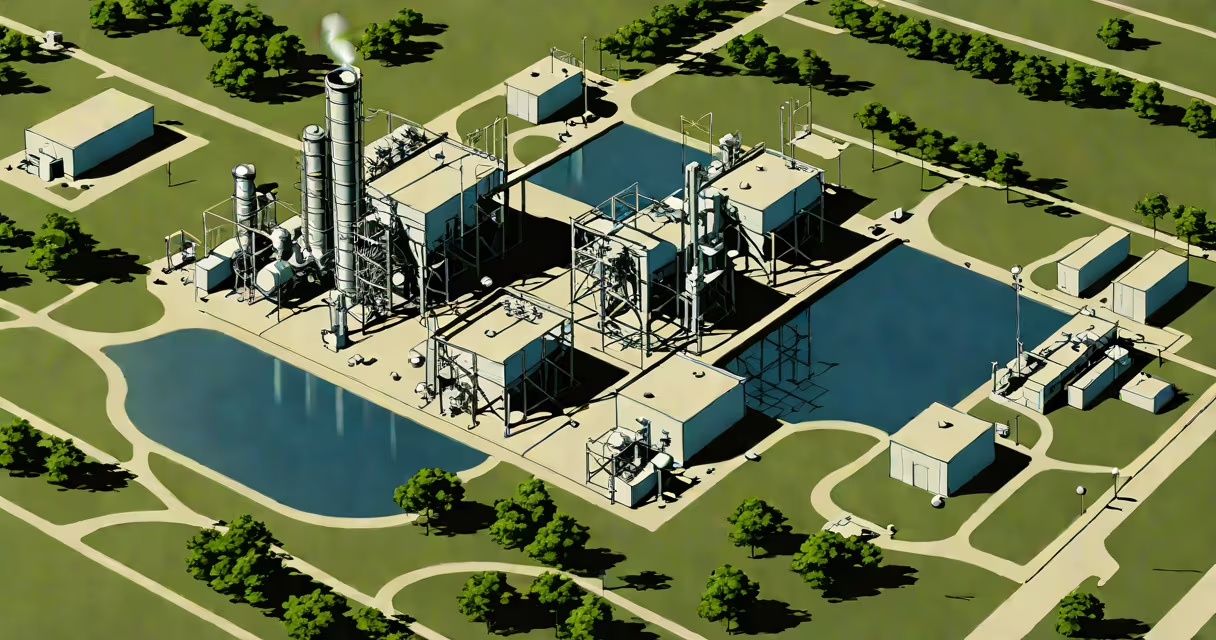
Hardin County Water District 1 is a publicly governed entity responsible for providing treated groundwater and surface water to residential, commercial, and industrial users within designated areas of Hardin County, Texas. It operates under the authority of the Texas Commission on Environmental Quality (TCEQ) and manages water rights, distribution systems, and conservation programs.
The district was established in 1955 under Chapter 44 of the Texas Water Code, which authorizes local entities to manage water resources in response to growing demand and declining aquifer levels. Its primary function is to ensure a reliable, safe, and sustainable water supply through infrastructure maintenance, regulatory compliance, and long-term planning.
Hardin County Water District 1 serves approximately 12,000 customers across unincorporated areas and municipalities such as Lumberton, El Campo, and parts of Liberty County. It draws water primarily from the Jasper Aquifer and the Gulf Coast Basin, both of which face stress due to over-pumping and climate variability. The district monitors water levels monthly and reports findings to the TCEQ annually.
Hardin County Water District 1 functions through a five-member board of directors elected by qualified voters within its boundaries. Directors serve four-year terms and meet quarterly to approve budgets, set rates, and review infrastructure projects. Decisions require a majority vote and are subject to state audit standards.
Day-to-day operations include monitoring well yields, maintaining pipelines, conducting water quality tests, and responding to outages. All drinking water samples are tested biweekly for coliform bacteria, nitrates, lead, and disinfection byproducts. Results are published online and submitted to the TCEQ under the Safe Drinking Water Act (SDWA).
For example, in 2022, the district detected elevated nitrate levels in Well 7B due to agricultural runoff. It responded by installing a reverse osmosis filtration system at the treatment plant, reducing nitrate concentration from 12 mg/L to 1.2 mg/L-well below the federal limit of 10 mg/L. This action prevented a boil-water advisory and maintained compliance with EPA standards.
The district owns and maintains over 180 miles of pipeline, 12 pumping stations, and three storage reservoirs. Most pipelines are made of ductile iron or PVC, with corrosion-resistant linings. Pipes are inspected every five years using acoustic leak detection and internal camera surveys.
Water sources are categorized into two types: groundwater and surface water. Groundwater accounts for 87% of supply, drawn from 22 active wells. Surface water, sourced from a nearby retention pond during wet seasons, makes up 13%. The district uses a tiered pumping schedule based on seasonal rainfall and aquifer pressure to reduce energy costs and prevent overdraft.
| Resource Type | Source Location | Supply Share | Testing Frequency |
|---|---|---|---|
| Groundwater | Jasper Aquifer wells (zones A-F) | 87% | Biweekly |
| Surface Water | Lumberton Retention Pond | 13% | Daily during flood season |
A non-obvious distinction: unlike many rural districts, Hardin County Water District 1 uses real-time SCADA (Supervisory Control and Data Acquisition) systems to monitor flow rates, pressure, and chemical levels. This allows automated adjustments during peak usage hours and rapid alerts during anomalies. The system integrates with the TCEQ's statewide water database, enabling cross-district coordination during drought emergencies.
Hardin County Water District 1 is often mistaken for private water providers or neighboring districts. It is not a franchise operated by a corporation. It is a governmental agency with taxing authority, rate-setting power, and legal liability for service failures. Unlike private utilities, it cannot declare bankruptcy or sell assets without legislative approval.
Another confusion arises between Hardin County Water District 1 and Hardin County Water District 2, which covers different watersheds and has separate governance. The two districts share no equipment or personnel. District 1 serves the northern portion of the county, while District 2 manages the southern region near the Sabine River.
Some residents assume their water is free because they pay property taxes. That is incorrect. Customers pay a monthly fee based on usage, metered in gallons. Rates average $3.20 per 1,000 gallons, with discounts for low-income households and senior citizens. The district offers a water budgeting tool online to help users track consumption and identify leaks.
In 2021, I visited the district's central treatment facility in Lumberton during a routine inspection. I observed a technician calibrate a turbidity sensor using a standard reference fluid. The sensor read 0.1 NTU (nephelometric turbidity units), meeting the EPA's requirement of ≤1.0 NTU for finished water. I also reviewed the 2023 annual report, which showed a 98.6% compliance rate with all federal and state water quality standards.
During a community forum, a resident asked whether the district planned to switch to desalination. The board clarified that seawater desalination is not feasible due to distance (over 80 miles from the coast) and high energy costs. Instead, the district is exploring managed aquifer recharge projects using reclaimed stormwater from nearby roads.
Hardin County Water District 1 exemplifies how localized, state-regulated water governance balances sustainability, equity, and infrastructure resilience. Its model supports long-term water security in a region vulnerable to drought and population growth. The district continues to update its master plan every five years, incorporating climate projections and stakeholder feedback.