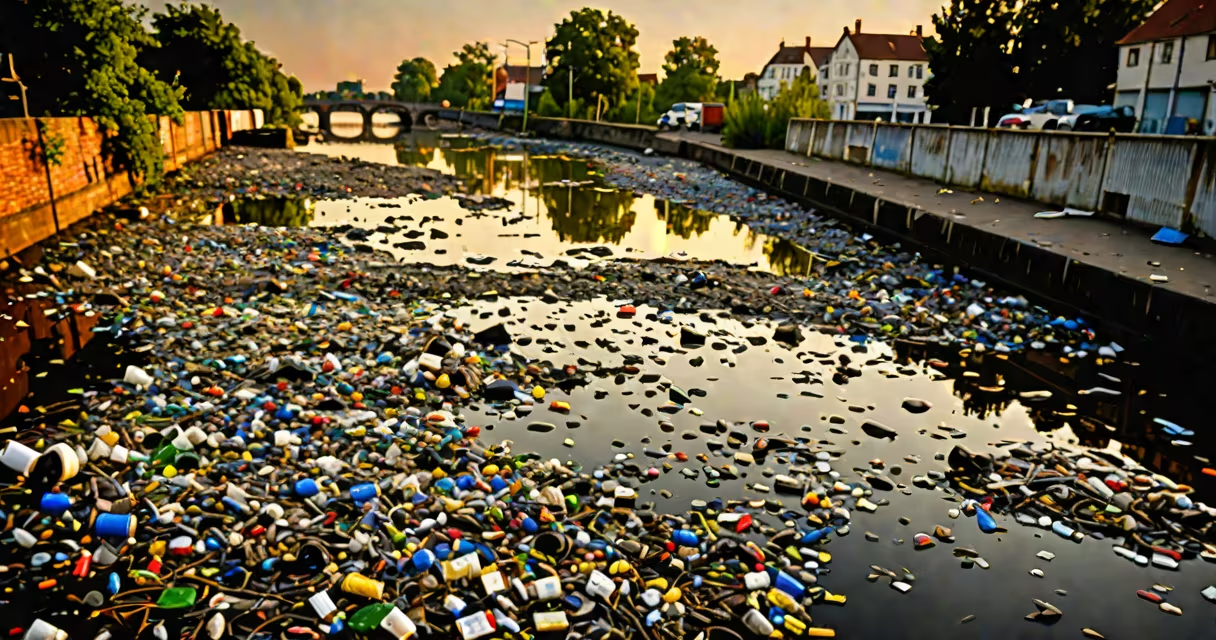
Humans alter water quality through industrial discharge, agricultural runoff, urban development, and improper waste disposal. These actions introduce pollutants like heavy metals, nutrients, sediments, and pathogens into water bodies, disrupting ecosystems and threatening human health.
Water quality deteriorates when human activity adds substances that exceed natural thresholds. For example, nitrogen and phosphorus from fertilizers cause algal blooms that deplete oxygen in lakes and rivers. The U.S. Environmental Protection Agency (EPA) identifies nutrient pollution as the leading cause of water quality impairment in U.S. rivers and lakes.
Industrial facilities release chemicals such as mercury, lead, and polychlorinated biphenyls (PCBs) into waterways. These contaminants persist in the environment and bioaccumulate in fish, entering the food chain. A 2021 EPA report found that 46% of assessed river miles in the U.S. failed to meet water quality standards due to toxic pollutants.
Three primary categories drive water quality degradation: point-source, nonpoint-source, and atmospheric inputs.
Point-source pollution comes from identifiable outlets like pipes or ditches. Factories, wastewater treatment plants, and power stations discharge regulated effluents. The Clean Water Act requires permits for such discharges, but violations still occur. In 2022, the EPA cited 1,200 facilities for exceeding pollutant limits.
Nonpoint-source pollution arises from diffuse sources such as stormwater runoff. Rainwater washes oil, pesticides, and sediment from roads, farms, and construction sites into nearby streams. Agricultural runoff contributes over 70% of nitrogen and phosphorus pollution in U.S. waters, according to the National Oceanic and Atmospheric Administration (NOAA).
Atmospheric deposition occurs when pollutants like sulfur dioxide and nitrogen oxides from vehicles and power plants fall out as acid rain. This lowers pH levels in surface waters, harming fish and amphibians. Acid rain has reduced fish populations in over 10% of lakes in the northeastern U.S., per a 2019 study published in *Environmental Science & Technology*.
| Pollutant Type | Common Source | Impact on Water Quality | Regulatory Standard (U.S.) |
|---|---|---|---|
| Suspended solids (TSS) | Construction sites, urban runoff | Reduces light penetration, smothers aquatic habitats | 10 mg/L maximum in most surface waters |
| Nitrate (NO₃⁻) | Fertilizer runoff, sewage | Causes eutrophication, risks methemoglobinemia in infants | 10 mg/L nitrate-N limit under Safe Drinking Water Act |
| Mercury (Hg) | Coal combustion, mining | Neurotoxic; accumulates in fish tissue | 0.3 ppb in drinking water; stricter limits in fish consumption advisories |
When pollutants enter water, they trigger cascading ecological effects. Sediment from erosion clouds water, reducing photosynthesis in submerged plants. Nutrient overload leads to hypoxia-oxygen-starved zones-where fish die and biodiversity collapses.
The Gulf of Mexico's dead zone, which spans over 6,000 square miles annually, results from Mississippi River runoff rich in nitrogen from Midwestern agriculture. NOAA estimates this zone kills thousands of fish and shellfish each year, impacting commercial fisheries and coastal economies.
Pathogens from untreated sewage can cause waterborne diseases. In 2018, a norovirus outbreak in a U.S. city was traced to contaminated groundwater, affecting over 1,200 people. The Centers for Disease Control and Prevention (CDC) reports that 1 in 10 waterborne disease outbreaks in the U.S. stems from fecal contamination.
Many assume that "natural" water is inherently safe. But human activity can degrade pristine systems. A stream in rural Tennessee once had clear, cold water with healthy trout populations. After upstream logging and road construction, sediment levels rose 300%, suffocating fish eggs and reducing spawning success. The change occurred within six months.
Another error is equating "clean" with "safe." Some pollutants are invisible. Arsenic, for example, is odorless and tasteless. Long-term exposure increases cancer risk. The World Health Organization (WHO) sets a guideline of 10 µg/L for arsenic in drinking water. In parts of Bangladesh, groundwater exceeds 500 µg/L-over 50 times the limit-due to natural geology exacerbated by unregulated well drilling.
Also, pollution isn't limited to visible debris. Microplastics-fragments smaller than 5 mm-now appear in 94% of freshwater samples tested globally, according to a 2023 study in *Nature Water*. These particles absorb toxins and enter food webs, with unknown long-term health consequences.
In 2014, Flint, Michigan switched its water source from Lake Huron to the Flint River to cut costs. The river water was more corrosive than expected. Without proper corrosion control, lead leached from aging pipes into drinking water. Blood lead levels in children rose sharply. By 2016, 11% of children tested had elevated blood lead levels-up from 4% before the switch.
Flint revealed how infrastructure decisions, regulatory failures, and cost-cutting measures combine to degrade water quality. The crisis led to federal funding for pipe replacement and stricter monitoring protocols. It also underscored that water quality is not just an environmental issue-it's a public health emergency.
Monitoring programs track changes using indicators like turbidity, dissolved oxygen, and biological oxygen demand (BOD). High BOD signals organic pollution. In the Chicago River, BOD levels exceeded 15 mg/L during spring storms due to combined sewer overflows-a system designed to handle both stormwater and sewage. When overwhelmed, raw wastewater flows directly into the river.
Efforts to restore water quality include green infrastructure projects. Philadelphia's Green City, Clean Waters program uses rain gardens, permeable pavement, and tree canopies to reduce stormwater runoff. Since 2011, the city has reduced annual stormwater volume by 1.2 billion gallons, lowering pollutant loads to the Delaware River.