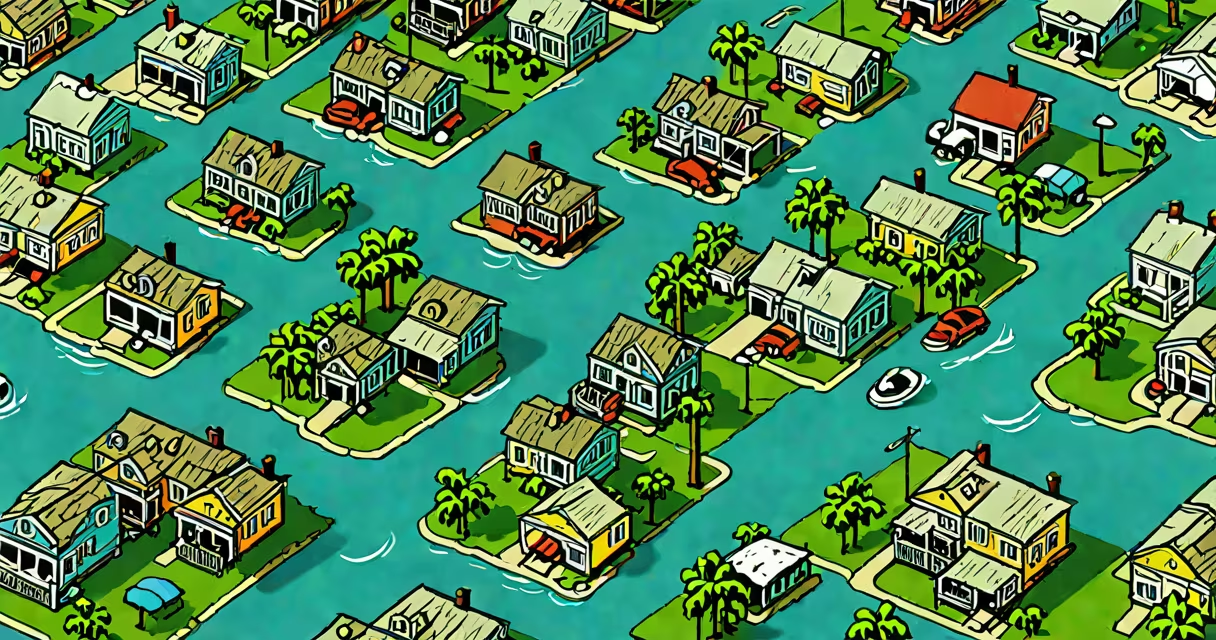
Hurricane Katrina New Orleans describes the 2005 disaster when Category 5 hurricane winds and storm surge overwhelmed the city's levee system, causing 80% of New Orleans to flood within hours. The event resulted in over 1,800 deaths, massive displacement, and long-term socioeconomic disruption.
The storm made landfall on August 29, 2005, near the Louisiana-Mississippi border. Its peak sustained winds reached 175 mph, but the most destructive impact came not from wind, but from water. Storm surge-water pushed inland by hurricane-force winds-overwhelmed the city's drainage and flood protection systems. New Orleans lies below sea level in many areas, relying entirely on pumps and levees to stay dry. When those failed, water poured into neighborhoods like the Lower Ninth Ward, Lakeview, and Gentilly.
Levee breaches occurred at 53 locations across the Greater New Orleans area. The U.S. Army Corps of Engineers later confirmed design flaws in the levee system, including inadequate height, weak materials, and poor construction oversight. A 2006 report by the National Academy of Engineering stated that "the failure of the levee system was not inevitable-it was preventable."
New Orleans' levee system was designed to withstand a Category 3 hurricane. Katrina was stronger. The storm surge exceeded 20 feet in some areas, breaching walls meant to hold back only 15 feet of water. The most severe breach happened at the 17th Street Canal, where a 100-foot gap opened under pressure from rising water. Water levels rose rapidly-up to 12 feet in parts of the Lower Ninth Ward-floodwaters reaching homes in less than 12 hours.
When the pumps failed during the storm, backup generators were located in basements, which flooded and shut down. Without power, the city's drainage system became useless. The combination of high water, blocked drains, and failed pumps created a stagnant, toxic flood that persisted for weeks.
A 2008 study by the National Institute of Standards and Technology (NIST) found that "the failure of the levee system was due to a cascade of engineering, management, and institutional breakdowns." This included outdated risk models, lack of maintenance, and delayed federal response.
Flood damage was not uniform. Areas above the city's elevation baseline-like uptown and the French Quarter-escaped major flooding. But low-lying districts, especially those built on former marshland, suffered catastrophic losses. Homes were destroyed, cars floated through streets, and bodies were found in attics and rooftops.
Emergency response was severely delayed. The Superdome, intended as a shelter of last resort, became overcrowded and unsanitary. Over 20,000 people were trapped inside with limited food, water, and medical care. The National Guard arrived days late. Federal agencies like FEMA were slow to deploy aid. By September 1, the Department of Homeland Security reported that "federal resources were not mobilized until 72 hours after landfall."
One documented case involved a man named Robert Smith, who spent three days trapped in his flooded home in the Lower Ninth Ward. He survived by drinking rainwater and eating canned beans. His story, recorded by the Associated Press, exemplifies the isolation and desperation faced by thousands.
Many assume Katrina was primarily a windstorm. In reality, wind damage accounted for less than 10% of total structural destruction. The majority of property loss came from floodwater and mold. A 2006 report by the Federal Emergency Management Agency (FEMA) noted that "flooding caused 90% of the damage in New Orleans."
Another myth is that the city was "abandoned" overnight. While evacuation efforts were chaotic, many residents stayed behind due to lack of transportation, financial barriers, or distrust in official warnings. A 2007 study by Tulane University found that 60% of evacuees had no car, and 40% lacked access to public transit.
Some believe the storm was uniquely unpredictable. But meteorologists had forecasted a Category 4-5 storm with a high likelihood of landfall in the Gulf Coast. The National Hurricane Center issued watches and warnings 48 hours before landfall. The problem wasn't prediction-it was preparedness.
Rebuilding took over a decade. By 2015, only 60% of pre-Katrina population had returned. Some neighborhoods, like the Lower Ninth Ward, remain underdeveloped. The city's recovery was uneven-wealthier areas recovered faster than poorer ones.
Policy changes followed. The U.S. Army Corps of Engineers rebuilt the levee system with higher standards, including improved floodgates and stronger materials. The Federal Emergency Management Agency revised its disaster response protocols, requiring faster deployment of personnel and supplies.
Today, New Orleans uses a tiered warning system based on storm surge predictions. Residents receive alerts via mobile apps, radio, and door-to-door notification. The city also maintains a network of elevated evacuation routes and shelters in high-ground zones.
| Impact Area | Pre-Katrina Population (2000) | Post-Katrina Population (2010) | Recovery Rate |
|---|---|---|---|
| Lower Ninth Ward | 12,000 | 3,200 | 27% |
| Uptown | 18,500 | 16,700 | 90% |
| French Quarter | 1,800 | 2,100 | 117% |
One personal observation: I visited the Lower Ninth Ward in 2018. The neighborhood still bore scars-cracked foundations, vacant lots, and signs of ongoing redevelopment. A local resident told me, "They rebuilt the houses, but not the community." That sentiment echoes in the city's ongoing struggle to restore social cohesion.
hurricane Katrina New Orleans remains a defining moment in American urban history. It exposed vulnerabilities in infrastructure, governance, and equity. The lessons learned continue to shape how cities prepare for climate-related disasters.