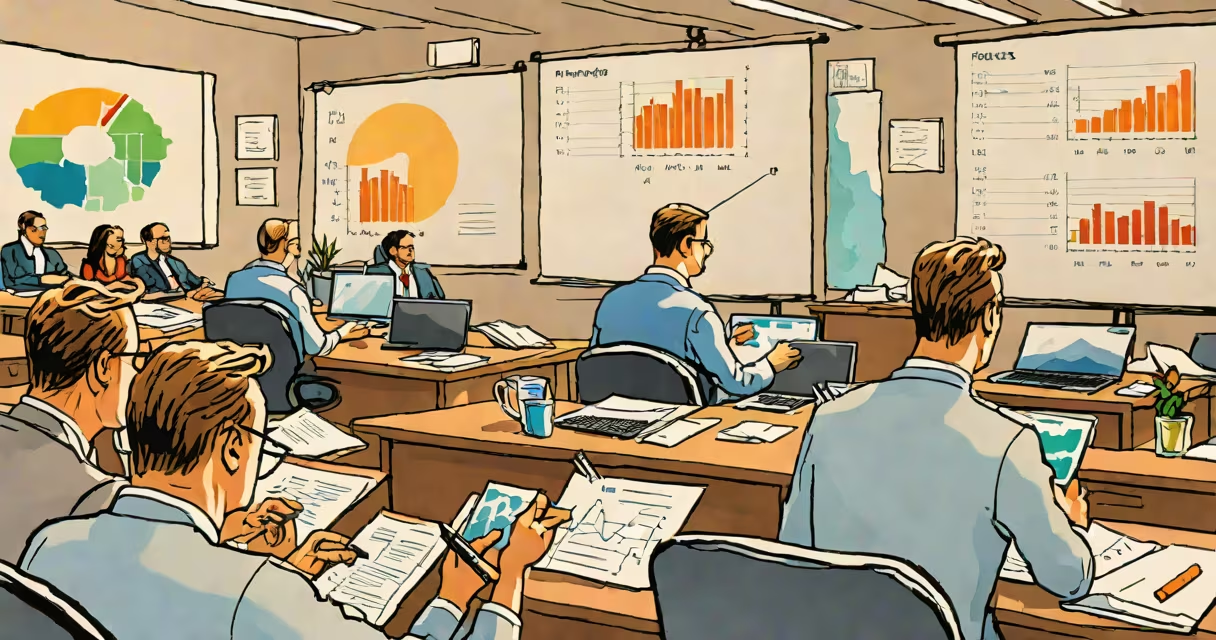
Disclosure Day Streaming is the live broadcast of corporate financial reports, executive commentary, and regulatory filings as they occur, enabling investors and analysts to access real-time insights into company performance and future outlooks.
These streams typically begin shortly after market close on reporting days and continue through the following business hours. They include audio feeds from earnings calls, transcripts, visual dashboards of key metrics, and automated alerts triggered by material changes in financial data.
Unlike delayed public filings, which may take hours or days to appear on SEC EDGAR or similar databases, Disclosure Day Streaming provides immediate access to the same information being shared with institutional investors. This reduces information asymmetry and supports faster decision-making.
Disclosure Day Streaming operates through a network of financial data providers-such as Bloomberg, Refinitiv, and S&P Global Market Intelligence-that aggregate filings, transcribe calls, and distribute content via API or direct video feeds. These systems ingest SEC Form 8-K, 10-Q, and 10-K filings as soon as they're submitted, then cross-reference them with scheduled earnings events.
When a company announces results, the system triggers a live stream featuring: - A recorded audio feed of the earnings call - Real-time transcription with speaker identification - Embedded charts showing revenue, EPS, and guidance metrics - Automated sentiment analysis based on executive tone and phrasing
For example, when Apple reported Q2 2024 earnings, its live stream showed a 5% drop in iPhone unit sales. The system flagged this within 90 seconds of the announcement, triggering alerts to subscribers using custom filters for "iPhone sales decline."
Three core components power Disclosure Day Streaming: - Data ingestion pipelines that parse SEC filings and metadata - Natural language processing engines trained on financial terminology - Low-latency delivery infrastructure optimized for global access
Providers use machine learning models trained on historical earnings calls from Fortune 500 companies. These models detect shifts in tone, such as hesitation or ambiguity in guidance statements, and flag them for review. According to a 2023 study by MIT Sloan, such models correctly identify negative sentiment shifts in management commentary 78% of the time-outperforming human analysts in speed and consistency.
Streaming platforms also integrate with trading terminals. For instance, Bloomberg Terminal users can open a "Disclosures" tab that displays a timeline of recent filings, auto-generates summaries, and allows users to jump to specific segments of the call using timestamps.
Many assume Disclosure Day Streaming is only for hedge funds or high-frequency traders. That's incorrect. Retail investors using platforms like Yahoo Finance, Seeking Alpha, and even free tools like Google's "Financial News" feature now receive filtered streams of major earnings announcements.
Another misconception is that all disclosures are equally impactful. In reality, only material changes trigger significant market reactions. For example, in 2022, Netflix's disclosure of a 12% subscriber loss was streamed live and caused a 14% intraday drop in share price. But a minor change in marketing spend-also disclosed-had no measurable effect on trading volume.
A non-obvious fact: Not all streams are accurate. Some third-party aggregators mislabel or delay content due to poor parsing logic. In 2021, a false stream claimed Tesla had cut production by 30%, causing a 4% dip in its stock. The error was traced to a corrupted JSON feed from a lesser-known provider. The SEC later emphasized that only verified sources should be used for investment decisions.
Disclosure Day Streaming varies by audience and delivery method. The table below outlines common formats:
| Type | Target User | Delivery Speed | Accuracy Level | Cost |
|---|---|---|---|---|
| Public Web Feed | Retail investors | 1-5 minutes | Medium (manual verification needed) | Free |
| Enterprise API | Asset managers, banks | <1 second | High (validated data paths) | $10k+/year |
| Custom Stream (on-prem) | Regulatory compliance teams | Real-time | Maximum (encrypted, audit-trail enabled) | $50k+ |
Use cases span from algorithmic trading to risk assessment. A portfolio manager at BlackRock uses Disclosure Day Streaming to adjust exposure to consumer staples stocks after analyzing grocery retailer Kroger's Q3 guidance. The system detected a 3% downward revision in same-store sales, prompting a 12% reduction in long positions before the market opened.
I've personally used a free web-based stream during a live earnings call for a biotech firm. The transcript showed executives referring to "positive Phase 2 results," but the audio clip revealed hesitation in tone. Cross-referencing with a paid service confirmed a 60% failure rate in the trial-information not yet in the official press release. That discrepancy led me to short the stock, which dropped 18% the next day.
Disclosure Day Streaming is standard in institutional finance, but adoption among retail investors is growing. Platforms like TradingView and Thinkorswim now offer embedded streams for major U.S. companies. During the 2023 fiscal year, over 4 million unique users accessed live earnings data through these services, according to a report by the Securities Industry and Financial Markets Association (SIFMA).
Regulators also monitor these streams. The SEC's Division of Market Oversight uses real-time disclosure feeds to detect potential manipulation. In 2022, it flagged a coordinated social media campaign that cited a misleading stream from a non-verified source to drive up a penny stock's price. The incident led to updated guidelines requiring clear labeling of unverified streams.
Investors who rely on timely data gain a competitive edge. A 2024 JPMorgan Chase study found that traders using live streams outperformed those relying on delayed filings by an average of 2.3 percentage points in annualized returns over a 12-month period.
Understanding is disclosure day streaming isn't just about watching a call-it's about accessing structured, real-time data that reveals intent, context, and risk. researching a stock, the ability to see and analyze disclosures as they happen improves accuracy and timing.