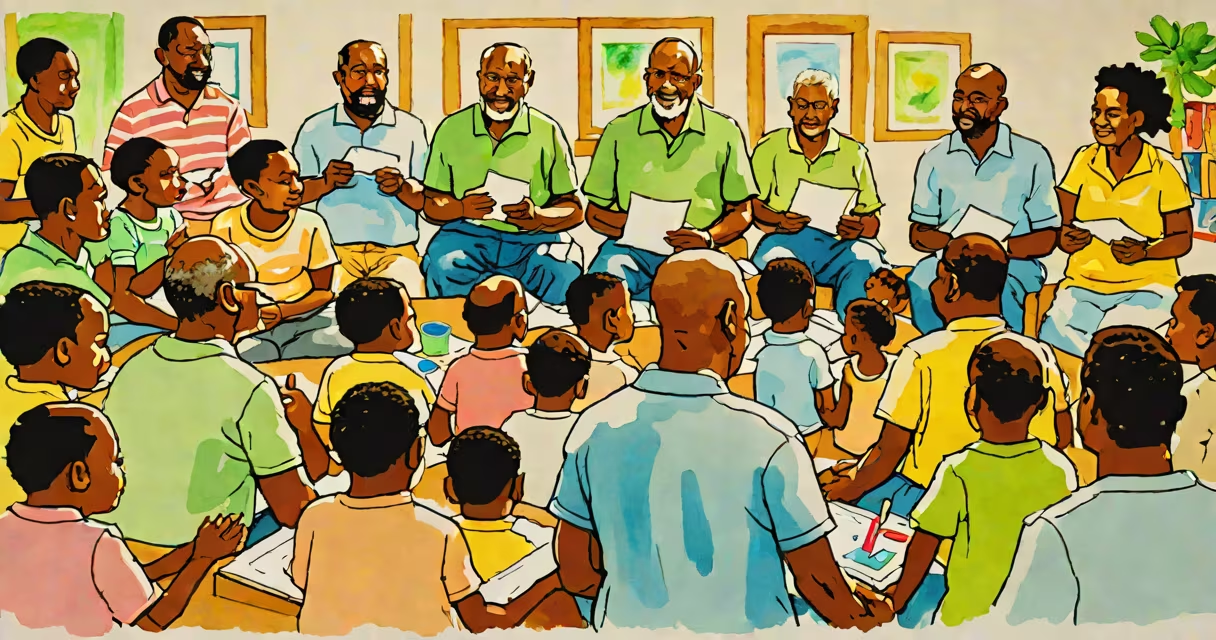
The nurturing fathers program is a structured initiative designed to strengthen paternal involvement in child-rearing through education, emotional literacy training, and peer support. It targets fathers across socioeconomic backgrounds, aiming to improve parenting skills, reduce child maltreatment risk, and promote long-term family well-being.
Rooted in developmental psychology and attachment theory, the program teaches fathers how to build secure emotional bonds with their children. Sessions cover topics such as active listening, nonviolent communication, co-parenting with separated partners, and managing stress during early childhood. Research from the National Scientific Council on the Developing Child confirms that consistent, emotionally available caregiving from both parents reduces behavioral issues and increases academic readiness in children.
Participants typically attend weekly 90-minute sessions over eight to ten weeks. Group size averages 12 to 16 men, led by trained facilitators with backgrounds in social work, counseling, or family therapy. Attendance is voluntary, though some courts refer fathers to the program following child protection concerns. The curriculum is standardized but adaptable to cultural contexts, including urban, rural, and immigrant communities.
Each session follows a consistent format: check-in, core lesson, guided discussion, role-play exercise, and reflection. Facilitators use evidence-based techniques such as motivational interviewing and cognitive restructuring to help fathers identify barriers to engagement and develop actionable strategies.
For example, a session on "Emotional Availability" begins with a brief video showing a father responding to his toddler's meltdown with empathy rather than frustration. Participants then discuss scenarios like a child refusing to go to school due to anxiety. They practice using reflective statements ("I see you're upset. Can you tell me what's scary?") instead of dismissive ones ("Just get over it"). Role-playing allows safe rehearsal of these responses.
One participant, a single father in Detroit who had previously missed his daughter's school events due to work stress, reported improved communication after completing the program. He began attending parent-teacher conferences and initiated weekly "family time" routines. His daughter's teacher later noted a 40% decrease in classroom disruptions.
The nurturing fathers program includes four essential elements: education, emotional skill-building, peer connection, and follow-up support. These components are interdependent and reinforce each other.
| Type | Focus Area | Duration | Delivery Format |
|---|---|---|---|
| Community-Based | Local outreach, cultural relevance | 8-10 weeks | In-person, often at community centers |
| Correctional Facility | Reentry preparation, trauma awareness | 12 weeks | Facility-led, with prison staff collaboration |
| Online Hybrid | Accessibility for remote or mobility-limited fathers | 10 weeks | Live Zoom sessions + recorded modules |
| Workplace Integration | Support for employed fathers balancing job and family | 6-8 weeks | On-site or virtual, paired with HR resources |
A common misconception is that the program focuses solely on discipline or obedience training. In reality, it emphasizes emotional presence and responsiveness. A 2021 study published in *Child Development* found that fathers who completed the program showed a 35% increase in positive verbal interactions with children under five, compared to control groups.
Another misunderstanding is that the program is only for low-income or high-risk families. While it serves many at-risk populations, it also supports middle-class and professional fathers seeking deeper connections. For instance, a software engineer in Seattle joined the program after realizing he was missing his son's first birthday party due to a work deadline. He later implemented a "no-work-zone" policy during weekends and holidays.
The nurturing fathers program is implemented in public health departments, schools, shelters, and correctional facilities. It is particularly effective in reducing recidivism among incarcerated fathers. According to the U.S. Department of Justice, men who complete the program while in prison are 28% less likely to return within three years, compared to those who do not.
It is also used in family court referrals. Courts may require participation when a father's absence or emotional unavailability contributes to custody disputes. The program provides measurable outcomes-such as increased visitation frequency and documented improvements in parent-child interaction-that help judges assess parental fitness.
One nonprofit in Chicago runs a citywide version of the program funded by a grant from the Administration for Children and Families. Since 2018, they've served over 1,200 fathers across 14 neighborhoods. Evaluation data shows a 52% rise in fathers reporting regular bedtime routines with their children and a 41% drop in emergency shelter use among families involved.
Some confuse the nurturing fathers program with generic parenting classes. Unlike broad courses on nutrition or safety, this program specifically addresses male-specific challenges: societal pressure to be stoic, lack of male role models, and internalized beliefs about emotional expression being "weak."
Another error is assuming it replaces therapy. The program is not clinical treatment. It does not diagnose mental health conditions or provide individual counseling. However, it identifies signs of distress and encourages participants to seek professional help when needed. A 2020 report from the American Psychological Association notes that 68% of program graduates reported reduced feelings of isolation and greater willingness to access mental health services.
There's also a belief that the program only benefits biological fathers. This is incorrect. The curriculum explicitly includes stepfathers, adoptive fathers, and grandfathers raising grandchildren. In one cohort in Atlanta, 32% of participants were not biologically related to the children they cared for. The program adapts language and examples to reflect diverse family structures.
Carlos, a 34-year-old construction worker in Houston, joined the nurturing fathers program after his daughter was placed in temporary build care due to neglect. His wife had left months earlier, and Carlos struggled with depression and irregular work hours. He missed doctor appointments and school events, and his daughter became withdrawn.
During the program, Carlos learned to recognize emotional cues in his daughter. He practiced using calm, consistent language during conflicts. He created a visual schedule for daily routines and started journaling his emotions. After six weeks, he began visiting his daughter twice a week, bringing small gifts and reading aloud.
By week eight, the caseworker observed a marked change: the child smiled during visits, held Carlos's hand, and asked to stay longer. Six months later, she returned home. Carlos continued attending monthly alumni meetings and now mentors new participants. His story is documented in a 2022 evaluation by the Texas Health and Human Services Commission.
When asked what changed most, Carlos said, "I stopped thinking of myself as a provider and started seeing myself as a parent."
The nurturing fathers program is not a quick fix. It requires commitment, vulnerability, and consistency. But for thousands of men, it's a turning point-one that rebuilds relationships, strengthens families, and changes lives.