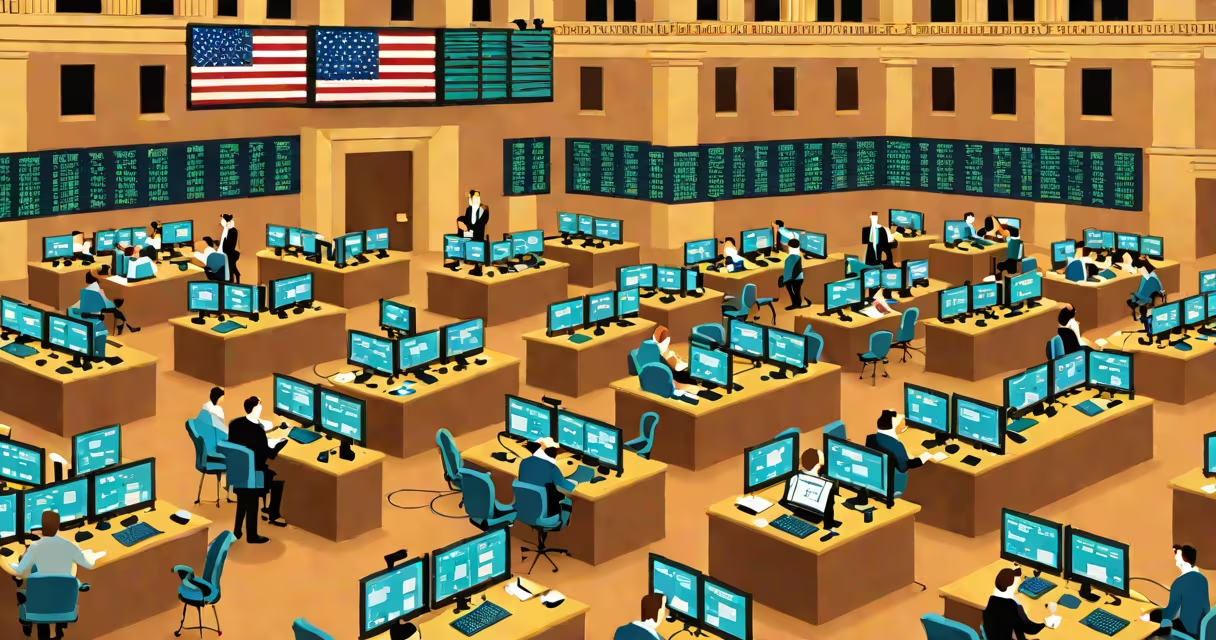
The NYSE trading day runs from 9:30 AM to 4:00 PM Eastern Time, Monday through Friday, during regular market sessions. It excludes federal holidays and scheduled closures. This window defines when equities listed on the New York Stock Exchange trade actively.
Trading begins with a pre-market session from 4:00 AM to 9:30 AM ET, where institutional orders and algorithmic strategies execute. The official open occurs at 9:30 AM ET, when the exchange's electronic trading system activates. The market closes at 4:00 PM ET, following a final auction phase that settles prices for the day. After-hours trading continues from 4:00 PM to 8:00 PM ET, though volume and liquidity drop sharply.
Market participants include institutional investors, high-frequency traders, retail brokers, and market makers. Orders flow through the NYSE's hybrid system, which combines electronic platforms with floor-based specialists who manage order books for specific stocks. For example, on a typical trading day, Apple (AAPL) sees over 10 million shares traded within the first hour after the open, reflecting immediate price discovery based on incoming news and investor sentiment.
The NYSE operates on Eastern Time (ET), aligning with U.S. financial hubs. The standard session spans 6.5 hours daily. The pre-market opens at 4:00 AM ET, allowing early access to global news and earnings reports. The regular session starts at 9:30 AM ET, the most volatile period due to high participation. The close at 4:00 PM ET triggers settlement processes and triggers algorithmic exits.
After-hours trading extends until 8:00 PM ET, but spreads widen and bid-ask gaps increase. A single share of Tesla (TSLA) may move $1.50 in the after-hours session on a quiet day, compared to $0.20 during regular hours. This reduced efficiency makes after-hours trades riskier for retail investors.
On average, the NYSE sees 2.3 billion shares traded daily during the regular session. Volume spikes during economic data releases-such as the monthly jobs report-where trading activity can surge 40% above baseline levels.
The NYSE observes nine official holidays each year. On these days, the exchange closes early or remains closed entirely. Examples include New Year's Day, Martin Luther King Jr. Day, Presidents' Day, Good Friday, Memorial Day, Independence Day, Labor Day, Thanksgiving, and Christmas. The exchange also closes early on the day before certain holidays, such as Christmas Eve and New Year's Eve.
When a holiday falls on a weekend, the exchange typically moves the closure to the nearest weekday. For example, if New Year's Day lands on a Saturday, the holiday is observed on the following Monday. This ensures consistent scheduling for market participants.
Many assume the NYSE trading day ends at 4:00 PM ET with no further activity. In reality, clearing and settlement continue past the close. The Depository Trust & Clearing Corporation (DTCC) processes trades through the end of the business day, with final settlement occurring T+2 (two business days after trade date).
Another misconception is that all U.S. exchanges follow the same schedule. The NASDAQ operates on the same core hours but has different volatility patterns due to its electronic-only structure. For example, on a day with a major tech earnings release, NASDAQ stocks like Nvidia (NVDA) often see faster price reactions than NYSE-listed stocks, even though both markets open and close simultaneously.
A lesser-known fact: the NYSE allows "special opening" procedures when extreme volatility or technical failures occur. During the 2020 market crash, the exchange paused trading in several stocks for 15 minutes to allow order book stabilization. These pauses are rare but legally permitted under SEC Rule 611.
| Session Type | Time Range (ET) | Typical Volume Share | Volatility Level |
|---|---|---|---|
| Pre-market | 4:00 AM - 9:30 AM | 12% | Low to moderate |
| Regular trading | 9:30 AM - 4:00 PM | 85% | High |
| After-hours | 4:00 PM - 8:00 PM | 3% | Very high |
Understanding the NYSE trading day is essential for accurate timing in strategy execution. The exchange's schedule is published annually by the NYSE Regulation division and verified by the Securities and Exchange Commission (SEC). According to the SEC's 2022 Market Structure Report, 98.7% of NYSE trades settle on time, underscoring the reliability of the established trading day structure.
Knowing when the NYSE trading day begins and ends prevents missed opportunities and reduces exposure to illiquid conditions. Traders who align their entry and exit points with the official session hours improve execution consistency and reduce slippage risk.