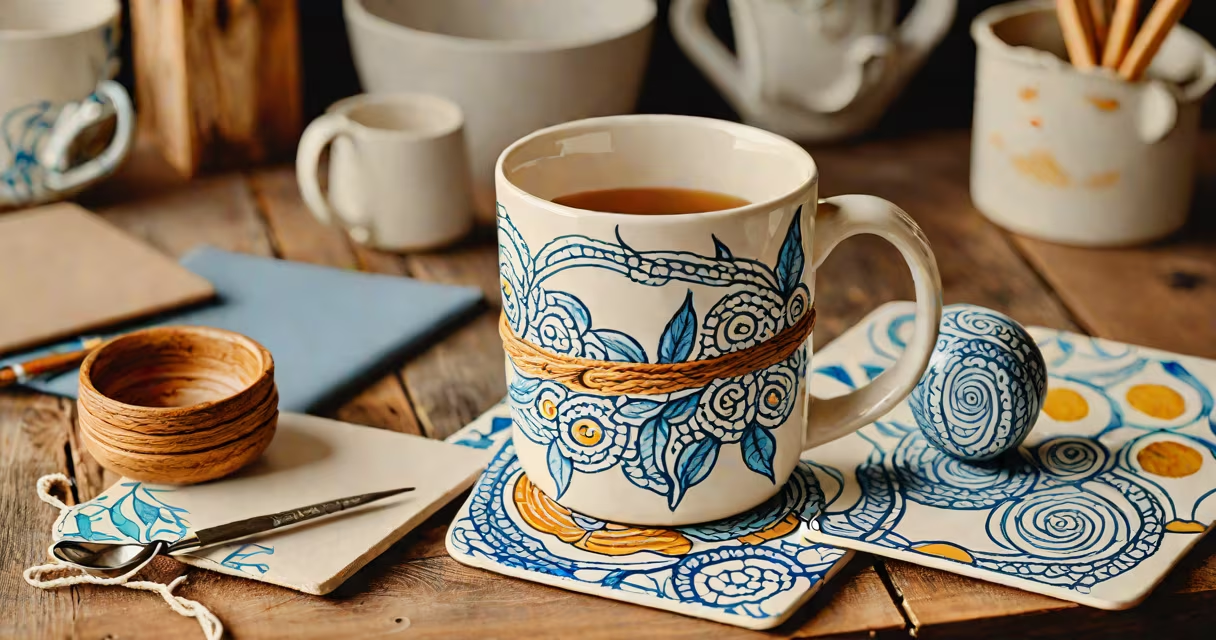
Popular crafts to sell are handmade items with consistent consumer demand, low material costs, and strong visual appeal-such as personalized jewelry, hand-poured candles, and knit accessories. These products often generate repeat customers due to their emotional resonance and practical utility.
These crafts succeed because they combine personalization, aesthetic quality, and affordability. A customer buys a candle not just for light but for mood, memory, and ambiance. A knitted scarf serves warmth and style while reflecting the maker's attention to detail. The most successful sellers focus on niche markets: pet lovers, plant parents, or fans of specific music genres.
According to the U.S. Small Business Administration, 62% of small craft businesses report profits within the first year when they target specific buyer personas. Etsy's 2023 seller survey found that handmade candles, custom name necklaces, and seasonal home décor consistently rank among the top 10 best-selling categories, with average prices between $15 and $45.
Each item functions as both a product and a story. A hand-dyed silk scarf isn't just fabric-it's a piece of art tied to a specific dye technique, such as shibori or ikat. When sold with a card explaining the process and cultural origin, it becomes more valuable than mass-produced alternatives.
Profit margins depend on material cost, labor time, and perceived uniqueness. For example, a single soy wax candle using 4 oz of wax, 10 ml essential oil, and a cotton wick costs about $2.50 to make. Selling it for $18 nets a gross profit of $15.50 per unit. At 10 units per week, that's $620 in monthly revenue before fees and shipping.
Success hinges on consistency. A seller who makes 12 candles weekly with a repeating design-like "forest mist" with pine and cedar scents-builds brand recognition. Repeat buyers return for new seasonal scents, increasing lifetime value.
The most frequently sold handmade items fall into five categories based on sales volume and ease of entry:
| Type | Material Cost (avg) | Time to Make (avg) | Top Platforms | Best For |
|---|---|---|---|---|
| Personalized Jewelry | $3-$8 | 15-30 min | Etsy, Instagram, Shopify | Gifts, birthdays, anniversaries |
| Hand-Poured Candles | $2-$5 | 20-40 min | Etsy, Amazon Handmade, Facebook Marketplace | Seasonal gifting, home decor |
| Knit & Crochet Accessories | $4-$10 | 1-3 hours | Etsy, Ravelry, local markets | Weather-appropriate wear, gifts |
| Custom Art Prints | $1-$3 | 1 hour (design only) | Redbubble, Society6, Etsy | Home walls, office spaces |
| Wooden Home Décor | $5-$12 | 30-60 min | Etsy, Facebook Groups, craft fairs | Wall shelves, signs, coasters |
These categories share a pattern: low overhead, high perceived value, and strong social media visibility. A handmade wooden sign with a quote like "This is my happy place" sells well during holidays and on Pinterest.
Buyers seek authenticity and connection. A 2022 Pew Research Center study found that 68% of U.S. adults prefer buying from small makers over big retailers when the product feels unique. This preference holds especially true for gifts and home décor.
Platforms like Etsy and Instagram amplify reach. On Etsy, search terms like "personalized dog necklace" or "candle for anxiety relief" drive traffic. Sellers who use specific keywords in titles and descriptions see 3x higher click-through rates than those using generic terms.
Local craft fairs remain effective despite online competition. At a farmers market in Portland, Oregon, a seller of hand-stitched leather keychains reported selling 25 units in four hours-each priced at $22. The average transaction included a second purchase, indicating strong impulse buying driven by tactile experience.
Many new craft sellers assume that high-quality materials automatically lead to high sales. That's false. A $50 resin ring with flawless details may not sell if it lacks a narrative or emotional hook. Buyers don't pay for materials-they pay for meaning.
A common error is overpricing based on time spent. One seller spent 12 hours making a crocheted blanket and priced it at $120. After six months, it remained unsold. Repriced at $75 with a photo showing it on a bed and a caption like "Made for cold winter nights," it sold in three days.
Another mistake is ignoring platform-specific norms. On Instagram, users expect quick visuals and hashtags. On Etsy, detailed listings with multiple photos and bullet points outperform minimalist ones. According to Etsy's 2023 Seller Handbook, listings with five or more images receive 40% more views.
In 2021, Sarah M., a freelance graphic designer from Austin, Texas, began selling candles under the brand "Mist & Memory." She used a simple recipe: soy wax, 100% cotton wicks, and essential oils. Her initial batch used lavender, eucalyptus, and vanilla-scents associated with calm and sleep.
She photographed each candle in a room with soft lighting, added a handwritten label with the scent name and a short poem. She listed them on Etsy with titles like "Sleep Ritual - Lavender & Vanilla Candle."
Within 90 days, she sold 142 units. Her average rating rose to 4.9 stars. By month six, she expanded to seasonal scents-"Autumn Leaves" (cinnamon and apple) and "Winter Solstice" (pine and amber)-and launched a subscription box. Revenue reached $3,800/month by year-end.
Her success came not from rare ingredients but from storytelling, consistent branding, and understanding buyer psychology. She didn't just sell candles-she sold moments of peace.
They are not limited to expensive tools or formal training. You don't need a kiln to make ceramics or a sewing machine to create quilts. Many top sellers start with basic supplies: a hot glue gun, scissors, and a microwave-safe bowl.
They are also not all high-margin. A handmade soap bar costing $1.20 to make and selling for $8.50 yields a 77% profit margin. But a $50 hand-carved wooden spoon with a complex design may only net $25 after materials and labor-making it less scalable.
Finally, popular crafts to sell are not always trendy. A 2023 study by the Craft Council found that items with timeless appeal-like hand-stitched notebooks or reusable cloth bags-outlast seasonal fads. They generate steady income over years, unlike limited-run holiday items.