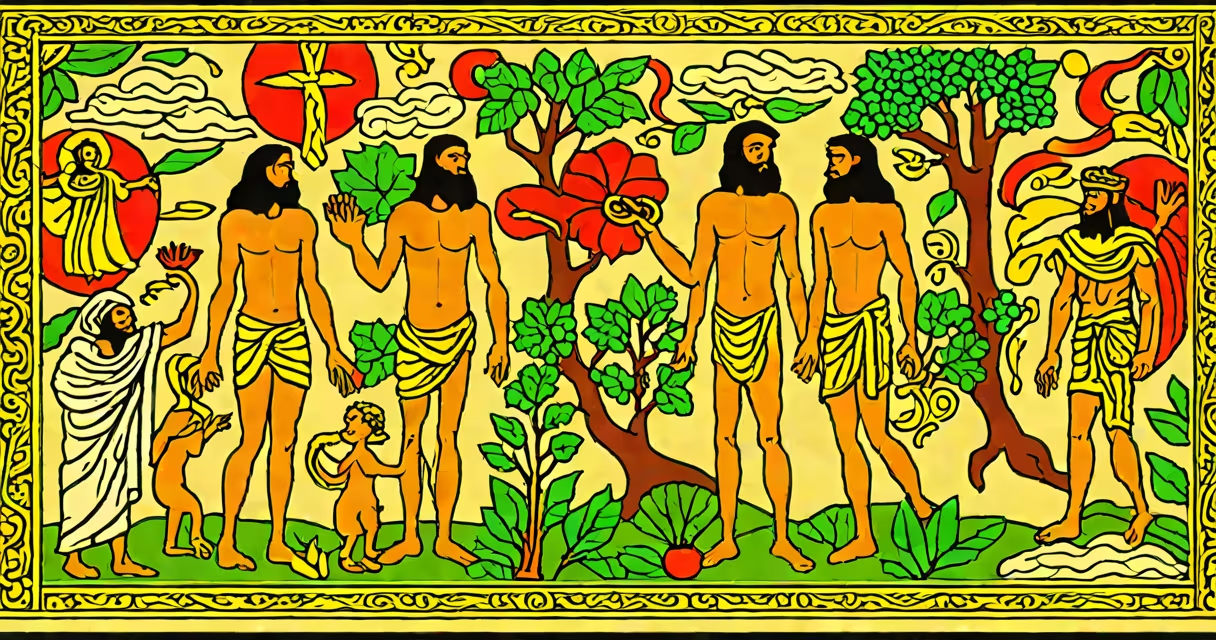
In the Bible, "mankind" refers to all human beings created in the image of God, distinct from animals and angels, and entrusted with stewardship over creation. This concept appears most in Genesis 1:26-27, where God says, "Let us make mankind in our image, in our likeness."
The Hebrew word for mankind in Genesis is *'ādām*, which originally denotes the first human, Adam, but expands to include all people. This term carries both biological and spiritual significance-it identifies humans as physical beings formed from dust, yet also as moral agents capable of relationship with God.
Modern translations often render *'ādām* as "man," "humankind," or "people," depending on context. The King James Version uses "man" throughout, while the New International Version consistently translates it as "mankind" or "humanity." This variation reflects differing interpretive traditions and linguistic choices across denominations.
Mankind in the Bible is not a passive category. It is actively shaped by divine intention. In Genesis 1:26-27, God creates mankind with authority over the earth: "God blessed them and said to them, 'Be fruitful and increase in number; fill the earth and subdue it.'" This command establishes mankind's role as caretakers, not owners, of creation.
When Adam and Eve disobey God in Genesis 3, the consequences extend beyond them individually. The fall affects all of mankind-sin enters the world through one man, Paul writes in Romans 5:12. This establishes a collective responsibility: human nature is flawed not because individuals fail, but because the entire human condition is impacted by disobedience.
Later biblical texts reinforce this idea. Psalm 8:4-6 reflects on mankind's dignity: "What is mankind that you are mindful of them, human beings that you care for them?" Despite being small compared to the cosmos, mankind holds unique status due to divine favor and purpose.
Biblical mankind is composed of both physical and spiritual elements. Genesis 2:7 states, "Then the Lord God formed a man from the dust of the ground and breathed into his nostrils the breath of life, and the man became a living being." This dual origin-clay and spirit-defines human identity throughout Scripture.
Hebrew theology sees humans as *tselem* (image) and *demut* (likeness) of God. These terms imply resemblance in function, not form. Humans reflect God's attributes through reasoning, creativity, morality, and relational capacity-not through appearance.
Christian doctrine later formalized this idea. Augustine wrote in *City of God* (Book 14, Chapter 1): "Man was made in the image of God, not in bodily form, but in soul and intellect." This interpretation influenced centuries of Christian thought on human dignity and free will.
Mankind appears in 163 verses across the Old and New Testaments. Its usage varies by book and context:
| Book | Usage Frequency | Primary Theme |
|---|---|---|
| Genesis | 34 times | Creation, dominion, sin |
| Psalms | 28 times | Dignity, prayer, divine awareness |
| Romans | 15 times | Original sin, redemption, salvation |
| Job | 12 times | Suffering, questioning God's justice |
These patterns show that "mankind" is not just a demographic label. It functions as a theological category-representing humanity's origin, failure, and potential for restoration.
For example, in Ecclesiastes 1:2, the author declares, "Meaningless! Meaningless! Everything is meaningless." The Hebrew word *hebel*-translated as "meaningless"-refers to the futility of human effort apart from God. Here, mankind's pursuit of lasting achievement is shown to be empty without divine purpose.
Many assume "mankind" in the Bible refers exclusively to men. This is incorrect. While the word *'ādām* can refer to a single male, its broader usage includes women and all people. Genesis 5:2 confirms this: "When God created mankind, he made them in the likeness of God." The plural pronouns and inclusive language throughout Genesis affirm that both genders are included in the original creation.
A common error is treating "mankind" as synonymous with "humans" in every context. But in passages like Isaiah 40:6-7, "all mankind is grass," the term emphasizes fragility and mortality. Here, "mankind" is not about dignity but about impermanence-contrasting human life with God's eternal power.
Another misunderstanding arises from translation differences. The NRSV renders Genesis 1:27 as "God created humankind in his image," while the ESV says "man." Both are accurate within their frameworks. The NRSV prioritizes gender inclusivity; the ESV follows traditional masculine grammar. Neither version changes the core meaning: humans are made in God's image.
Consider the story of Noah's flood in Genesis 6-8. God decides to destroy "all flesh" because "the earth was filled with violence." He saves Noah and his family-eight people-because Noah "found favor in the eyes of the Lord."
Here, "flesh" refers to all of mankind, including animals. The narrative shows that God values the preservation of human life despite widespread corruption. After the flood, God makes a covenant with Noah: "I will never again curse the ground because of mankind, even though every inclination of the human heart is evil from childhood."
This passage illustrates that mankind is both responsible and redeemable. God acts not to eliminate humanity but to renew it. The covenant with Noah becomes a foundation for later covenants with Abraham, Moses, and Jesus Christ.
I once led a Bible study group where participants debated whether "mankind" meant only men. A woman pointed out that in Genesis 5:3, Seth is described as being "in the likeness of Adam," and Adam had children with Eve. The group realized that the term encompasses all descendants, regardless of gender. That moment clarified how deeply embedded inclusion is in biblical anthropology.
"mankind" in the Bible is not a static term. It evolves from creation to judgment to renewal. It defines humanity as both broken and beloved, flawed yet called to holiness.