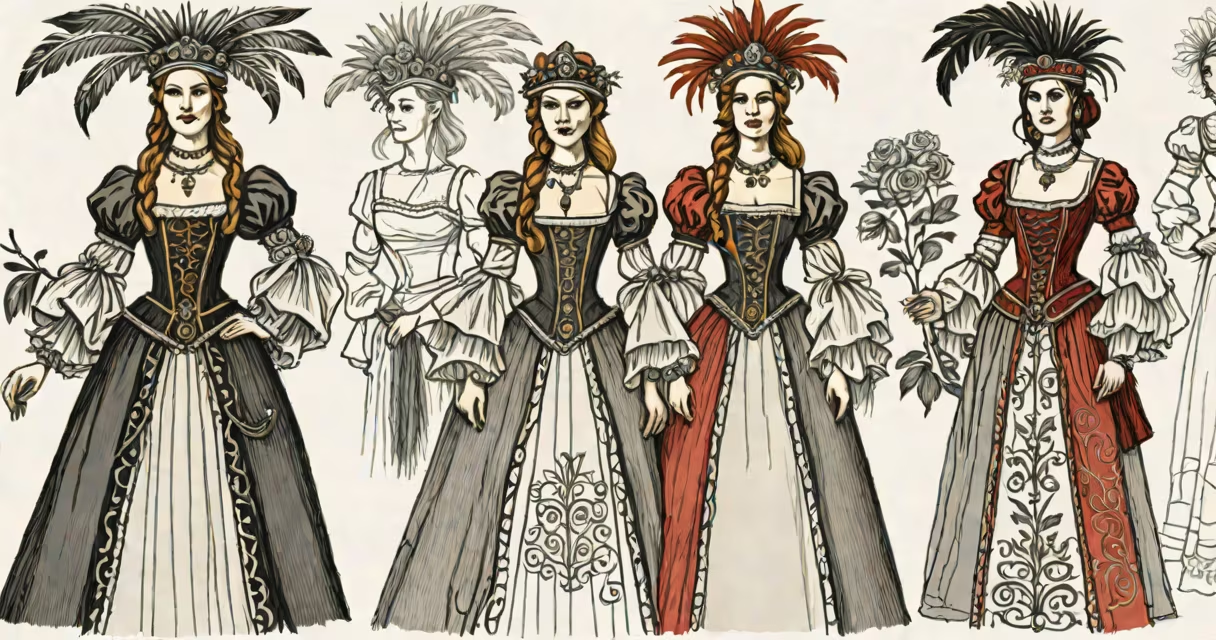
Ren Fair outfits are themed costumes worn at Renaissance fairs-live-history events celebrating 16th-century European culture through costuming, crafts, and performances. These ensembles mix historical accuracy with theatrical flair, often emphasizing rich textures, bold colors, and handmade details.
These outfits serve both aesthetic and functional roles. They immerse attendees in a stylized version of the past, allowing participants to embody characters from nobility, artisans, jesters, or fantastical figures. Unlike strict historical reenactment, Ren Fair fashion embraces creative liberty, blending elements from different eras and cultures.
For example, a typical outfit might include a linen tunic with gold-thread embroidery, leather boots laced with ribbon, and a belt adorned with brass charms. Accessories such as jeweled hairpins, painted wooden shields, or a handwoven sash complete the look. The goal is visual storytelling through fabric, color, and form.
Each Ren Fair outfit functions as a wearable narrative. Designers and wearers select garments based on a character concept-whether a noblewoman from Elizabethan England, a traveling minstrel, or a mythical forest spirit. This narrative focus shapes choices in silhouette, fabric weight, and ornamentation.
Outfits are constructed using layered textiles: outer layers of wool or cotton for structure, linings of softer fabrics like muslin or silk for comfort. Embroidery, appliqué, and paint add visual interest. For example, a knight's surcoat may feature a family crest stitched in silver thread, while a witch's cloak might be dyed in indigo and stitched with black lace.
Wearers often tailor pieces to fit their body type and movement needs. A performer might choose a split skirt for dancing, while a vendor prefers a long, flowing dress with hidden pockets for selling goods. Functionality and performance are balanced with visual impact.
Ren Fair outfits fall into distinct categories based on role, period, and design intent. The most common types include:
| Type | Key Features | Common Materials | Example Use |
|---|---|---|---|
| Noble/Aristocrat | Rich dyes, structured silhouettes, metal accents | Silk, velvet, brocade | Portraying royalty or courtiers at a royal procession |
| Peasant/Farmer | Simple cuts, earth tones, patched seams | Linen, coarse wool, burlap | Working in a market stall or portraying a village elder |
| Entertainer/Jester | Asymmetrical shapes, clashing patterns, bells | Cotton, felt, recycled fabric | Performing comedy routines or juggling acts |
| Fantasy/Mythical | Elaborate headpieces, glowing effects, animal motifs | Organza, sequins, faux fur | Playing a woodland sprite or enchanted warrior |
Materials vary widely. Wool and linen dominate for authenticity, especially in cooler climates. Synthetic blends are common among budget builders due to lower cost and ease of care. However, purists favor natural fibers for breathability and historical plausibility.
A lesser-known fact: many Ren Fair outfits incorporate hidden functionality. A peasant dress might have a removable inner lining for temperature changes. A nobleman's doublet can include a concealed pocket for carrying small items. These features are rarely advertised but improve usability during multi-day events.
Ren Fair outfits are worn primarily at large-scale events like the Renaissance Pleasure Faire in California, the Maryland Renaissance Festival, and the Texas Renaissance Festival. Attendance ranges from 5,000 to 15,000 people per weekend, with thousands of attendees dressing in theme.
Participants wear these outfits for several reasons. Some attend to celebrate history, others to express identity through performance. A 2023 survey by the Society for Creative Anachronism (SCA) found that 68% of members cited "creative expression" as their primary motivation for costuming, while 42% mentioned social connection.
For example, at the 2023 New York Renaissance Faire, a group of performers dressed as 16th-century alchemists used glowing glass vials and hand-painted robes to simulate magical experiments. Their outfits were designed with safety in mind-non-flammable fabrics and heat-resistant dyes-to prevent accidents during fire-based demonstrations.
Ren Fair outfits are often mistaken for cosplay or Halloween costumes. While all three involve wearing fictional or historical attire, they differ in purpose and context. Cosplay typically replicates characters from pop culture, such as Star Wars or anime. Halloween costumes are temporary, often mass-produced, and worn for a single night.
Ren Fair outfits, by contrast, are worn over multiple days and emphasize craftsmanship and continuity. A well-made Ren Fair gown can last five years with proper care. They are not meant to be discarded after one event.
Another misconception: all Ren Fair outfits must be historically accurate. This is false. The term "Renaissance" in "Renaissance fair" refers to the artistic and cultural flowering of the 1500s-but the fairs themselves are modern celebrations. Many outfits blend 15th-century French styles with 18th-century German embroidery or Celtic knotwork.
I once built a Ren Fair outfit based on a 1530s Flemish portrait. I used period-appropriate wool and hand-stitched the embroidery with a needle I bought from a reenactment supply shop. During the event, a historian approached me and said, "You've captured the mood better than most museum exhibits." That moment confirmed something I'd learned: authenticity isn't just about correct fabric-it's about presence.
Ren Fair outfits are more than costumes-they are tools for immersion, identity, and community. building a full regal ensemble, the process connects you to a living tradition of storytelling through clothing. The key is intention: ask not just "what does it look like?" but "who am I becoming?"