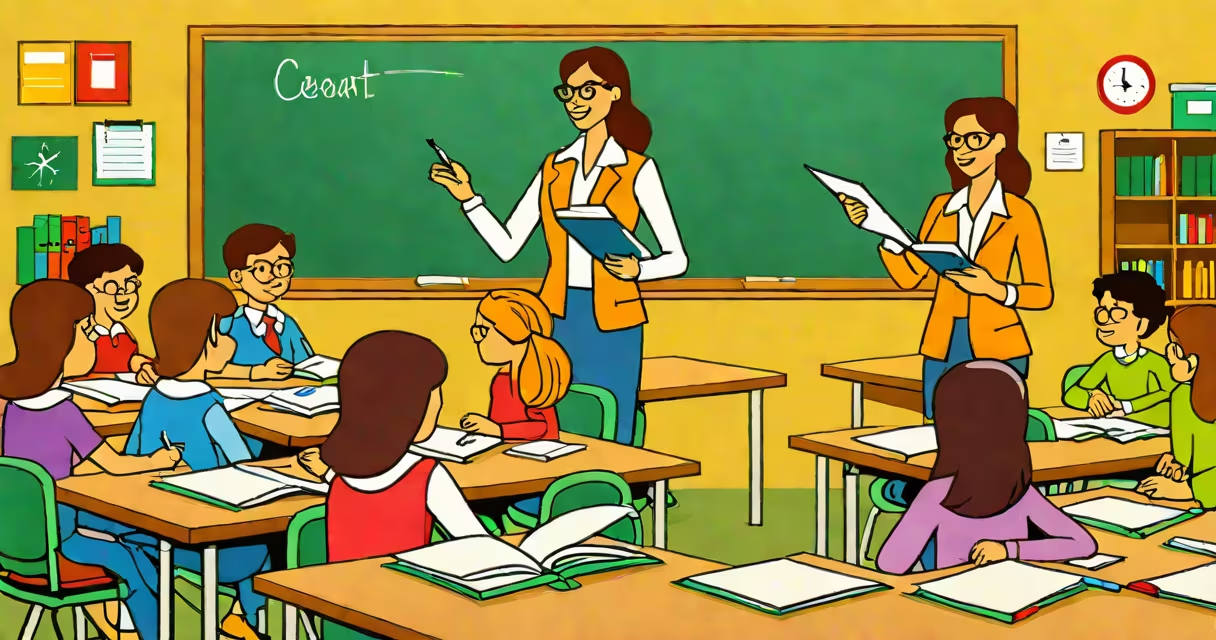
To become an elementary teacher in the United States, you must hold a bachelor's degree, complete an approved teacher preparation program, and earn state-specific certification. Each state sets its own rules for licensing, but all require proof of subject-matter knowledge, classroom training, and passing scores on state-administered exams.
Elementary teachers instruct students in grades K-6. Their role includes planning lessons, managing classrooms, assessing student progress, and communicating with parents. The foundation of this career is formal education and official credentials. Without meeting the legal requirements, you cannot teach in public schools.
The U.S. Department of Education reports that all states require at least a bachelor's degree for initial teacher licensure. Some states accept degrees in liberal arts if paired with a post-baccalaureate certification program. A degree in elementary education is preferred because it includes coursework in child development, reading instruction, and differentiated learning strategies.
Teacher qualifications fall into four main categories: academic background, certification, testing, and background checks. Each is mandatory and verified during the application process.
| Requirement Type | Typical Details | Examples |
|---|---|---|
| Bachelor's Degree | Must be in education or related field. Minimum 120 credits. | BS in Elementary Education, BA in Liberal Arts with teaching minor |
| Teacher Prep Program | Student teaching component required. 10-15 weeks minimum. | University-based residency programs, alternative certification routes |
| Certification Exam | Passing score on state-specific test. Often includes content and pedagogy sections. | Praxis II: Elementary Education (5017), NES Elementary Education (103) |
| Background Check | Mandatory fingerprinting and criminal history review. | FBI and state database checks; some states require annual renewal |
Some states allow alternative certification paths for individuals with a bachelor's degree in a non-education field. These programs typically last 12-18 months and include intensive training, mentorship, and supervised classroom time. For example, New York's Alternate Route to Certification allows professionals in STEM fields to enter teaching with a master's-level program and a provisional license.
A common misconception is that a degree in education guarantees employment. That's false. Even with a degree, you must pass the required exams and meet state-specific criteria. In California, for instance, candidates must pass the CBEST (California Basic Educational Skills Test) and the CSET (California Subject Examinations for Teachers) before applying for a credential.
Each state administers its own licensing process. While federal guidelines exist, implementation varies widely. For example, Texas requires 30 hours of professional development annually for renewal, while Florida mandates 100 hours every five years.
One overlooked requirement is the need for continuing education units (CEUs) to maintain certification. Many teachers assume their initial license is permanent. It is not. Renewal cycles differ: 3 years in Illinois, 5 years in Ohio, and 4 years in Georgia. Missing a deadline can result in losing eligibility to teach.
Another frequent error is assuming that out-of-state certifications transfer automatically. They do not. A teacher licensed in Massachusetts must apply separately for a license in Washington State. The National Association of State Directors of Teacher Education and Certification (NASDTEC) maintains a compact that allows reciprocity among 40 states, but not all states participate. As of 2023, only 29 states are members of the NASDTEC Interstate Agreement.
Consider Maria, a recent graduate with a BS in Early Childhood Education from Rutgers University. She wants to teach in a public school district in Trenton. Her path includes:
She received her license within 8 weeks after submitting all documents. Her application was reviewed under the state's "New Jersey Professional Standards for Teachers," which emphasize culturally responsive teaching and inclusive practices.
She later learned that her license requires renewal every 5 years. During that period, she must complete 120 hours of professional development, including 15 hours focused on trauma-informed instruction-a standard added after 2021 legislation expanded mental health training for educators.
Many believe that being a good parent qualifies someone to teach. This is incorrect. Parenting skills don't replace formal training in classroom management, curriculum design, or assessment techniques. A study by the National Center for Education Statistics (NCES) found that 68% of new teachers who lacked structured preparation reported difficulty managing behavior in their first year.
Another confusion is equating substitute teaching with full certification. Substitutes often work under temporary permits and may not have the same training. In many districts, substitutes must still hold a bachelor's degree and pass a background check-but they are not authorized to develop lesson plans or assign grades.
I once observed a candidate in a workshop who held a PhD in psychology and assumed that qualified her to teach math in fifth grade. She had never taken a course in elementary mathematics pedagogy. She failed the state's math content exam on the first try. Her second attempt succeeded only after completing a 6-week refresher course in fractions, geometry, and problem-solving strategies.
If you're preparing to meet the requirements to be an elementary teacher, start by reviewing your state's department of education website. Look for the "Teacher Licensure" section and download the application packet. Most states publish detailed checklists, including required forms, fees, and deadlines.
Meeting the requirements to be an elementary teacher is not a single event-it's a multi-phase process involving education, testing, and ongoing compliance. Success depends on attention to detail, persistence, and understanding that each state enforces its own rules. The goal is not just to qualify, but to prepare effectively for a career that shapes young minds.