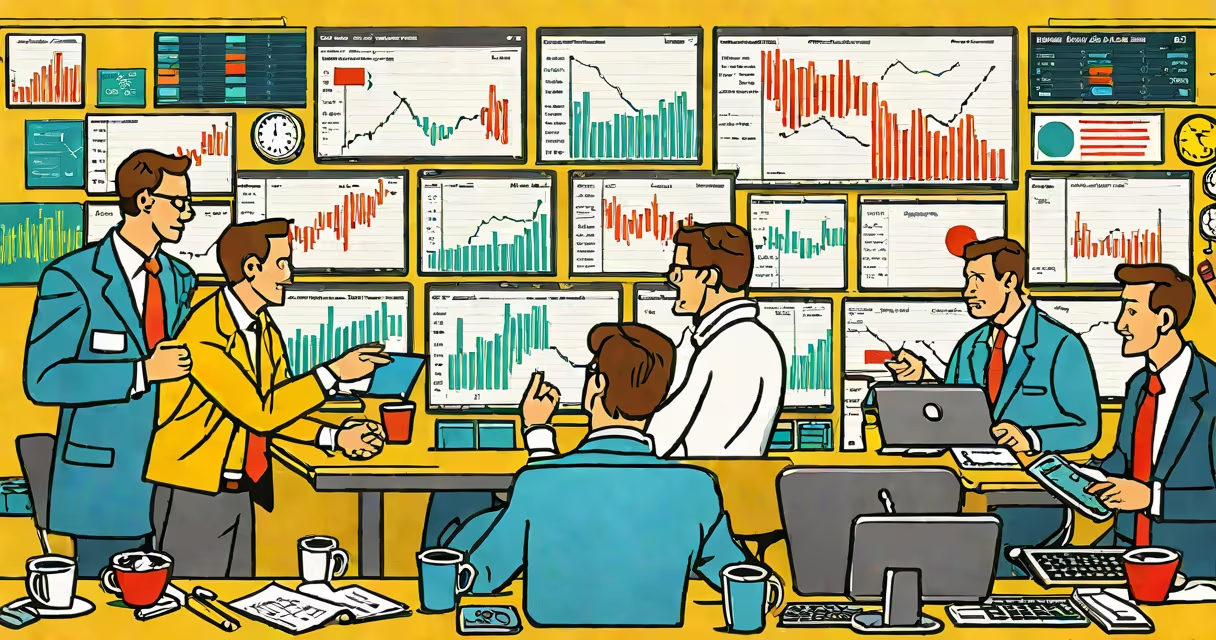
The stock market is a network where people buy and sell ownership shares in publicly traded companies. These shares represent small pieces of a company's value, and their prices change based on supply, demand, and investor expectations. You don't need a finance degree to understand how it works-just a few core principles.
When a company goes public, it sells shares to raise money. Investors who buy those shares become partial owners. If the company grows and earns more profit, the share price often rises. If it struggles, the price drops. Prices are set in real time during trading hours on exchanges like the New York Stock Exchange (NYSE) or NASDAQ.
For example, Apple Inc. (AAPL) had around 16.5 billion shares outstanding in 2023. Each share represents a tiny fraction of the entire company. If you bought one share at $150, you owned a very small piece of Apple. If Apple's profits rose and investors believed the company would grow, demand for shares increased, pushing the price up to $180. Your share was worth more, even though nothing physical changed.
Stocks trade on centralized exchanges. Buyers and sellers connect through brokers-digital platforms like Fidelity, Charles Schwab, or Robinhood. When you place an order, the system matches your bid with someone else's offer. Trades happen in seconds.
Prices aren't set by the company. They're determined by market forces. If many people want to buy a stock, the price goes up. If many want to sell, the price falls. This happens continuously during market hours, which run from 9:30 AM to 4:00 PM Eastern Time, Monday through Friday.
Market indices track the performance of groups of stocks. The S&P 500 includes 500 large U.S. companies. Its value changes daily based on how much the stocks in it rise or fall. On January 10, 2024, the S&P 500 closed at 5,175. That number reflects the average weighted price of those 500 companies.
People often think the stock market is gambling. It's not. Gambling relies on chance. Investing in stocks involves analyzing company fundamentals-revenue, earnings, debt, management quality. Even then, outcomes are uncertain. But decisions are based on data, not luck.
A common mistake is confusing a stock's price with its value. A $1 share doesn't mean the company is cheap. A $100 share doesn't mean it's expensive. Value depends on earnings per share (EPS), price-to-earnings ratio (P/E), and growth potential. For example, Amazon's stock traded above $150 in 2023, but its P/E ratio was around 60-meaning investors paid 60 times its annual earnings. That high multiple reflects belief in future growth, not current profit.
Another misunderstanding: people assume all stocks go up over time. They don't. In 2022, the S&P 500 dropped 19.4%. Some individual stocks fell 50% or more. Volatility is normal. Long-term investing reduces risk because downturns tend to recover over years.
There are two main types: common and preferred. Common stock gives voting rights and potential dividends. Preferred stock pays fixed dividends and has priority in bankruptcy but no voting power. Most retail investors buy common stock.
Investors choose between individual stocks and index funds. Individual stocks require research. Index funds hold hundreds of stocks, reducing risk. The S&P 500 index fund, for example, tracks the 500 largest U.S. companies. In 2023, it returned about 24%, matching the market's performance.
| Type | How It Works | Example |
|---|---|---|
| Common Stock | Ownership in a company. Vote on major decisions. May pay dividends. | Buying 10 shares of Tesla (TSLA) |
| Preferred Stock | Fixed dividend payments. No voting rights. Higher claim in liquidation. | Buying shares in Verizon (VZ) preferred stock |
| Index Fund | Tracks a group of stocks. Low fees. Diversified. | Investing in an S&P 500 ETF like SPY |
I once watched a friend buy 100 shares of a tech startup at $5 each. He expected rapid growth. The company failed within six months. His investment dropped to nearly zero. I learned that understanding a business model matters more than hype. Before buying any stock, ask: Who runs it? How do they make money? What risks exist?
Many confuse "stock" with "market." A stock is a single company's share. The stock market is the entire system where stocks trade. Saying "I bought the market" is incorrect. You can't buy the whole market. You can buy a fund that tracks it.
Another error: thinking you need thousands to start. You don't. Many brokers allow fractional shares. You can invest $10 in Apple or Microsoft. The platform buys a fraction of a share. Over time, compounding returns grow your holdings. A $10 monthly investment in an S&P 500 fund could grow to over $10,000 in 30 years, assuming 7% average annual return.
Also, people believe the stock market moves only on news. While headlines affect sentiment, long-term trends depend on economic data-interest rates, inflation, employment numbers. The Federal Reserve's rate decisions in 2023 influenced market direction more than any single earnings report.
Track market movements with stock market up or down summaries. These show daily shifts, volume trends, and sector performance. Knowing whether the market is rising or falling helps you avoid emotional decisions during volatility.
Remember: the stock market isn't a game. It's a mechanism for allocating capital to businesses. When you invest, you're helping fund innovation, job creation, and economic growth. You don't have to be an expert to participate-but understanding the basics prevents costly mistakes.