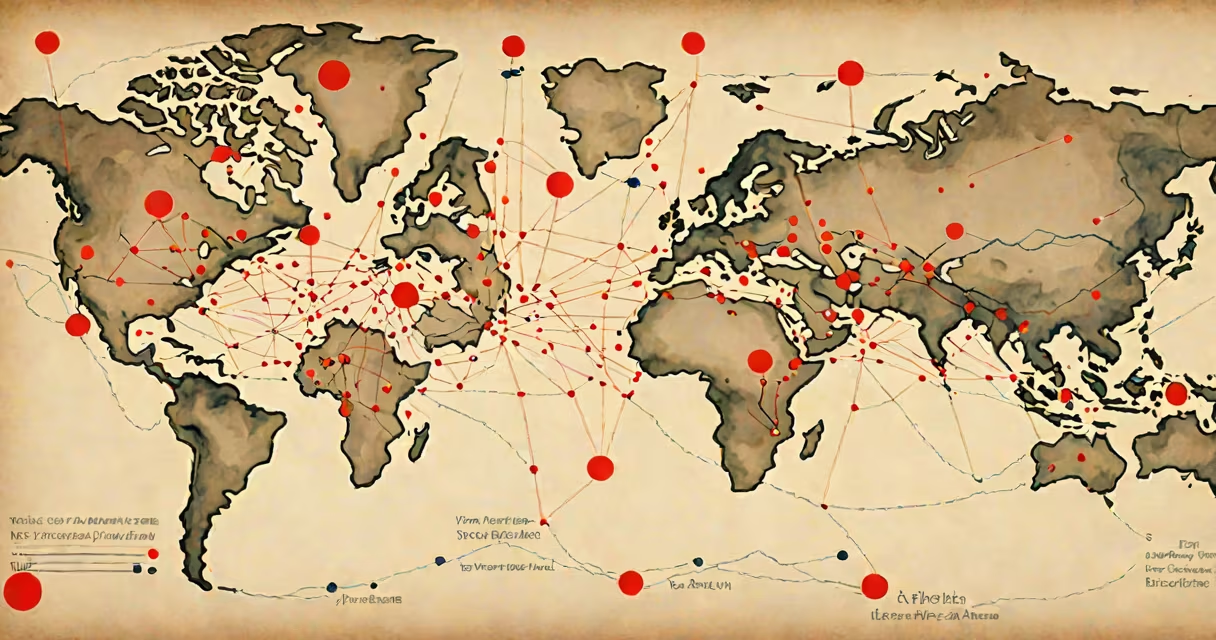
IP address tracking is the process of identifying a device's physical location and online behavior using its unique numerical identifier assigned by the internet protocol. This tracking enables services to deliver localized content, enforce access controls, and detect suspicious activity.
Every device connected to the internet receives a distinct IP address-either static or dynamically assigned-by a network provider. These addresses serve as digital fingerprints that reveal routing paths, approximate geographic zones, and sometimes specific network providers. While not precise enough to pinpoint a home address, they offer meaningful insights into user location and network patterns.
For example, when you visit a website, the server logs your public IP address. If you're in New York and access a news site, the site may show local headlines based on your IP's region. This is IP address tracking in action-used daily by websites, advertisers, and security systems.
When a device connects to the internet, it receives an IP address through a router or ISP. IPv4 uses four sets of numbers separated by dots (e.g., 192.168.1.1), while IPv6 uses eight groups of four hexadecimal digits (e.g., 2001:0db8:85a3::8a2e:0370:7334).
Network operators assign ranges of IP addresses to geographic regions. Databases maintained by companies like MaxMind and IPinfo track these assignments. When a request reaches a server, the system checks the sender's IP against these databases to determine the country, city, and ISP.
For instance, a login attempt from an IP registered in Nigeria might trigger a security alert if your account usually accesses from Germany. This detection relies on IP address tracking to flag anomalies.
Tracking methods vary by purpose and accuracy. Not all IP tracking is equally detailed or invasive.
| Type | Accuracy | Use Case | Example |
|---|---|---|---|
| Country-level | High | Content localization | Netflix shows different movies based on country |
| City-level | Moderate | Weather forecasts, ads | Google Maps displays nearby restaurants |
| ISP-level | Low | Security monitoring | Firewall blocks traffic from known malicious ISPs |
Some services use reverse DNS lookups or BGP routing data to infer network topology. Others analyze traffic timing and packet size to correlate devices across sessions-even across networks.
A non-obvious fact: many public Wi-Fi hotspots share a single IP address among hundreds of users. This means multiple people can appear to come from the same location, making accurate individual tracking difficult without additional data.
People often confuse IP address tracking with surveillance tools like GPS or cookies. Unlike GPS, which uses satellite signals to pinpoint exact coordinates, IP tracking only estimates location based on database mappings. Accuracy varies widely-sometimes off by hundreds of miles.
Another misconception is that IP tracking identifies individuals. It does not. An IP address alone cannot reveal a person's name, email, or identity unless paired with data from an ISP or service provider. Law enforcement can request such records under legal authority, but this requires a warrant.
Some assume that changing your IP address hides all online activity. That's false. While rotating IPs via a proxy or VPN masks your current address, your browsing history, device fingerprints, and login credentials remain traceable if stored by websites or apps.
IP address tracking supports essential functions. Streaming platforms use it to comply with copyright laws. Banks apply it to prevent fraud. Governments use it to manage internet access during emergencies.
But risks exist. Advertisers use IP data to build user profiles. Cybercriminals exploit leaked IP databases to launch targeted attacks. In 2021, researchers found that over 1.2 million exposed IP addresses were being sold on dark web marketplaces, often combined with other personal data.
I once monitored a small business network using a free IP geolocation tool. A login from a Russian IP triggered an alert. Upon investigation, it was a bot scanning for weak passwords. The IP tracker helped identify the threat early.
Despite these benefits, privacy advocates warn that persistent IP tracking erodes anonymity. The European Union's GDPR and California's CCPA require transparency about data collection, including IP usage. Websites must inform users and allow opt-outs.
You can reduce exposure to IP address tracking. Using a virtual private network (VPN) routes traffic through encrypted servers in different countries. This hides your real IP and replaces it with a temporary one.
For better privacy, combine a VPN with a browser that blocks third-party trackers. Tools like Tor provide layered encryption and route traffic through multiple nodes, making tracking extremely difficult.
However, some services block traffic from known proxy or Tor exit nodes. You may lose access to certain sites or face slower speeds. Balance convenience and protection carefully.
Understanding what is IP address tracking clarifies both its utility and limits. It powers modern internet functionality but demands awareness of privacy trade-offs.