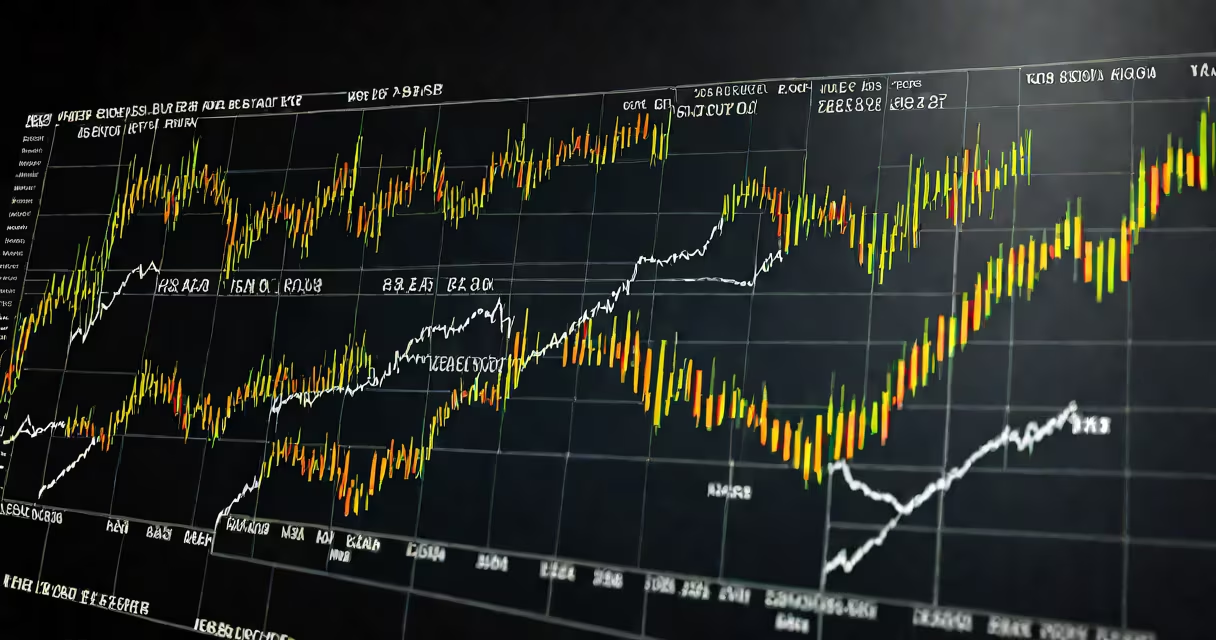
Stock market ulta describes periods of extreme volatility where stock prices swing sharply upward or downward in short timeframes, often driven by panic, news events, or algorithmic trading. These movements exceed normal market fluctuations and can trigger widespread investor reactions.
Such volatility is not random. It stems from real-time shifts in supply and demand, amplified by automated systems and emotional responses. For example, during the March 2020 pandemic crash, the S&P 500 dropped 34% in under three weeks-a classic case of stock market ulta. Similarly, GameStop's 2021 surge, fueled by retail investors on Reddit, saw its share price rise over 1,000% in days before collapsing, illustrating how social media and speculative behavior can create ulta conditions.
These episodes are distinct from regular market swings. Normal daily changes in the S&P 500 average around 0.5%. In contrast, stock market ulta events see moves exceeding 5% in a single session. The 1987 Black Monday crash, where the Dow Jones Industrial Average fell 22.6%, remains one of the most extreme examples in history.
Market ulta occurs when large volumes of trades happen rapidly due to sudden information, fear, or coordinated actions. Algorithms detect patterns and execute trades in milliseconds, sometimes accelerating price swings beyond human control. This was evident in the 2010 Flash Crash, when the Dow dropped nearly 1,000 points in five minutes before recovering.
Human psychology plays a major role. Fear triggers selling, which drives prices down further, creating feedback loops. Conversely, greed fuels buying sprees. During the 2021 meme stock frenzy, retail traders on r/WallStreetBets coordinated purchases of stocks like AMC and GameStop, pushing prices far above fundamental valuations. The resulting volatility caught institutional investors off guard and led to massive losses for hedge funds.
Regulators monitor these events closely. The Securities and Exchange Commission (SEC) introduced circuit breakers in 1988 to halt trading during extreme drops. These mechanisms pause trading when indices fall by preset thresholds-10%, 20%, or 30%-to allow time for calm and prevent cascading failures.
Not all ulta moments are alike. They stem from different sources and manifest in unique ways:
| Type | Trigger | Duration | Example |
|---|---|---|---|
| News-driven | Major geopolitical events, earnings surprises | Hours to days | 2022 Ukraine invasion caused global markets to drop 5% in one day |
| Algorithmic | Automated trading systems reacting to signals | Minutes | 2010 Flash Crash: 1,000-point drop in 5 minutes |
| Speculative | Retail investor coordination, social media hype | Days to weeks | GameStop stock rose 1,000% in January 2021 |
| Economic shock | Interest rate changes, inflation spikes | Weeks | 2022 Fed rate hikes triggered 20% market correction |
A common misconception is that stock market ulta always leads to losses. In reality, it creates opportunities. Traders who understand volatility can profit from both sides. For example, options traders use volatility to set premiums-higher volatility increases option prices, allowing sellers to earn more.
Another misunderstanding is that ulta events are rare. According to the Federal Reserve Bank of St. Louis, the S&P 500 experienced at least one 5% daily move in 33% of years since 1950. While not every event becomes legendary, they are statistically frequent enough to require preparedness.
People often mistake stock market ulta for long-term market direction. A single day of wild swings doesn't predict future performance. The S&P 500 gained 19.4% in 2021 despite multiple ulta episodes throughout the year. Market trends are better assessed over months or years, not hours.
Some assume ulta is purely emotional. But research from the National Bureau of Economic Research shows that algorithmic trading accounts for over 70% of U.S. equity volume. Automated systems amplify movements, especially during high-volume times like market open or close. Human emotion may start the wave, but machines sustain and magnify it.
There's also confusion between volatility and risk. High volatility doesn't equal high risk. Beta measures a stock's sensitivity to market movements. A stock with beta 1.5 moves 50% more than the market. A stock with beta 0.5 moves less. So a volatile stock isn't necessarily riskier-it depends on context. Understanding beta in stock market helps distinguish true risk from noise.
In January 2021, GameStop's stock price rose from $17 to over $480 in less than three weeks. This surge wasn't based on fundamentals-its revenue had declined for years. Instead, it was driven by coordinated buying from retail investors on Reddit's r/WallStreetBets.
The movement created a short squeeze. Hedge funds had bet against the stock, borrowing shares to sell. As prices rose, they were forced to buy back shares at higher prices to cover their positions. This buying pressure pushed prices even higher-an ulta feedback loop.
By January 28, GameStop's market cap reached $14 billion, up from $1.5 billion in early January. The stock then collapsed to below $20 within a month. The episode showed how social media, low barriers to entry, and use can generate extreme volatility. It also prompted regulatory scrutiny into market fairness and transparency.
I observed this firsthand while managing a small portfolio. I held GameStop shares briefly during the spike, drawn by the momentum. I exited before the collapse, but the experience taught me that ulta events reward discipline, not speculation. Emotional decisions during such swings lead to losses-even when the initial move seems profitable.
Stock market ulta affects everyone-from individual investors to pension funds. Extreme swings can erode retirement savings, trigger margin calls, or distort asset pricing. Understanding the mechanics helps avoid reactive decisions.
For long-term investors, ulta is noise. The S&P 500 has averaged 7% annual returns since 1926, despite dozens of crashes. Selling during a dip locks in losses. Staying invested through volatility delivers better outcomes.
For active traders, ulta offers tools. Options strategies like straddles profit from expected volatility. Traders use implied volatility metrics-like the VIX-to gauge market fear. When the VIX exceeds 30, it signals high expected volatility, a sign to adjust positions.
Always assess context. Not every sharp move is ulta. A 3% drop due to weak earnings is normal. A 10% drop on no news is a red flag. Use data, not headlines, to judge severity.
When volatility spikes, review your holdings. Are you exposed to high-beta stocks? Do you have too much concentration in one sector? Rebalancing reduces risk. Diversification spreads exposure and dampens the impact of any single ulta event.