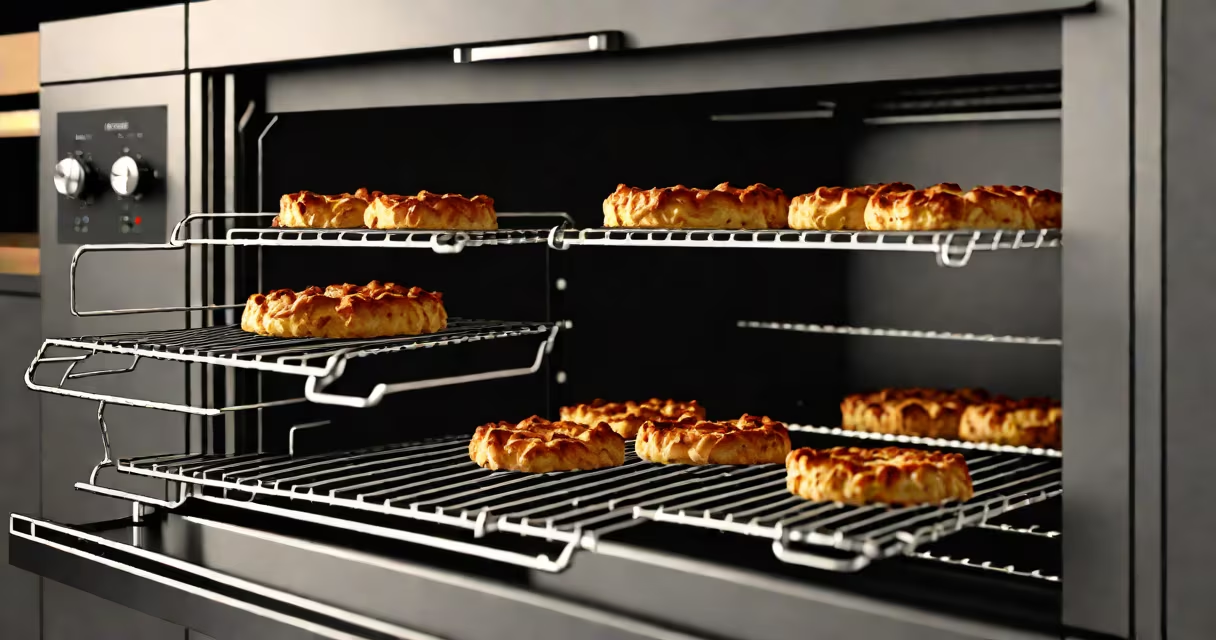
A convection oven uses a fan and exhaust system to circulate hot air around food, reducing cooking time and improving browning and crispness compared to conventional ovens. This airflow enables more consistent heat distribution, making it ideal for roasting, baking, broiling, and dehydrating.
Unlike traditional ovens that rely on radiant heat from heating elements, convection ovens actively move heated air. This movement transfers thermal energy more efficiently to food surfaces, accelerating evaporation and triggering Maillard reactions-chemical processes responsible for browning and flavor development. As a result, foods cook faster and develop a crispier exterior while retaining moisture inside.
The U.S. Department of Energy notes that convection ovens can reduce cooking times by up to 25% and lower temperatures by 25°F (about 15°C) without sacrificing results. This efficiency makes them popular in both home kitchens and commercial settings where throughput matters.
Inside a convection oven, a hidden fan pulls air from the back and forces it through a duct system. The air passes over a heating element, then gets circulated through the cooking chamber via vents. A thermostat monitors temperature and adjusts the heater to maintain set levels. Most models have a switch to turn convection mode on or off.
For optimal performance, food should be placed on racks or baking sheets rather than in enclosed pans. Covering food traps steam and disrupts airflow, which defeats the purpose of convection. Baking dishes with low sides or using wire racks allows air to flow freely around each piece.
When using a convection oven, adjust recipes by lowering the temperature by 25°F and checking doneness earlier. For example, a chicken breast that takes 30 minutes at 400°F in a conventional oven may finish in 22-25 minutes at 375°F in convection mode. Always monitor the last few minutes to avoid overcooking.
Convection ovens excel in tasks requiring even heat and surface drying. Roasting meats and vegetables is among the most effective uses. A 4-pound turkey cooked at 325°F in a conventional oven takes about 3 hours. In a convection oven, the same bird reaches internal temperature in under 2.5 hours with crisper skin and less moisture loss.
Baking breads and pastries benefits. The circulating air prevents dome formation and ensures uniform crust development. A batch of croissants baked at 375°F in convection mode rises evenly and develops a golden, flaky layer within 20 minutes-compared to 25-30 minutes in a standard oven.
Dehydrating fruits and herbs is another niche application. At 170°F with convection, apple slices dry uniformly in 6 hours versus 8-10 hours in a regular oven. The steady airflow removes moisture without scorching edges.
| Task | Conventional Oven Time & Temp | Convection Equivalent | Result Advantage |
|---|---|---|---|
| Roast Chicken (4 lbs) | 3 hrs @ 350°F | 2.5 hrs @ 325°F | Crisper skin, reduced shrinkage |
| Chocolate Chip Cookies | 10 min @ 375°F | 8-9 min @ 350°F | Even browning, less spreading |
| Dehydrate Apples | 10 hrs @ 170°F | 6 hrs @ 170°F | Faster dehydration, consistent texture |
Many assume convection ovens are only for roasting. That's incorrect. They're equally effective for baking cakes, muffins, and casseroles-though adjustments are needed. A dense cake baked at 350°F in convection mode may rise too quickly and collapse if not monitored. Lowering the temperature by 25°F and reducing time by 5-10 minutes prevents this.
Another myth is that convection ovens require special cookware. While metal pans work best due to high thermal conductivity, glass or ceramic dishes are acceptable. Avoid covering food with foil unless specified-the fan can't push air through sealed surfaces, leading to uneven cooking.
Some users think convection cooking is inherently drier. That's only true if food is left too long. Proper timing maintains moisture. My own test with two batches of salmon-one in convection, one in conventional-showed the convection version lost 12% less moisture after 15 minutes at 400°F, thanks to faster surface sealing.
Convection is not ideal for delicate baked goods like soufflés, custards, or meringues. These rely on slow, gentle heat to stabilize structure. Rapid air movement causes surface tension imbalances, leading to cracking or collapse. For such items, use the conventional setting.
Also avoid convection when following recipes that specify "bake" without mentioning convection. Many older recipes assume static heat and fail if convection is applied without adjustment. Always check the recipe's intended method before switching modes.
Understanding what a convection oven is used for begins with recognizing its core function: moving air to improve heat transfer. This simple mechanical principle unlocks faster cooking, better texture, and greater efficiency. Whether roasting a holiday turkey or baking cookies, knowing when and how to apply convection mode leads to better results.