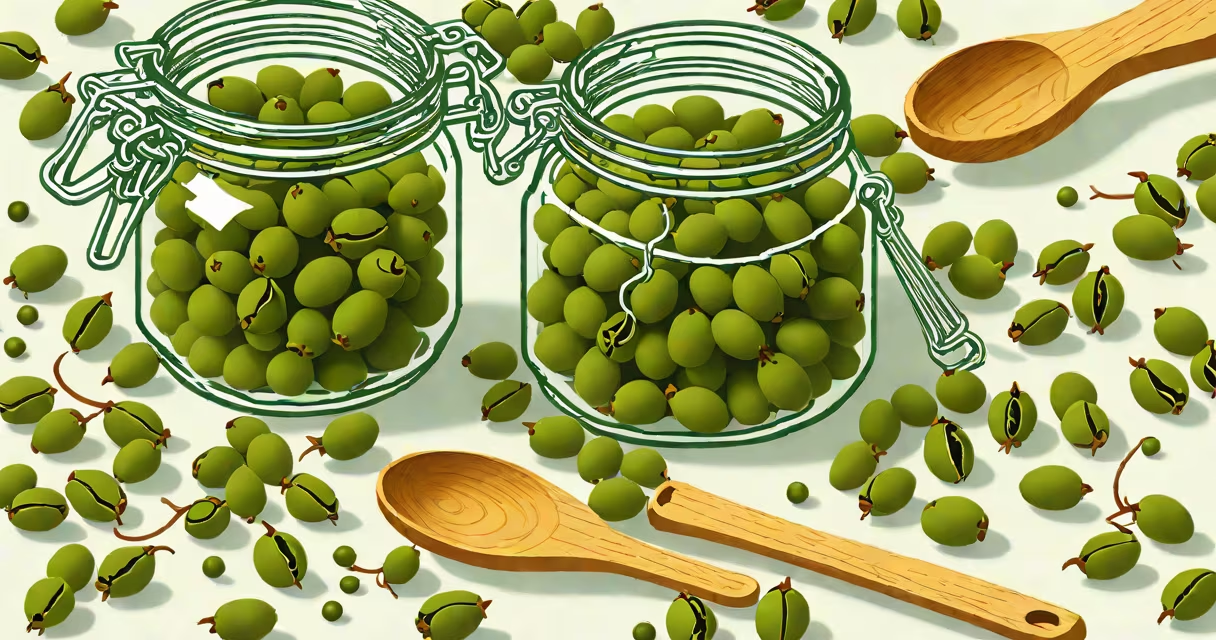
Capers are the unopened flower buds of the Capparis spinosa shrub, harvested before blooming and preserved in brine or salt. They deliver a sharp, salty, slightly bitter taste that enhances savory dishes.
These tiny, round buds grow on a spiny shrub native to the Mediterranean region, particularly in coastal areas of southern Europe, North Africa, and parts of the Middle East. Harvesting happens early in spring when the buds are still tight and green. After picking, they're cured in salt or vinegar to preserve texture and intensify flavor. The most common form sold in stores is brined capers, which have a clean, zesty bite.
Despite their size-typically 3-6 mm in diameter-capers pack a useful punch. They're not vegetables, herbs, or spices in the traditional sense. Instead, they're a preserved botanical ingredient, often used as a finishing touch rather than a base component. Their role is to add complexity, acidity, and a subtle crunch to foods.
Capers contribute a distinctive flavor profile: salty, sour, and faintly peppery. This combination makes them ideal for cutting through rich or fatty ingredients. A classic example is salmon tartare, where capers balance the richness of raw fish and avocado with their bright acidity.
They're also essential in sauces and dressings. In a traditional French sauce gribiche, capers mix with hard-boiled eggs, mustard, and herbs to create a tangy emulsion served with boiled potatoes or grilled meats. The capers don't dissolve-they remain distinct, offering bursts of flavor with each bite.
Because capers are preserved, they retain their firmness even after long cooking. This makes them suitable for simmered dishes like stews or braises, though their flavor can fade if cooked too long. For maximum impact, add them toward the end of preparation.
Capers come in different sizes and grades, affecting both price and flavor intensity. The smallest, known as "nonpareil," are prized for their delicate texture and mild taste. Larger varieties-"surfines" and "capucines"-offer more bite and stronger flavor.
| Size | Flavor Profile | Best Uses |
|---|---|---|
| Nonpareil (3-4 mm) | Mild, balanced sourness | Garnishes, salads, delicate sauces |
| Surfines (5-6 mm) | Bolder, sharper tang | Grilled fish, pasta, hearty stews |
| Capucines (larger, irregular) | Strongest flavor, earthy undertones | Charcuterie boards, tapenade, high-impact dishes |
When shopping, avoid capers packed in oil unless specified. Oil-packed versions tend to be greasier and less acidic. Brined capers in glass jars offer better control over salt levels and freshness. Always rinse capers before using to reduce excess salt, especially in recipes sensitive to sodium.
Capers are staples in Mediterranean and Middle Eastern cooking. In Italy, they appear in pasta alla puttanesca, where their sour bite cuts through tomato and anchovy richness. In Greece, capers are used in dolmades-stuffed grape leaves-adding a layer of complexity to the filling.
A lesser-known but impactful use is in seafood paella. Adding capers during the final minutes of cooking introduces a bright contrast to saffron and shellfish. The flavor doesn't overpower; it lingers on the palate, enhancing the experience.
Even in modern fusion cuisine, capers hold ground. A 2022 study published in the Journal of Food Science noted that capers increased perceived umami in plant-based dishes by 18% when paired with fermented ingredients-a finding backed by sensory panel testing.
Capers are often mistaken for capers' cousin, the caperberry-the large, edible fruit of the same plant. Caperberries are larger, softer, and typically eaten whole or sliced in antipasti. They're not interchangeable with capers in recipes.
Another frequent error is assuming capers are a spice. They're not dried or ground. They're preserved, living plant material. Using dried capers would result in a limp, flavorless substitute. Always use fresh, properly cured capers.
Some cooks also overuse capers, thinking more equals better. A single tablespoon of capers can dominate a dish. Start with 1 tsp per serving and adjust. Overuse leads to a one-dimensional sourness that overwhelms other flavors.
I once prepared a version of Norwegian fish soup (fiskesuppe) for a dinner party. The recipe called for dill and leeks, but I added a tablespoon of rinsed nonpareil capers at the end. Guests remarked on the "unexpected brightness" in the broth. One said, "It's like the soup suddenly remembered it was supposed to be alive." That moment confirmed capers aren't just garnish-they're flavor architects.
For a simple home test: try adding capers to scrambled eggs. Heat butter in a pan, scramble eggs gently, then stir in 1 tsp of rinsed capers. The result is a dish with depth and a clean finish. It's not fancy-but it's unforgettable.
Capers are small, potent, and purposeful. They're not a substitute for lemon juice or vinegar, nor are they a flavor filler. Their value lies in precision: a few drops of sourness, a hint of salt, a burst of texture. When used correctly, they improve dishes beyond simple seasoning.
Understanding what capers you eat means recognizing them not as mere garnish, but as intentional ingredients. They're part of a global culinary tradition rooted in preservation, flavor balance, and regional identity.