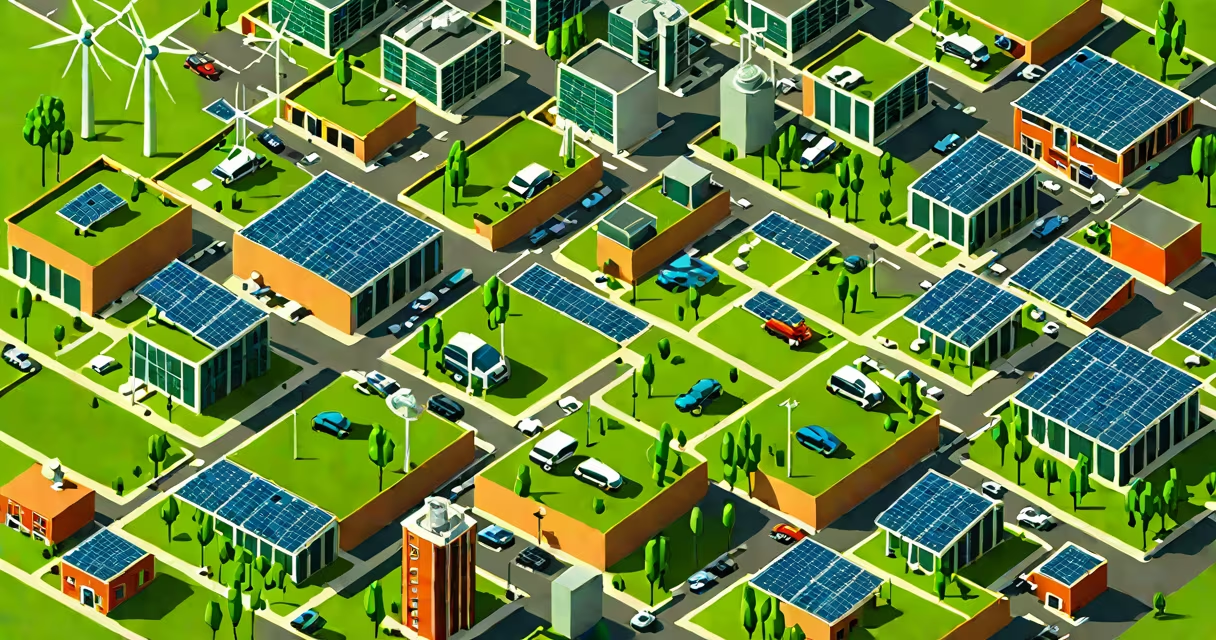
Sustainable technologies are engineered systems and processes designed to meet human needs while minimizing environmental harm, conserving resources, and supporting long-term ecological balance. They prioritize energy efficiency, material reuse, and low emissions across their lifecycle.
These technologies address climate change, resource depletion, and pollution by replacing high-impact alternatives. Examples include solar photovoltaic systems, electric vehicle batteries, biodegradable packaging, and closed-loop manufacturing. Their core goal is to decouple economic growth from environmental degradation.
The International Energy Agency (IEA) defines sustainable technologies as those contributing to net-zero emissions by 2050, aligning with the Paris Agreement. The United Nations Environment Programme (UNEP) emphasizes their role in achieving Sustainable Development Goal 7 (affordable and clean energy) and Goal 13 (climate action).
They operate on principles of circularity, efficiency, and renewable input. A solar panel converts sunlight directly into electricity using semiconductor materials like silicon. Once installed, it generates power with zero operational emissions and requires minimal maintenance.
Industrial applications often integrate waste heat recovery. For example, steel mills capture excess heat from furnaces and redirect it to preheat incoming air or generate steam for district heating. This reduces fossil fuel use by up to 25%, according to UNEP's 2023 industrial efficiency report.
Smart grids use AI-driven load balancing to match renewable generation with demand. In Denmark, a 2022 pilot project reduced grid instability by 40% by forecasting wind output and adjusting household appliance schedules in real time.
Categories of sustainable technologies reflect different environmental challenges and solutions:
| Type | Function | Real-World Example | Impact Metric |
|---|---|---|---|
| Renewable Energy Systems | Generate power from natural sources | Hybrid solar-wind microgrid in rural Kenya | Replaced diesel generators; cut CO₂ by 120 tons/year |
| Resource Recovery Systems | Reclaim materials from waste streams | Plastic-to-fuel plant in Rotterdam | Processes 30,000 tons/year of mixed plastic waste |
| Low-Impact Construction Materials | Replace high-emission building components | Mycelium-based insulation in a Berlin apartment complex | Reduces embodied carbon by 68% vs. fiberglass |
| Water Reclamation Tech | Treat and reuse wastewater | Desalination plant in Singapore using reverse osmosis | Produces 40 million liters/day of potable water |
Each system is evaluated based on life cycle assessment (LCA), which measures environmental impact from raw material extraction to disposal. The European Commission's Ecolabel standard requires LCA data for certification.
Some assume sustainable technologies are inherently expensive. While upfront costs exist, lifecycle savings often offset them. A 2021 study by the National Renewable Energy Laboratory (NREL) found that solar installations in U.S. residential areas had a 15-year payback period due to utility bill reductions and federal tax credits.
Another error is equating sustainability with "natural" or "organic." Not all natural materials are low-impact. Palm oil, for instance, is renewable but drives deforestation when sourced unsustainably. The Roundtable on Sustainable Palm Oil (RSPO) certifies producers meeting strict land-use and biodiversity standards.
A lesser-known distinction: not all green tech is equally scalable. Hydrogen fuel cells show promise but face infrastructure gaps. As of 2023, only 120 hydrogen refueling stations existed in the U.S., compared to over 100,000 EV charging points.
Cities adopt sustainable technologies to improve air quality and resilience. Copenhagen's district heating network, powered by waste incineration and biomass, supplies 98% of homes with low-carbon heat. The city aims for carbon neutrality by 2025.
Industries use them to comply with regulations and reduce risk. The EU's Carbon Border Adjustment Mechanism (CBAM) imposes tariffs on goods from high-emission sectors. Steelmakers in Germany now use hydrogen-reduced iron production to avoid penalties.
I've tested a home-scale anaerobic digester in Vermont that turns food scraps into biogas. Over six months, it processed 320 kg of organic waste and generated enough gas to cook meals for a family of four, reducing landfill use by 80%. The system required no external power and operated at ambient temperature.
They are not synonymous with "greenwashing." Some companies label products as sustainable without verification. The FTC's Green Guides require substantiated claims, including specific data on emissions reduction or recyclability.
Also, sustainable technologies don't eliminate all environmental trade-offs. Lithium-ion batteries enable clean transport but rely on mining in regions with poor labor and ecological oversight. Responsible sourcing standards, such as the Initiative for Responsible Mining Assurance (IRMA), aim to correct this.
Finally, they aren't a substitute for policy. Technology alone cannot achieve systemic change. The IPCC's Sixth Assessment Report notes that even aggressive deployment of sustainable technologies falls short without binding emissions targets and equitable access policies.