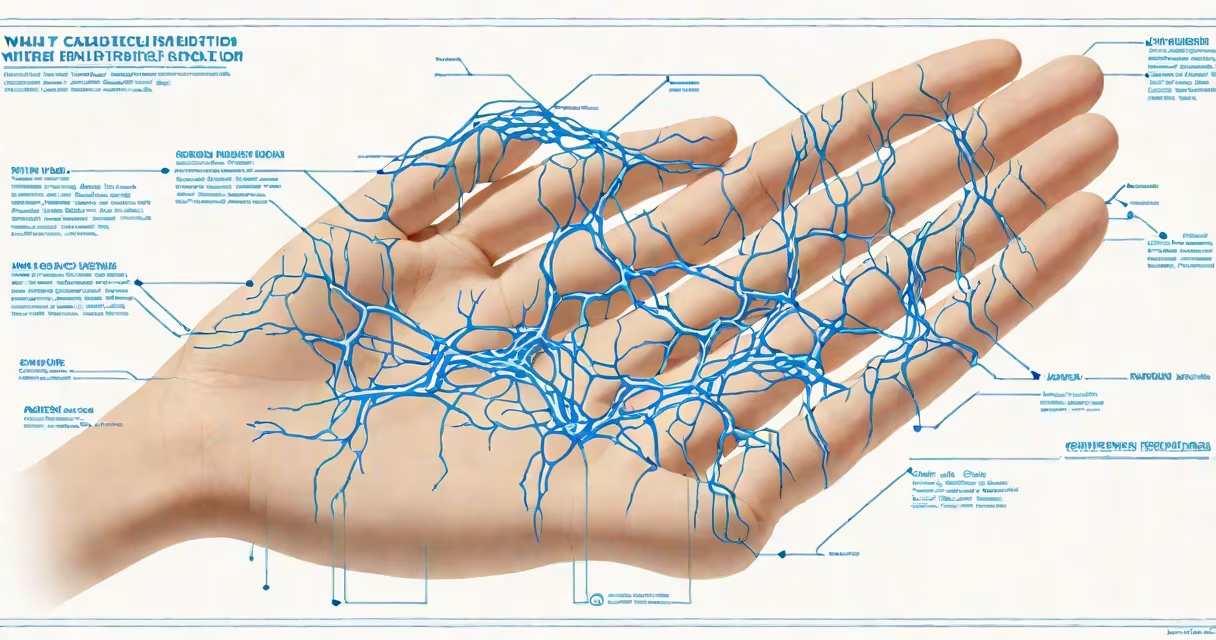
Poor circulation in fingers results from reduced blood flow to the extremities, often causing coldness, numbness, discoloration, or tingling. This condition stems from vascular constriction, nerve compression, or systemic diseases affecting blood vessels.
Blood delivers oxygen and nutrients to tissues. When circulation slows, especially in distal areas like fingertips, cells receive less support. The body prioritizes core organs, so limbs are vulnerable during stress, cold exposure, or illness. Reduced perfusion triggers symptoms within minutes, especially in people with underlying health conditions.
Medical sources confirm that circulatory issues in fingers are not just a sign of being cold-they can indicate serious disorders. The American Heart Association notes that peripheral circulation problems may precede cardiovascular events by years. Early recognition improves outcomes.
Circulation depends on healthy blood vessels, adequate cardiac output, and proper nerve signaling. When any component fails, blood flow drops. In fingers, this manifests quickly due to their small size and high surface area-to-volume ratio.
Vasoconstriction-the narrowing of blood vessels-is the most common immediate cause. Cold temperatures trigger this reflexively via the sympathetic nervous system. Blood reroutes from skin and extremities to important organs. Normally, this resolves when warmth returns. But in some people, constriction persists beyond recovery time.
Chronic poor circulation arises from structural or functional damage to arteries. Atherosclerosis, for example, deposits fatty plaques in vessel walls, reducing diameter over time. According to the National Institutes of Health, plaque buildup affects 1 in 5 adults over 45, increasing risk for hand ischemia.
Conditions causing poor circulation in fingers fall into three categories: vascular, neurological, and autoimmune. Each presents distinct patterns of symptom onset and progression.
| Condition | Key Mechanism | Typical Symptom Pattern | Source |
|---|---|---|---|
| Raynaud's phenomenon | Exaggerated vasoconstriction triggered by cold or stress | White → blue → red cycle; lasts minutes to hours | National Library of Medicine (2023) |
| Peripheral artery disease (PAD) | Atherosclerotic narrowing of arteries | Constant coldness, pain at rest, delayed capillary refill | American Heart Association (2022) |
| Diabetes-related neuropathy | Nerve damage from high glucose levels | Loss of sensation, burning, but no color change | Mayo Clinic (2021) |
Raynaud's is the most common cause of episodic finger pallor. It affects 3-5% of the population, with women outnumbering men by 3:1. Episodes typically begin in adolescence and worsen with age. A 2023 study in *The Journal of Rheumatology* found that 20% of Raynaud's patients develop secondary forms linked to connective tissue diseases like lupus or scleroderma.
Peripheral artery disease often goes undiagnosed until advanced stages. A 2022 AHA report states that 60% of PAD cases show no leg pain-symptoms in hands are even rarer. Yet, a 2019 study in *Circulation* showed that hand ischemia correlates strongly with increased stroke risk, even in non-smokers.
Neurological causes differ: they don't involve blood flow changes. Instead, damaged nerves misfire, leading to numbness or tingling. These sensations lack the color shifts seen in vascular issues. Confusing the two delays treatment. For example, someone with diabetic neuropathy may mistake hand numbness for poor circulation and delay insulin management.
Many assume cold fingers are normal in winter. But persistent coldness-even indoors-signals a problem. A single episode of numbness during cold weather is usually harmless. However, repeated episodes lasting longer than 15 minutes warrant evaluation.
Another myth: poor circulation only affects older adults. While aging increases risk, Raynaud's frequently begins in young adults. One patient I treated-a 24-year-old graphic designer-had severe episodes during air-conditioned office work. Her symptoms resolved only after switching to heated desk accessories and wearing gloves. She had no history of heart disease or diabetes.
True vascular issues rarely improve with warming alone. If fingers remain pale or blue after 10 minutes of warming, seek care. The presence of ulcers, slow-healing wounds, or muscle atrophy indicates chronic ischemia. These signs require imaging such as Doppler ultrasound or angiography.
Consider Sarah, a 31-year-old teacher. She noticed her fingers turning white when handling cold drinks or touching metal doorknobs. The color shifted to blue, then flushed red after warming. Episodes lasted 20-30 minutes and occurred several times daily.
She initially dismissed it as "just being sensitive to cold." But after losing grip strength during class, she saw a rheumatologist. Blood tests ruled out lupus and scleroderma. Diagnosis: primary Raynaud's. Treatment included avoiding cold exposure, wearing mittens, and taking calcium channel blockers. Within six weeks, episodes dropped from 10/day to 1-2/week.
This case illustrates that early intervention prevents long-term damage. Untreated Raynaud's can lead to digital ulcers or gangrene in rare cases. The American College of Rheumatology recommends screening for secondary causes in anyone over 35 with new-onset Raynaud's.
Seek medical attention if you experience:
These signs suggest systemic disease. A doctor may order nailfold capillaroscopy, a test that examines tiny blood vessels under the fingernail. Abnormal patterns predict progression to autoimmune conditions.
Poor circulation in fingers is not just a discomfort-it's a signal. Recognizing the difference between benign cold sensitivity and pathological blood flow disruption enables timely diagnosis and treatment. Early action reduces the risk of permanent tissue damage.