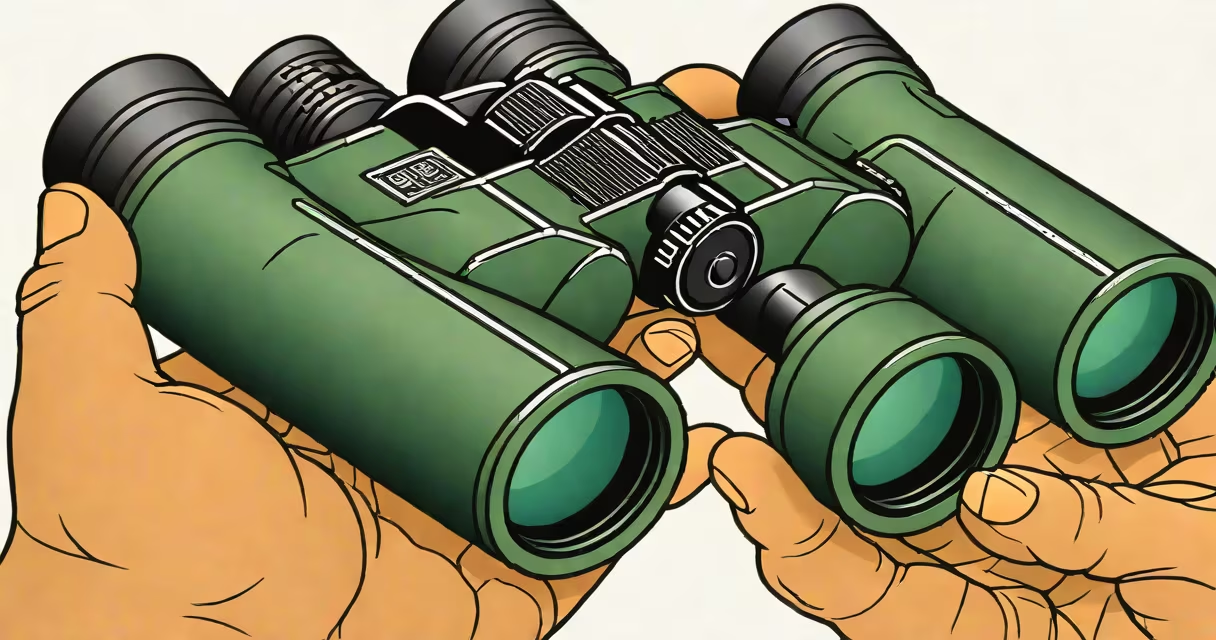
12x25 in binoculars means they provide 12 times magnification and have a 25-millimeter objective lens. This specification defines both how much larger distant objects appear and how much light the lenses gather.
The first number, 12, indicates magnification. Objects viewed through these binoculars appear 12 times closer than with the naked eye. A 12x zoom makes distant birds, landscapes, or stage performances seem near enough to see fine details.
The second number, 25, is the diameter of the front lens in millimeters. This determines how much light enters the binoculars. Larger lenses capture more light, improving brightness in low-light conditions. A 25mm lens is relatively small, limiting light intake compared to larger models.
Magnification and objective lens size are linked. Higher magnification requires larger lenses to maintain image brightness. With 12x magnification and only a 25mm lens, the image may appear dimmer than in larger binoculars.
For example, 10x50 binoculars have a 50mm lens, which gathers more light. They perform better in dusk or fog. The 12x25 model sacrifices light-gathering ability for compactness and weight savings.
Image stability becomes critical at 12x magnification. Hand tremors amplify at high zoom levels. Without image stabilization, handheld viewing becomes difficult beyond 10 seconds. Most 12x25 binoculars lack stabilization, making tripod use ideal for extended observation.
12x25 binoculars fall into the compact category. They are typically lightweight, under 200 grams, and fit easily in a coat pocket or small backpack. Their small size makes them popular for travel, hiking, and casual outdoor events.
These binoculars are often used for birdwatching at close range, concerts, sports games, or theater performances. Their portability outweighs their lower light-gathering capability in most daylight scenarios.
They are not suited for long-range astronomy or marine navigation. The narrow field of view and limited light transmission reduce effectiveness at night or in dense forests. For those tasks, binoculars with larger lenses-like 10x50 or 8x42-are preferred.
| Specification | 12x25 | 10x50 | 8x42 |
|---|---|---|---|
| Magnification | 12x | 10x | 8x |
| Objective Lens (mm) | 25 | 50 | 42 |
| Light Gathering | Low | High | Medium-High |
| Weight (approx.) | 160g | 550g | 480g |
| Best Use Case | Daytime travel, concerts | Night viewing, wildlife | General outdoor use |
Many assume higher magnification always means better quality. That's false. 12x25 binoculars offer strong zoom but suffer from reduced brightness and narrower fields of view. A 10x42 pair may show a wider scene and brighter image despite lower magnification.
Another error is equating size with performance. The 12x25 model is small because it uses smaller optics and less glass. This reduces cost and weight but limits low-light capability. You cannot compensate for a 25mm lens with better coatings alone.
A lesser-known fact: exit pupil size determines how well the binoculars work in dim light. Exit pupil = objective lens ÷ magnification. For 12x25, exit pupil = 25 ÷ 12 ≈ 2.1 mm. This is below the average human pupil size in darkness (4-7 mm), reducing effective visibility at twilight.
I used a 12x25 pair during a morning visit to a wetland reserve. The sun was rising, providing good daylight. I spotted a heron standing in shallow water about 100 meters away. At 12x magnification, the bird appeared defined-feathers visible, beak position precise.
However, when I tried to track it as it moved, the image shook noticeably. My hands couldn't hold steady. Switching to a tripod improved stability, but the image remained slightly dim. I noticed that nearby observers using 8x42 binoculars had a wider field of view and clearer images in shaded areas.
After 15 minutes, my eyes felt strained. The narrow field of view made it hard to reacquire the bird after it moved. In contrast, a 10x50 pair would have offered better light and easier tracking.
Choose 12x25 binoculars if portability is your priority. They're ideal for travelers, festival-goers, or anyone who wants a quick, lightweight tool for daytime viewing. Their compact size fits in small bags or pockets.
But avoid them for nighttime use, long-distance surveillance, or serious wildlife observation. The small lens and high magnification limit performance in low light and increase image shake.
Check for lens coatings. Multi-coated lenses reduce glare and improve contrast. Even with a small lens, good coatings improve image clarity. Look for terms like "fully multi-coated" or "high-transmission coatings."
Also, understand that "12x25" doesn't include image stabilization. Some brands advertise "stabilized" versions, but they're rare in this size class. If you plan to use them handheld for extended periods, look for models with built-in stabilization or use a tripod adapter.
12x25 binoculars are not for everyone. They serve a clear purpose: compact, portable, daytime viewing. But knowing their limits prevents disappointment. Choose based on your environment, lighting, and intended activity-not just the numbers on the label.