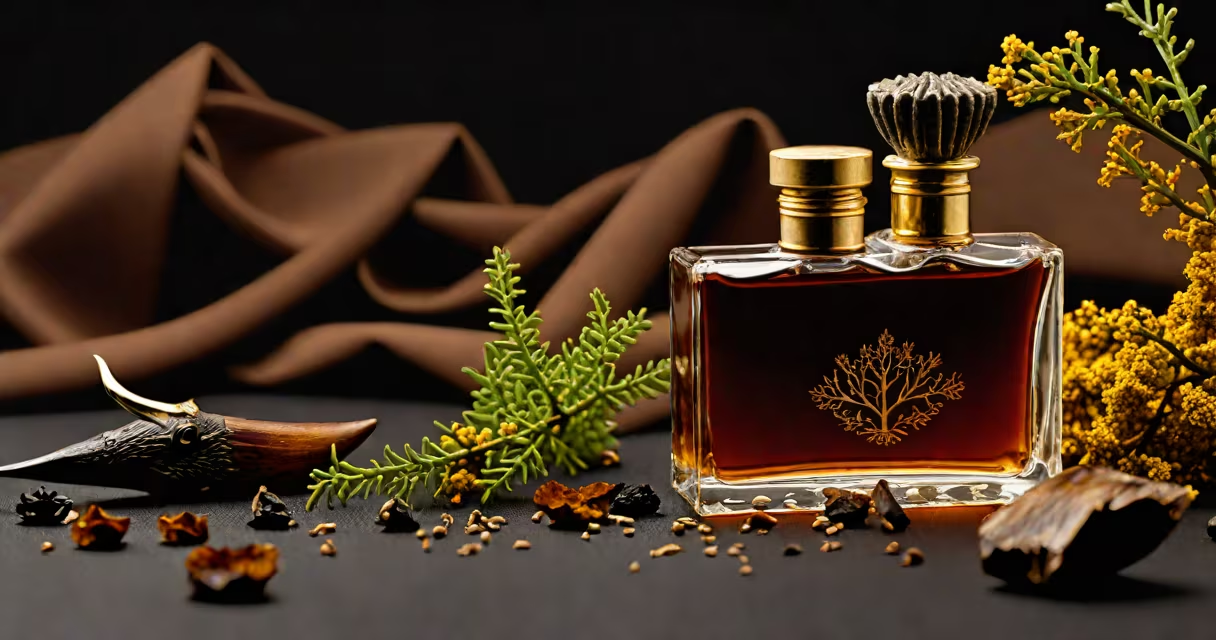
Animalic in perfume refers to scent notes that evoke primal, raw, or musky qualities associated with animal secretions-such as castoreum, civet, or musk-or synthetic compounds designed to mimic those effects. These notes add depth, sensuality, and intensity, often described as skin-like, animal-like, or earthy.
Perfume creators use animalic notes to build complexity and emotional resonance. They are not meant to smell like actual animals but rather to trigger instinctive, subconscious reactions tied to biology and memory. The term applies both to natural extracts and lab-created molecules that replicate the effect.
According to the International Fragrance Association (IFRA), many traditional animalic materials have been replaced by synthetics due to ethical and regulatory concerns. However, the olfactory impact remains central to modern perfumery.
Animalic notes function as base notes-present in the dry-down phase of a fragrance. They emerge after top and heart notes fade, anchoring the scent in warmth and intimacy. Their low volatility means they linger for hours, often blending with the wearer's body chemistry to create a unique signature.
These notes activate receptors linked to primal human responses. Research from the Monell Chemical Senses Center shows that certain musks stimulate brain regions associated with attraction and bonding, even when not consciously perceived.
For example, the synthetic musk molecule known as Galaxolide is widely used in perfumes labeled "clean" or "fresh." Despite being man-made, it delivers a soft, skin-like animalic effect-proving that the category isn't limited to natural sources.
Animalic notes fall into two categories: natural extracts and synthetic imitations. Natural sources include substances harvested from living animals, while synthetics are engineered to replicate the scent profile without animal involvement.
| Type | Source | Common Name | Olfactory Description |
|---|---|---|---|
| Natural | Civet cat (Viverra civetta) | Civet | Amber, fecal, leathery, warm |
| Natural | Beaver (Castor canadensis) | Castoreum | Leathery, sweet, balsamic, slightly medicinal |
| Synthetic | Lab synthesis | Galaxolide | Soft, clean, skin-like, powdery |
| Synthetic | Lab synthesis | Ambergris (synthetic) | Warm, marine, sweet, slightly fecal |
Castoreum, extracted from beaver glands, was used in high-end perfumes until the 1960s. It contributes a sweet, balsamic depth now largely replicated by synthetic alternatives. Modern perfumers favor these because they avoid ethical issues and supply inconsistencies tied to wild animal sourcing.
Ambergris-once prized for its rarity and aphrodisiac reputation-is now mostly replaced by synthetic versions like Ambroxan. This compound delivers a similar warm, ambery, skin-like quality but without the cost or controversy.
Many people assume animalic means "smells like a zoo" or "unpleasant." That's a misconception. While some animalic notes carry strong or unusual characteristics, their role is to improve, not dominate. A well-balanced animalic note adds dimension and realism to a fragrance.
Consider the perfume Black Orchid by Tom Ford. Its base features a blend of patchouli, vanilla, and a synthetic musk that gives a rich, skin-like warmth. The animalic element is subtle-felt more as a presence than a smell-but it's essential to the scent's allure. Without it, the fragrance would lack depth and intimacy.
A common error is equating animalic with "dirty" or "sweaty." But in perfumery, "animalic" doesn't refer to odor but to olfactory texture. The term describes a sensory quality-not a literal smell. As noted in *The Perfume Lover's Guide* by Mandy Aftel, "Animalic is not about smell-it's about feeling."
When testing a fragrance, pay attention to the dry-down stage. If the scent becomes warmer, softer, or more intimate-especially around the skin-there's likely an animalic component. You may detect a faint musk, a skin-like warmth, or a lingering sweetness that feels personal.
Look for ingredients like "musk," "civet," "castoreum," or "ambergris" on the ingredient list. However, many modern perfumes use synonyms such as "white musk," "synthetic musk," or "ambrox." These are not always labeled, so familiarity with scent profiles helps.
I once wore a sample of Le Labo Santal 33 during a long flight. After several hours, the sandalwood base softened into a warm, skin-like musk. A fellow passenger commented, "You smell like someone who's been awake all night." That's the effect-an animalic note that feels intimate, almost private.
Not all musky scents are animalic. Some are floral or green. But when the musk feels deep, warm, and personal-especially when it blends with your body heat-it's likely animalic in nature.
Confusion often arises between animalic, gourmand, and oriental fragrances. All three can feature warmth and sweetness, but their foundations differ.
Gourmand scents focus on edible, dessert-like notes-vanilla, caramel, chocolate. They aim to evoke taste. Animalic scents evoke sensation and presence. Oriental fragrances combine spice, wood, and resin, often with a heavy base. Animalic notes are frequently found in oriental styles but aren't synonymous with them.
For example, Yves Saint Laurent Black Opium is gourmand-its coffee and vanilla notes make it feel like a dessert. Chanel No. 5 is oriental-floral, aldehydic, complex. Diptyque Philosykos contains a subtle animalic musk beneath fig and amber, giving it a skin-like depth without overt sweetness.
If you're drawn to scents that feel close to the skin, that linger in memory, or seem to change with your mood, you're likely responding to animalic elements-even if you don't realize it.
Understanding what animalic means in perfume helps decode why certain fragrances feel useful, intimate, or unforgettable. It's not about smell-it's about sensation, memory, and connection.
Animalic in perfume is not a flaw-it's a tool. Used wisely, it adds humanity to a scent, making it feel alive, personal, and enduring.