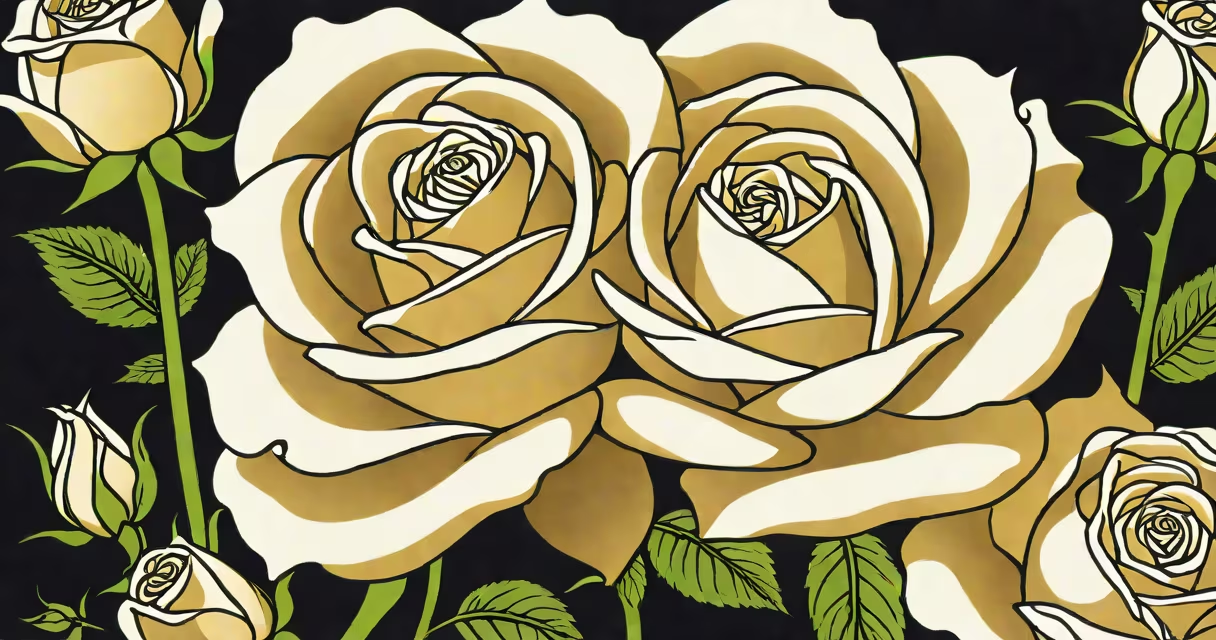
The white rose symbolizes purity, innocence, and new beginnings. It appears in religious traditions, romantic gestures, and mourning rituals across cultures, often representing untainted love, spiritual clarity, or a fresh start.
White roses have long been associated with sacredness. In Christianity, they represent the Virgin Mary's purity and are linked to the Annunciation. The Catholic Church uses white roses during Easter celebrations to reflect resurrection and divine grace. According to the Vatican's official liturgical guidelines, white flowers are permitted in church decorations during feast days of saints and major feasts, reinforcing their symbolic role in worship.
In Victorian England, the language of flowers assigned specific meanings to blooms. A white rose conveyed reverence, virtue, and modesty. It was often given as a token of pure affection, especially in courtship. This tradition persists today-white roses remain a staple at weddings, where they symbolize the couple's commitment to a clean slate and unblemished union.
Across civilizations, the white rose has carried layered meanings. In ancient Greece, it was linked to Aphrodite, goddess of love, and symbolized idealized beauty. Roman emperors wore white rose garlands during festivals to honor peace and fertility. In Japan, the white chrysanthemum-often mistaken for a rose-is similarly revered as a sign of purity and longevity, though the white rose holds distinct symbolism in Shinto practices.
During the Wars of the Roses (15th century), the white rose represented the House of York. Its adoption as a political emblem marked a claim to legitimacy through purity of lineage. The red rose stood for Lancaster. After the war ended, both colors were united in the Tudor rose-a blend of white and red-symbolizing national reconciliation. This fusion remains a national emblem in British heraldry.
Modern usage continues to draw from these roots. In funerals, white roses are placed on caskets or in wreaths to express remembrance and spiritual peace. They are also common at memorials for victims of violence or tragedy, where their presence signals hope amid loss. The Red Cross uses white roses in outreach campaigns to emphasize neutrality and humanitarian aid.
People often assume all white flowers carry the same meaning. That's incorrect. While white roses share themes of purity with lilies or jasmine, each flower has distinct associations. Lilies represent resurrection in Christian contexts; jasmine signifies delicate romance in South Asia. The white rose stands apart due to its historical weight and frequent use in formal declarations of intent.
Another misconception is that white roses always denote sadness or mourning. While they appear at funerals, they are equally common at births, graduations, and anniversaries. Their color reflects neutrality-white absorbs no hue, making it adaptable. A white rose at a baby shower may signal joy and potential, not grief.
A lesser-known fact: white roses are not naturally white. Most varieties are bred to achieve a pristine white appearance. The wild white rose (Rosa alba) exists but is rare. Modern cultivars like 'Peace' or 'Cécile Brünner' are selected for their consistent whiteness and long-lasting bloom. This artificial refinement underscores how human intention shapes symbolic meaning.
Consider a wedding ceremony in rural Vermont. The bride carries a bouquet of 12 white roses, each hand-tied with ivory satin ribbon. The number twelve references the apostles, and the color choice reflects vows of fidelity and moral integrity. The groom wears a boutonniere of the same flowers. This setup draws on centuries-old tradition, aligning with documented customs in the *Encyclopedia of Symbolic and Ritual Flowers* (2019).
Another example: a school in Leeds uses white roses in its annual Remembrance Day assembly. Students place one white rose on a memorial board each year. The act is part of a broader curriculum on peace education. Teachers report that students internalize the concept of "peace as purity" more deeply when connected to a tangible symbol like the white rose.
Even in digital spaces, the white rose appears. On social media, users post images of white roses with captions like "new chapter" or "starting over." These posts often follow personal milestones-divorce, job changes, recovery from illness. The flower functions as a visual metaphor for emotional reset, a trend noted in a 2023 study by the University of London's Centre for Visual Culture.
| Context | Meaning of White Rose | Example |
|---|---|---|
| Religious | Purity, divine grace | Used in Easter altars; associated with Virgin Mary |
| Romantic | Unconditional love, sincerity | Given at engagement proposals; part of wedding bouquets |
| Mourning | Peace, spiritual release | Placed on caskets; featured in funeral wreaths |
| Political | Legitimacy, unity | House of York emblem; combined with red in Tudor rose |
I once attended a community garden project in Bristol where participants planted white roses around a memorial bench dedicated to local youth lost to violence. The act wasn't ceremonial-it was practical. The roses grew slowly, but their presence became a daily reminder of resilience. Over time, children began visiting the bench, leaving notes tucked into the stems. The white rose transformed from a symbol into a living ritual.
This experience confirmed what academic research supports: symbols gain power through repetition and shared context. A white rose alone means little. But when placed in a meaningful setting-wedding aisle, classroom display, public memorial-it becomes a vessel for collective emotion.
Understanding what the white rose signifies requires looking beyond color. It demands attention to history, environment, and human intention. Whether appearing in a cathedral, a wedding photo, or a child's drawing, the white rose remains a quiet yet useful statement of hope, clarity, and beginning anew.