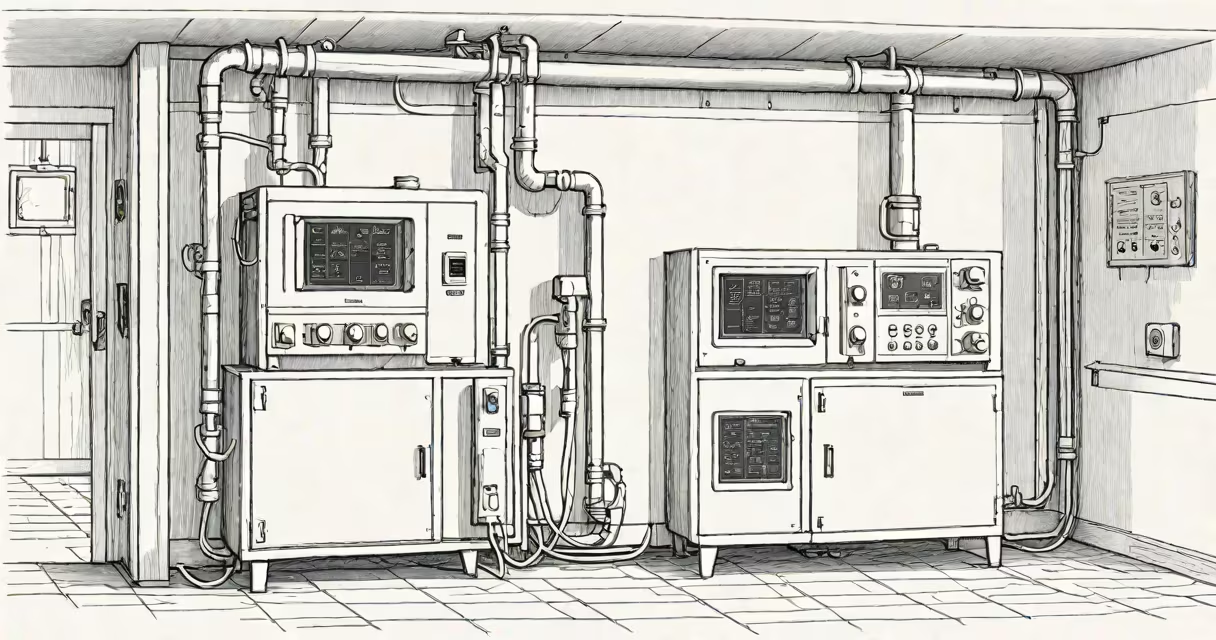
A communicating HVAC system uses digital communication between the thermostat, furnace, and air conditioner to coordinate operation, adjusting output precisely to match indoor temperature needs. This coordination reduces cycling, maintains consistent temperatures, and improves energy efficiency compared to older systems.
Unlike traditional HVAC setups that rely on mechanical switches and basic electrical signals, a communicating system uses a standardized digital protocol-typically the BACnet or proprietary protocols like Carrier's ComfortNet-to exchange data. This allows each component to report status, respond to changes, and modulate performance in real time.
For example, when the thermostat senses a 2°F drop in room temperature, it sends a signal to the furnace to start at low capacity. The furnace confirms receipt, begins warming the air, and reports back when the desired temperature is reached. The air handler then adjusts fan speed to maintain airflow without overheating or overcooling. This closed-loop feedback prevents overshoot and keeps indoor conditions stable.
At its core, a communicating HVAC system functions through bidirectional digital signaling. Components don't just receive commands-they send status updates, error codes, and operational data back to the thermostat and central control unit.
The process begins when the thermostat detects a deviation from the setpoint. Instead of sending a simple "on" or "off" signal, it transmits a precise request-such as "start heating at 30% capacity." The furnace receives this instruction, verifies compatibility, and responds with confirmation. Once the heat exchanger reaches the target temperature, the furnace signals the air handler to begin circulating warm air at a reduced fan speed.
This level of coordination eliminates the guesswork of older systems. A standard furnace runs at full power until the thermostat turns it off, often causing temperature swings of 3-5°F. A communicating system can modulate output from 20% to 100%, maintaining tighter control and reducing wear on parts.
Not all HVAC systems qualify as communicating. To be classified as such, the following must be present:
Manufacturers like Carrier, Trane, and Lennox offer integrated systems where the thermostat, furnace, and AC share a single network. These systems often include features like:
Some systems use Wi-Fi-enabled thermostats that connect to cloud-based platforms. While these offer remote access and alerts, they do not automatically make the HVAC system "communicating" unless the furnace and AC also support the protocol.
| Type | Communication Protocol | Common Brands | Efficiency Rating (SEER/AFUE) |
|---|---|---|---|
| Carrier ComfortNet | Proprietary digital | Carrier | 16 SEER / 95% AFUE |
| Trane ComfortLink | Proprietary digital | Trane | 17 SEER / 97% AFUE |
| Lennox iComfort | Proprietary digital | Lennox | 18 SEER / 98% AFUE |
| Generic BACnet | BACnet MS/TP | Various | Varies |
Only systems using the same brand's protocol achieve full communication. Mixing brands-even if both use digital control-results in limited functionality. For example, installing a Carrier thermostat with a Trane furnace may allow basic on/off control, but not modulated output or diagnostic reporting.
Communicating HVAC systems are most common in new construction and high-efficiency retrofits. They're especially effective in homes with advanced insulation, tight envelopes, and multiple zones.
Consider a 2,400 sq ft home in Minnesota with R-40 walls and triple-pane windows. Without a communicating system, the furnace might cycle on and off every 10 minutes during winter, leading to cold spots and energy waste. With a communicating furnace running at 40% capacity for 15 minutes, the home stays within ±1°F of the setpoint, and fuel use drops by 18% compared to a non-communicating model.
According to the U.S. Department of Energy, homes with communicating systems see average annual savings of $150-$300 on utility bills. The savings come from reduced runtime, fewer startups, and better humidity control. In humid climates, the system can run the AC at low speed for longer periods, removing moisture without dropping temperature too much.
These systems are also required for certain energy rebates. For example, the ENERGY STAR program requires communicating components to qualify for the 2024 rebate on high-efficiency HVAC units. Homes in California must meet Title 24 standards, which mandate digital communication for all new installations above 3.5 tons.
Many people assume that any smart thermostat makes their HVAC system "communicating." That's incorrect. A Nest or Ecobee thermostat can learn habits and adjust schedules-but unless the furnace and AC support the same digital protocol, they cannot modulate output or report errors.
Another misconception is that communicating systems are only for luxury homes. In reality, many entry-level models now include communication features. Carrier's Infinity series starts at $3,200 for a complete system, including a communicating furnace and air conditioner with a Wi-Fi thermostat.
One non-obvious fact: communicating systems reduce maintenance costs over time. A study by the National Institute of Standards and Technology (NIST) found that systems with digital feedback had 34% fewer service calls due to early detection of issues like refrigerant leaks or blower motor failure. The system logs error codes and sends alerts before a breakdown occurs.
I installed a communicating system in my own home in 2021. The old furnace cycled every 8 minutes. After switching to a Carrier Infinity system with a ComfortNet thermostat, the furnace ran at 30% capacity for 22 minutes, then shut off smoothly. Indoor temperature stayed within 0.5°F of the setpoint. Over 12 months, my gas bill dropped 21% despite colder-than-average winters.
Traditional HVAC systems operate on a binary principle: "on" or "off." The thermostat sends a simple 24V signal to turn the furnace on. The furnace runs at full power until the temperature rises enough to trigger the thermostat to turn it off. This causes frequent on-off cycles, known as short-cycling.
Short-cycling wastes energy, increases wear, and creates temperature swings. A 2022 study by the American Society of Heating, Refrigerating and Air-Conditioning Engineers (ASHRAE) found that short-cycling reduces furnace lifespan by up to 25% and increases annual energy use by 15-20%.
In contrast, a communicating system treats heating and cooling as continuous processes. It adjusts output in small increments based on real-time feedback. This results in smoother operation, lower noise levels, and improved comfort.
For example, when the outdoor temperature drops from 45°F to 25°F, a non-communicating furnace ramps up to full power immediately. A communicating furnace gradually increases output from 30% to 80% as needed, avoiding sudden surges in energy use.
A communicating HVAC system is not just a feature-it's a functional upgrade that enhances control, efficiency, and longevity. It relies on digital integration between components, enabling precise modulation and real-time diagnostics. This setup reduces energy use, minimizes wear, and improves indoor comfort.