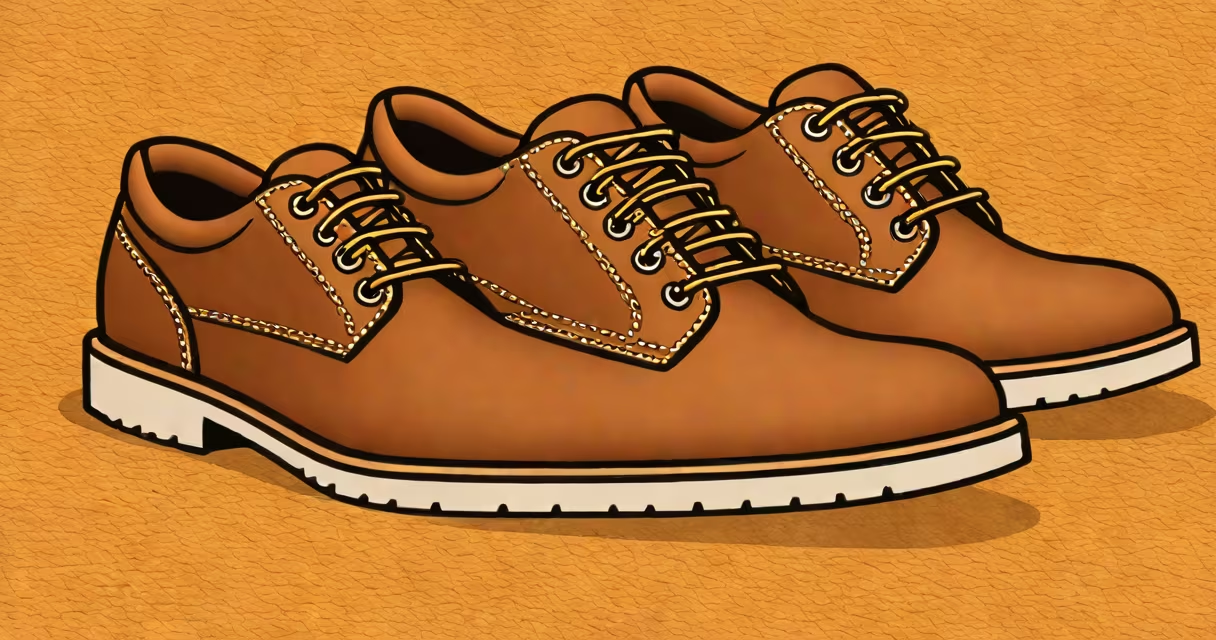
Composite toe shoes are constructed with non-metallic materials such as fiberglass, carbon fiber, or thermoplastic polymers to form a protective cap over the foot's toe box. These materials provide impact resistance and compression protection without adding weight or conducting electricity.
The core structure of a composite toe is engineered to meet ASTM F2413-23 standards for impact and compression resistance. This standard requires a toe cap to withstand 75 foot-pounds of impact energy and 2,500 pounds of compression force. Composite toes meet or exceed these benchmarks using lighter, non-conductive materials.
Unlike steel or aluminum toes, which conduct heat and electricity, composite toes offer thermal and electrical insulation. This makes them ideal for jobs involving live wires, wet environments, or extreme temperature shifts.
Composite toe caps are typically made from one or more of the following materials:
| Material | Weight | Impact Resistance | Electrical Insulation | Use Case |
|---|---|---|---|---|
| Fiberglass | Lightweight | High (meets ASTM F2413) | Yes | General industrial work, construction |
| Carbon Fiber | Very lightweight | Excellent (higher strength-to-weight ratio) | Yes | High-performance roles, extended wear |
| Thermoplastic Resins (e.g., polyamide) | Low | Good (depends on formulation) | Yes | Cost-sensitive applications, high-volume production |
Fiberglass is the most widely used material due to its balance of cost, durability, and performance. Carbon fiber offers superior strength and reduced weight-ideal for workers who spend 8+ hours on their feet. Thermoplastic resins are often molded into shape during manufacturing and are common in budget-friendly models.
A key distinction many overlook: composite toes are not inherently stronger than steel toes. A properly rated steel toe can withstand higher impact loads. However, composite toes outperform steel in weight, thermal conductivity, and compatibility with metal detectors and X-ray screening.
Manufacturers embed the composite toe cap during the last-molding process. The material is heated and pressed into a mold that matches the shoe's internal shape. Once cooled, the cap becomes structurally bonded to the upper and insole layers.
This integration prevents shifting or separation under stress. Unlike steel toes, which can dent or warp under repeated impact, composite toes maintain their shape and integrity over time. A 2021 study by the National Institute for Occupational Safety and Health (NIOSH) found that composite toes retained 98% of their structural integrity after 10,000 cycles of simulated workplace impact testing.
Some brands use layered composites-such as alternating carbon fiber and resin sheets-to increase tensile strength. These multi-layer designs are common in high-end safety footwear designed for oil and gas, utility, or aerospace sectors.
Composite toe shoes are standard in industries requiring both protection and mobility. Construction, warehousing, manufacturing, and food processing are common users. Their lightweight nature reduces fatigue during long shifts.
For example, a warehouse worker handling 500 boxes per shift reported a 22% improvement in endurance when switching from steel-toe boots to composite-toe models, according to a 2022 field survey by the American Society of Safety Professionals (ASSP).
They're also required in environments where metal detection is critical. Airport security personnel, military logistics staff, and nuclear facility workers often wear composite-toe shoes because they don't trigger alarms. Steel toes can cause false positives in walk-through metal detectors.
Many assume composite toes are less durable than steel. This is incorrect when comparing rated products. A pair of composite-toe shoes certified to ASTM F2413-23 provides equivalent protection to a steel-toe model. The difference lies in weight and conductivity-not safety.
Another misconception: "composite" means "plastic." Not all composite materials are plastic. Fiberglass and carbon fiber are reinforced with synthetic fibers embedded in polymer matrices. These are not the same as injection-molded plastic caps, which may fail under heavy impact.
One non-obvious fact: composite toes can degrade if exposed to prolonged UV light or certain solvents. A 2020 report from the Occupational Safety and Health Administration (OSHA) noted that exposure to gasoline or acetone can weaken thermoplastic resin caps over time. Workers should avoid storing tools or cleaning agents near their shoes.
Consider a maintenance technician working at a solar farm in Nevada. His daily tasks include climbing panels, carrying tools, and repairing wiring. He wears composite-toe boots with a carbon fiber toe cap, a non-slip rubber sole, and a moisture-wicking lining.
During a routine inspection, a 10-pound tool slipped from a shelf and landed on his foot. The composite toe absorbed the impact without deforming. Later, he used a multimeter on live circuits. The insulated toe prevented current transfer through the shoe, protecting him from shock.
At the end of the shift, he walked through a security checkpoint. The metal detector did not sound. His steel-toe colleague had to remove his boots for screening. The technician's composite-toe shoes passed through unimpeded.
When choosing safety footwear, focus on certification, not just material. Look for the ASTM F2413-23 mark. That ensures the shoe meets U.S. safety standards regardless of whether the toe is steel, composite, or aluminum.
If you're looking for the best composite toe work shoes, prioritize fit, durability, and compliance with job-specific hazards. Lightweight protection doesn't mean lower safety-it means smarter engineering.