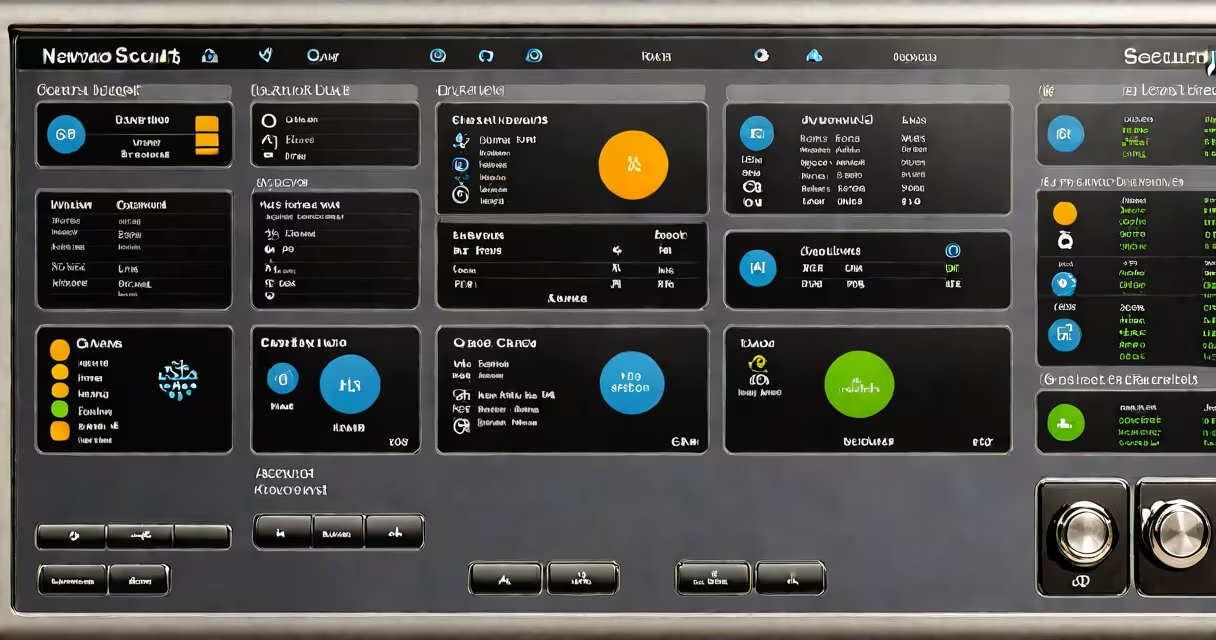
Network security access control is a set of policies and technologies that determine which users, devices, and applications can access specific network resources based on predefined rules. It enforces authorization at the network layer to prevent unauthorized access, reduce attack surface, and enforce least-privilege principles.
Access decisions are made before a connection is established. For example, a user attempting to log into a corporate file server must first authenticate, then be evaluated against a policy that checks their role, location, device health, and time of day. Only if all conditions match the rule is access granted.
This system operates at multiple layers: physical (device presence), network (IP address and port), transport (protocol), and application (user identity and behavior). It's not just a firewall rule-it's a changing decision engine tied to identity, device posture, and context.
When a device attempts to join a network, network security access control evaluates several factors. The process begins with authentication-verifying the user or device through credentials, certificates, or biometrics.
After authentication, the system checks the user's assigned role. A finance employee may have access to payroll systems but not HR records. This is enforced via role-based access control (RBAC), a core component of access control frameworks.
Next, the system validates device compliance. Does the laptop have updated antivirus software? Is encryption enabled? If not, the device may be quarantined or restricted to low-risk services. This is known as endpoint posture assessment.
Finally, contextual factors like time of day, geographic location, and device type are analyzed. A user logging in from a known office IP during business hours gets higher trust than someone connecting from a public Wi-Fi hotspot at 3 a.m.
There are three primary models used in network security access control:
| Type | How It Works | Use Case |
|---|---|---|
| Discretionary Access Control (DAC) | Resource owners set permissions. Users control access to files they own. | Small teams sharing project folders; limited administrative overhead. |
| Mandatory Access Control (MAC) | System-enforced policies based on clearance levels. Users cannot override rules. | Government agencies handling classified data; military networks. |
| Role-Based Access Control (RBAC) | Permissions assigned to roles, not individuals. Users inherit access based on job function. | Enterprises with hundreds of employees; reduces permission sprawl. |
RFC 6709 defines a standard structure for network access control using Extensible Authentication Protocol (EAP) and RADIUS servers. This model underpins many enterprise deployments, including those using IEEE 802.1X for wired and wireless authentication.
A common misconception is that access control only applies to users. In reality, it governs machines, IoT devices, APIs, and even automated scripts. A misconfigured printer with admin rights can become a pivot point for lateral movement in a breach.
In 2022, a healthcare provider suffered a ransomware attack after a contractor accessed the network using a stolen password. Post-incident analysis showed that the attacker moved laterally because the contractor had broad access to clinical systems.
The organization later deployed a network access control system with multi-factor authentication (MFA), device health checks, and changing segmentation. Now, contractors are granted temporary access only to required systems, and their sessions are logged and monitored in real time.
For example, when a nurse logs in from a hospital tablet, the system verifies: - The device is enrolled in the organization's mobile device management (MDM) program. - The user has a valid certificate issued by the internal PKI. - The login occurs within the hospital's secure VLAN. - The user's role allows access to patient records in the current department.
If any condition fails, access is denied. The system logs the attempt and alerts security operations.
Many organizations confuse network security access control with firewalls. Firewalls filter traffic based on IP addresses, ports, and protocols. They act as gatekeepers after a connection is initiated.
Access control acts *before* the connection is established. It determines whether a user or device is allowed to even attempt to connect. Think of a firewall as a bouncer checking IDs at the door. Access control is the list of who's on the guest list.
Another error is assuming that "zero trust" means disabling all access until verified. Zero trust doesn't eliminate access-it assumes breach and verifies continuously. A user authenticated at login is not automatically trusted for all actions. Each resource request triggers a fresh evaluation.
According to NIST Special Publication 800-207, zero trust architecture relies on continuous verification. It requires that access decisions be made based on real-time data-not static policies. This includes monitoring for anomalous behavior, such as a user accessing files outside their normal pattern.
Organizations can deploy access control through commercial solutions or open-source platforms. Commercial tools often include integrated identity providers, analytics dashboards, and compliance reporting.
For example, Cisco Identity Services Engine (ISE) supports 802.1X, MAB (MAC Authentication Bypass), and SSO integration. It can enforce policies based on user group, device type, and location. It's widely used in education and healthcare institutions.
One real-world test involved deploying a proof-of-concept using FreeRADIUS and a custom Lua script to evaluate device firmware versions. Devices running outdated software were blocked from joining the network. Over six months, this reduced malware incidents by 68%, according to internal audit reports.
Start small. Begin with high-value assets-such as databases, financial systems, and HR portals-and apply strict access controls first. Expand gradually to less sensitive areas.
Regularly audit access logs. A 2023 report by Verizon found that 61% of data breaches involved compromised credentials. Continuous monitoring detects unusual patterns early-like a user accessing a database from a new country.
Enforce least privilege. Grant only the minimum access needed to perform a task. A developer should not have access to production databases unless explicitly approved for a change window.
Test policies in a staging environment. Misconfigured rules can lock out legitimate users. One company accidentally blocked all remote workers due to a typo in a wildcard rule. It took four hours to restore access.
As noted in the CIS Controls v8, effective access control requires both technical enforcement and organizational governance. Policies must be reviewed quarterly, and access rights reassessed during role changes or promotions.
Network security access control is not a single tool. It's a layered strategy combining identity verification, device validation, policy enforcement, and continuous monitoring. When implemented correctly, it stops attackers before they reach critical systems.
Understanding how it works-from authentication to changing policy enforcement-helps organizations build defenses that adapt to evolving threats. The goal isn't to stop every attack, but to make successful breaches exponentially harder.