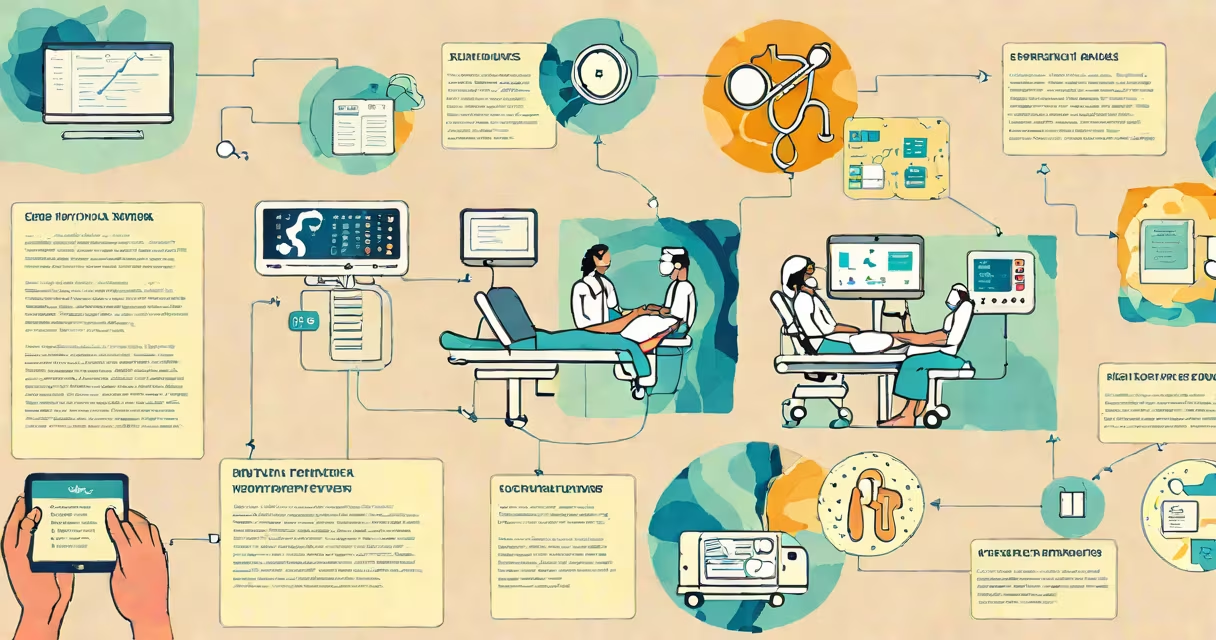
EDI in healthcare is the structured electronic transfer of clinical, financial, and administrative data between organizations using standardized formats such as X12 and HL7. It replaces paper-based processes like faxes and physical forms, enabling faster, more accurate communication across the healthcare system.
EDI operates through predefined data formats that ensure consistency regardless of the sender's or receiver's software. For example, when a doctor's office submits a claim to an insurer, EDI ensures the patient ID, procedure codes, and billing details appear in the correct fields across systems. This reduces errors and speeds up processing times from days to minutes.
The core function of EDI is to eliminate manual data entry. Without it, a single claim might require three staff members to retype information across five different systems. With EDI, that same claim flows automatically from the provider's EHR into the payer's system, validated and processed within hours.
EDI relies on a three-step process: data translation, transmission, and interpretation. First, internal systems-like an electronic health record (EHR) or practice management software-convert raw data into a standardized EDI format. Second, the formatted data is sent via secure networks, often using AS2, SFTP, or cloud-based gateways. Third, the recipient system parses the incoming data and integrates it into their own workflow.
For instance, when a patient visits a clinic, the visit details are recorded in the EHR. The system then generates an 837 transaction (healthcare claim) in X12 format. This file is encrypted, sent to the insurance company's server, and automatically imported into their claims adjudication system. The entire process takes under 60 seconds and requires no human intervention.
Transmission security is enforced through encryption protocols and authentication mechanisms. HIPAA mandates that all protected health information (PHI) transmitted electronically must be secured. EDI systems comply by using AES-256 encryption and digital certificates during data exchange.
Two primary standards govern EDI in healthcare: X12 and HL7. X12, developed by the Accredited Standards Committee, defines transaction sets for specific business purposes. Common X12 transactions include:
| Transaction Set | Purpose | Example Use Case |
|---|---|---|
| 837 | Healthcare claim | Submitting a patient's bill to an insurer |
| 270/271 | Eligibility and benefit inquiry/response | Checking if a patient's coverage applies to a procedure |
| 855 | Invoice acknowledgment | Confirming receipt of a billing statement |
| 835 | Payment advice | Notifying a provider of payment status and amount |
HL7 (Health Level Seven International) focuses on clinical data exchange. While not strictly EDI, HL7 messages are often integrated into EDI workflows. HL7 v2.x and FHIR (Fast Healthcare Interoperability Resources) support real-time messaging between EHRs, labs, and pharmacies. For example, a lab result can be sent via HL7 to a physician's EHR in near real time, triggering alerts or treatment adjustments.
A lesser-known but critical distinction: X12 handles administrative and financial data, while HL7 handles clinical data. Mixing them incorrectly causes system failures. A 2021 study by the Office of the National Coordinator for Health IT (ONC) found that 14% of failed EDI transmissions stemmed from mismatched data types, underscoring the need for proper standard alignment.
EDI is deployed across hospitals, clinics, insurers, laboratories, and pharmaceutical suppliers. Its adoption is driven by regulatory requirements and operational efficiency. The Centers for Medicare & Medicaid Services (CMS) mandates the use of EDI for all federal healthcare program claims, including Medicare Part B and Medicaid.
For example, a rural clinic in Montana uses EDI to submit claims to Blue Cross Blue Shield. Their practice management software automatically generates an 837 transaction, encrypts it, and sends it via a secure gateway. Within 12 hours, the insurer processes the claim, and the provider receives a response via 835. The entire cycle-from visit to payment-takes less than 48 hours, compared to 10-14 days with paper submissions.
EDI also supports prior authorization workflows. A dermatologist requests approval for a biologic drug. The request is sent as an 278 transaction (prior authorization request), which the insurer reviews and responds to via 279 (response). This process, handled entirely through EDI, reduces delays from weeks to under 72 hours.
One widespread misunderstanding is that EDI is synonymous with "electronic health records." They are distinct: EHRs store patient data; EDI moves it between systems. Another confusion is equating EDI with APIs. While both enable data flow, EDI uses batched, structured documents, whereas APIs deliver real-time, event-driven data. A hospital may use EDI to send monthly billing summaries and APIs to update live patient vitals.
Another misconception is that EDI is outdated. On the contrary, it remains central to healthcare interoperability. According to a 2023 report by HIMSS, 94% of U.S. hospitals use EDI for at least one transaction type. The persistence of EDI is due to its reliability, auditability, and compliance with HIPAA and the 21st Century Cures Act's interoperability rules.
As an example, I once observed a regional health network in Texas switch from fax-based referrals to EDI. Before, referrals took 3-5 days to process. After implementing X12 270/271 transactions, the average turnaround dropped to 18 hours. The reduction in lost paperwork and duplicate entries saved the organization $120,000 annually in administrative overhead.
EDI doesn't operate in isolation. It integrates with other systems like revenue cycle management (RCM) platforms, pharmacy benefit managers (PBMs), and patient portals. For instance, when a prescription is filled, the pharmacy sends an 837 transaction to the insurer, and the patient receives a notification via a mobile app linked to the RCM system.
Organizations often use EDI service providers-such as Quorum, MedData, or Surescripts-to manage the technical complexity. These vendors handle format conversion, network routing, error logging, and compliance reporting. A small clinic without in-house IT staff can outsource EDI operations for under $200/month.
When setting up EDI, organizations must define business partners, agree on transaction sets, test with sandbox environments, and obtain signed business associate agreements (BAAs) under HIPAA. Failure to validate configurations leads to rejected files and delayed payments.
EDI in healthcare is not a one-time setup-it's a continuous process of validation, monitoring, and updating. As new regulations emerge and systems evolve, maintaining EDI readiness ensures uninterrupted care delivery and financial stability across the healthcare supply chain.