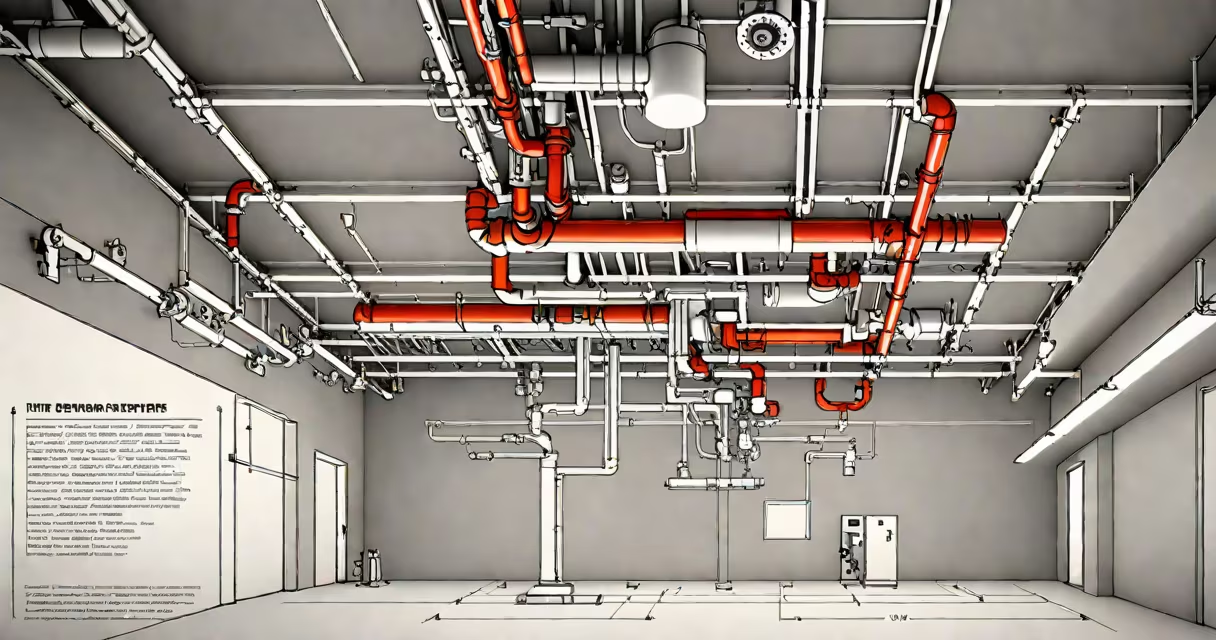
Fire sprinkler systems are automated devices that detect rising temperatures and release water to suppress or control fires in buildings. They activate only in the immediate vicinity of a fire, minimizing water damage while protecting lives and property. These systems are required in most commercial and high-risk residential structures under national fire safety codes.
Each sprinkler head contains a heat-sensitive element-typically a glass bulb filled with liquid or a fusible alloy link-that melts or shatters when exposed to high heat. Once triggered, the head opens and releases water in a predetermined spray pattern. The system operates independently of human intervention and aims to respond within seconds of detecting a fire's heat signature.
The National Fire Protection Association (NFPA) 13 standard governs the design, installation, and maintenance of fire sprinkler systems in the United States. According to NFPA, properly installed sprinkler systems reduce the risk of death in a fire by 80% and limit property loss by 70% compared to unprotected buildings. This data underscores their role as one of the most effective fire prevention tools available.
When a fire begins, heat rises and accumulates near the ceiling. A single sprinkler head senses this localized temperature increase-typically between 135°F and 165°F (57°C-74°C)-and activates. The system's water pressure, maintained by pumps or gravity-fed tanks, forces water through the open head and onto the fire.
Only the sprinklers closest to the fire activate. A typical system has multiple heads spaced 15 to 20 feet apart, depending on ceiling height and hazard level. In a test conducted by the Fire Protection Research Foundation, a single sprinkler head released approximately 15 gallons per minute (gpm) of water, covering a 30-foot diameter area effectively.
Water flow is monitored by a flow switch connected to the building's alarm panel. When water moves through the pipes, the switch sends a signal to sound alarms and notify emergency services. This ensures rapid response even if occupants don't notice the fire.
There are three primary types of fire sprinkler systems, each suited to different environments based on climate, occupancy, and risk profile:
| Type | Activation Method | Best For | Common Risks |
|---|---|---|---|
| Wet Pipe | Always filled with water under pressure | Residential buildings, offices, schools | Freezing not a concern |
| Dry Pipe | Pipes filled with pressurized air; water enters after head activation | Unheated garages, cold storage areas | Freezing damage risk |
| Preaction | Requires two events: detection of smoke/heat AND head activation | Data centers, museums, archives | High-value assets; avoid accidental discharge |
Wet pipe systems are the most common, accounting for over 90% of installations in the U.S., according to the NFPA. Dry pipe systems are used in unheated spaces where freezing could rupture wet systems. Preaction systems are designed for sensitive environments where water damage from a false alarm could be catastrophic.
A key distinction often missed is that preaction systems do not release water until both a trigger condition (like smoke detection) and physical head activation occur. This dual-stage process prevents accidental discharge due to broken heads or debris. For example, in a museum storing priceless manuscripts, a preaction system reduces the chance of water damage from a single malfunctioning head.
Fire sprinkler systems are mandated in most commercial buildings, multi-family residential units, and industrial facilities. The International Building Code (IBC) requires sprinklers in high-rise buildings, assembly occupancies with more than 300 people, and certain manufacturing zones.
They are especially critical in healthcare facilities. A 2019 study published in the Journal of Fire Sciences found that hospitals with sprinkler systems had a 62% lower rate of fire-related fatalities than those without. In one case, a fire in a hospital wing in Chicago was contained within 90 seconds thanks to a single activated sprinkler head, preventing evacuation of patients in the adjacent ward.
Residential use is growing. Since 2010, California has required sprinklers in all new single-family homes over 2,500 square feet. New York City mandates them in all new high-rises and some older buildings undergoing renovation. These laws reflect a shift toward proactive fire protection rather than reactive firefighting.
Many people believe that sprinkler systems activate during a fire alarm or when someone pulls a manual pull station. This is incorrect. Only the sprinkler heads near the actual fire trigger. A building-wide alarm does not cause all heads to open.
Another myth is that sprinklers cause widespread water damage. In reality, a single sprinkler head discharges about 15 gpm-roughly equivalent to a household garden hose. By comparison, fire hoses deliver 100-250 gpm. Water damage from sprinklers is typically minimal and localized.
I once observed a controlled test at a fire training facility where a kitchen fire in a mock apartment caused only one sprinkler head to activate. The room remained dry except for a small puddle beneath the head. The rest of the apartment stayed untouched. This demonstrated how targeted and efficient the system is.
Some assume that sprinklers are prone to failure. However, NFPA reports that less than 0.1% of sprinkler heads fail to operate when exposed to fire. Most failures stem from poor maintenance, not design flaws. Regular inspections and testing prevent issues before they arise.
Understanding the differences between wet, dry, and preaction systems is essential for proper selection. Wet systems are simple and reliable but unsuitable for freezing environments. Dry systems avoid freeze damage but have a delay-typically 30 to 60 seconds-between head activation and water delivery due to air expulsion.
Preaction systems eliminate this delay but require additional components: smoke detectors, heat sensors, and a control panel. They are more expensive to install-up to 30% higher than wet systems-but offer peace of mind in sensitive locations.
For example, a data center in Seattle uses a preaction system because a single water leak could destroy servers and erase years of research. The system remains inactive until both a smoke detector signals a problem and a sprinkler head melts. This dual verification prevents accidental discharge during routine maintenance.
Fire sprinkler systems are not optional in many settings-they are life-saving infrastructure. Their design, function, and regulatory oversight ensure that they perform reliably when needed most. Understanding how they work and which type suits your space prevents confusion and ensures safety.