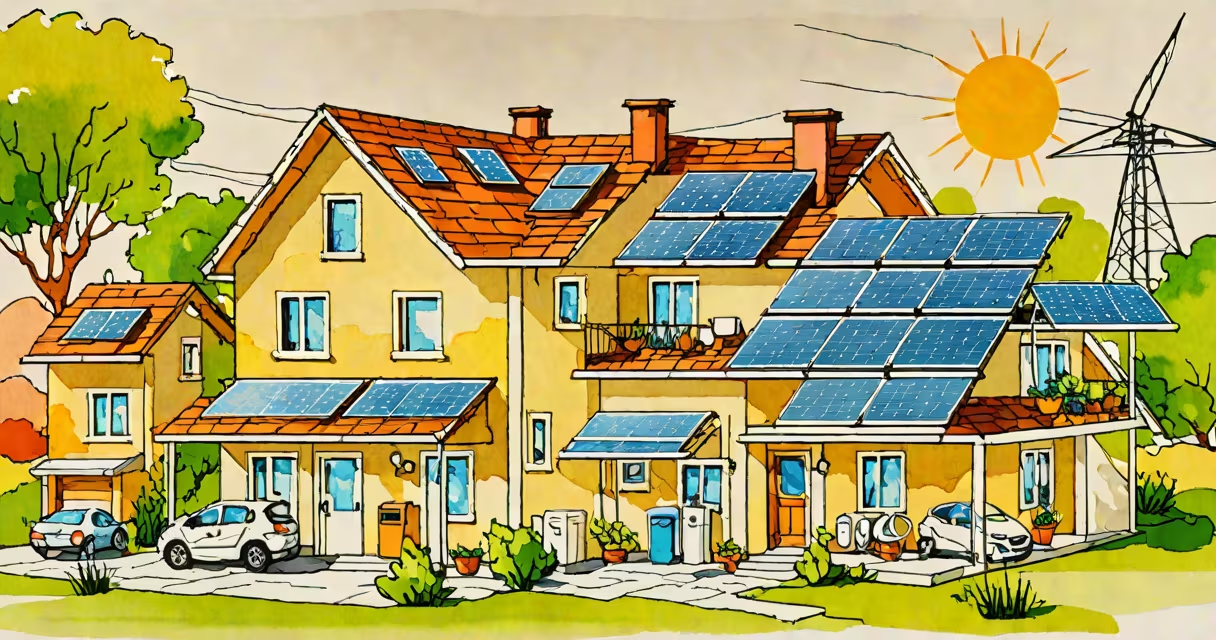
Energy consumption is the total amount of energy used by a system, device, or process over a specific period. It's measured in kilowatt-hours (kWh) for electricity, joules for mechanical work, or British Thermal Units (BTUs) for heating. This metric determines operational costs, environmental impact, and system design.
Electricity use in homes, factories, and vehicles is tracked through meters. A 100-watt light bulb running for 10 hours consumes 1 kWh. That's the standard unit for billing and efficiency comparisons. Industrial machines, data centers, and transportation systems also report consumption in kWh or megawatt-hours (MWh).
The U.S. Energy Information Administration (EIA) reports that the average American household consumed 873 kWh per month in 2023. That translates to roughly 29 kWh per day. This baseline helps compare usage across regions, seasons, and building types. Consumption levels directly affect utility bills and greenhouse gas emissions.
Energy consumption occurs when a device converts electrical, thermal, or chemical energy into useful work. A refrigerator runs a compressor using 150 watts. Over 24 hours, that's 3.6 kWh. The meter records this as consumption, regardless of whether the fridge is cooling food or just cycling on standby.
Consumption depends on both power draw (watts) and duration (hours). A 2,000-watt space heater running for 1 hour uses 2 kWh. A 100-watt fan running 8 hours uses 0.8 kWh. The product of power and time gives total consumption. This relationship is linear and predictable.
Smart meters track real-time usage and send data to utilities. They enable time-of-use pricing, where electricity costs more during peak demand hours. A homeowner who runs a dishwasher at 10 PM pays less than someone who runs it at 6 PM. This shifts consumption patterns and reduces strain on grids.
Energy consumption varies by sector. Residential, commercial, industrial, and transportation sectors each have distinct profiles.
| Sector | Average Monthly Consumption (kWh) | Main Sources | Key Devices |
|---|---|---|---|
| Residential | 873 | Grid electricity, natural gas, fuel oil | Refrigerators, HVAC, water heaters |
| Commercial | 1,200 | Grid electricity, natural gas | Lighting, servers, elevators |
| Industrial | 15,000+ | Coal, natural gas, grid electricity | Motors, furnaces, compressors |
| Transportation | 500-1,000 (per vehicle) | Petrol, diesel, electricity | Cars, trucks, planes |
Residential consumption is dominated by heating and cooling. The U.S. Department of Energy notes that HVAC systems account for 40% of home energy use. Water heating follows at 18%. These figures vary by climate zone. Homes in Arizona use more AC energy; those in Minnesota use more heating energy.
Industrial facilities consume large amounts due to continuous operations. A steel mill may use 10 MWh per ton of steel produced. This level of consumption requires dedicated power lines and often involves on-site generators or cogeneration plants.
People often confuse energy consumption with energy efficiency. A high-consumption device isn't necessarily inefficient. A 3,000-watt air conditioner may cool a room faster than a 1,000-watt model. But if it runs longer, it uses more total energy. Efficiency is about output per unit of input, not total consumption.
Another error is assuming all electricity comes from fossil fuels. In 2023, 40% of U.S. electricity came from natural gas, 19% from nuclear, 20% from wind and solar combined. The rest came from coal and hydro. So a home using 1,000 kWh from the grid may have a lower carbon footprint depending on local generation mix.
Consumption doesn't equal waste. A server farm processing 100 terabytes daily consumes significant power, but this is necessary for data storage and retrieval. The energy is used productively. Waste occurs when devices run unnecessarily, such as idle computers or lights left on in unoccupied rooms.
Consider a family of four living in a 2,000-square-foot home in Texas. Their monthly electricity bill shows 1,100 kWh used. Breakdown:
At $0.15 per kWh, their bill totals $165. Reducing HVAC use by 15% through better insulation saves 66 kWh monthly-about $10 per month. Over a year, that's $120 in savings. This illustrates how targeted changes reduce consumption and cost.
I monitored my own home's consumption using a Sense energy monitor. It showed that the electric oven used 2.5 kWh during a single 3-hour cooking session. The microwave, used 10 times daily, added 0.8 kWh. These small loads accumulate. Tracking them revealed that unplugging unused chargers saved 1.2 kWh per month-enough to power a LED bulb for 30 days.
Higher energy consumption correlates with greater carbon emissions. The EPA estimates that each kWh of U.S. electricity generates 0.8 pounds of CO₂ on average. A household using 1,100 kWh annually produces 880 pounds of CO₂. That's equivalent to driving a car 3,000 miles.
Reducing consumption lowers emissions and utility costs. The International Energy Agency (IEA) states that improving energy efficiency could cut global energy demand by 12% by 2030. This would delay the need for new power plants and reduce reliance on imported fuels.
Consumption also influences infrastructure planning. Utilities forecast demand spikes during heatwaves. If consumption rises too fast, they may build new substations or activate backup generators. These decisions affect rates and grid reliability.
Understanding what is energy consumption helps individuals and organizations make informed choices. It's not just about paying bills-it's about sustainability, resilience, and long-term planning.