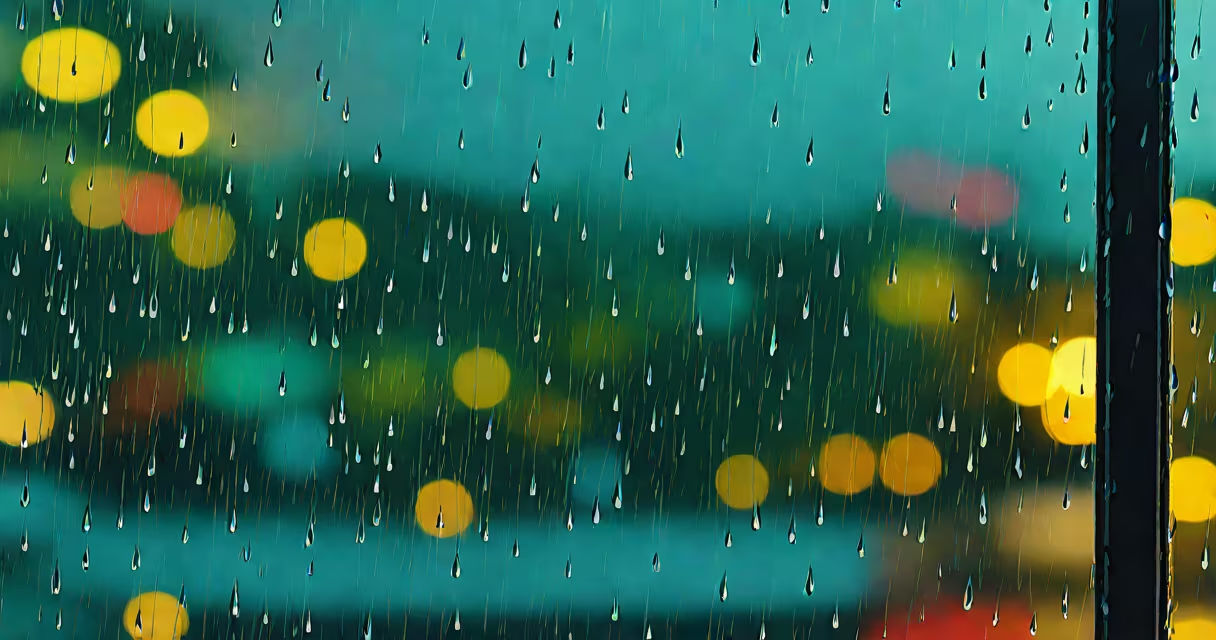
Beautiful words related to rain are expressive, often poetic terms that capture the mood, sound, or visual quality of rainfall beyond simple description. They convey emotion, atmosphere, and sensory detail using precise or imaginative language.
Rain is more than water falling from clouds-it's a sensory experience shaped by culture, memory, and metaphor. Poets, writers, and everyday speakers use specific vocabulary to reflect how rain feels, sounds, or changes a scene. These words go beyond "wet" or "pouring." They describe the quiet hush of a drizzle, the sharp drumming on rooftops, or the way sunlight breaks through after a storm.
Examples include *pelting* (intense, forceful rain), *drizzle* (light, persistent drops), and *mizzle* (a rare term for a fine mist mixed with rain). Others like *petrichor*-the scent of rain on dry soil-capture the olfactory dimension. These terms aren't just descriptive; they're emotionally charged, often tied to personal or cultural memory.
These terms function by combining sensory precision with emotional resonance. A single word can signal not just the physical state of rain but the feeling it evokes-melancholy, renewal, stillness, or urgency.
For instance, *pattering* describes the rhythmic tapping of small raindrops on leaves or pavement. It's not just sound-it's a cadence. The word suggests something gentle, almost musical. In poetry, such words create rhythm and mood. In prose, they ground scenes in texture.
Another example: *glistening*. Used to describe rain on a leaf or a car windshield, it implies both shine and fragility. The surface reflects light, but the droplets are transient. This duality makes *glistening* useful in narrative-beauty that is fleeting, like moments under a storm's edge.
Terms fall into distinct sensory or emotional categories. Some focus on sound, others on sight, smell, or feeling. Understanding these helps choose the right word for a scene, poem, or letter.
| Sensory Focus | Term | Meaning & Example |
|---|---|---|
| Sound | Pattering | Light, rhythmic tapping. "The pattering of rain on the tin roof kept time with my thoughts." |
| Visual | Glistening | Shining with moisture. "Her hair glistened under the streetlamp after the sudden shower." |
| Smell | Petrichor | The earthy scent after rain. "I inhaled petrichor as I stepped onto the porch, the air thick with memory." |
| Feel | Drizzly | Light, persistent rain. "We walked slowly through the drizzly afternoon, shoulders close." |
| Intensity | Pelting | Forceful, heavy rain. "The wind drove the rain pelting against the windows, blurring the city." |
Some terms are archaic or regional. *Mizzle*, for example, appears in British dialect and refers to a fine, misty rain. It's less common than *drizzle* but carries a denser, more atmospheric weight. Using it signals attention to nuance.
Other terms blend science and poetry. *Aeolian* refers to wind-driven phenomena, but when paired with rain-"the aeolian hush of rain on stone"-it creates a layered effect. The word itself is rarely used alone, but in context, it adds depth.
Beautiful words related to rain appear most frequently in literature, song lyrics, and personal writing. They serve to deepen mood, avoid cliché, and connect readers to sensory experience.
In fiction, authors use precise terms to build setting. In Haruki Murakami's *Norwegian Wood*, rain isn't just wet-it's "a slow, steady rain that soaked through his coat and settled into his bones." The choice of "settled" implies permanence, weight. Rain becomes a metaphor for grief.
Lyrics often rely on these terms for emotional impact. In "The Rain Song" by Led Zeppelin, lines like "I've been waiting for the rain to come" use rain as a symbol of release. The word "rain" is simple, but its repetition and context make it feel inevitable, even sacred.
Even in casual conversation, people deploy these words intuitively. Saying "It's drizzling" sets a different tone than "It's raining lightly." The former feels more observational, grounded in weather patterns. The latter leans toward poetic framing.
Many assume all beautiful rain terms are poetic or invented. That's incorrect. Most are standard English words with long usage, though some are rare or literary.
For example, *petrichor* is not a made-up word. It was coined in 1964 by Australian chemists Isabel Bear and R. G. Thomas, who studied the scent released when rain hits dry soil. The term comes from Greek: *petra* (stone) and *ichor* (the fluid of the gods). It's scientifically valid and widely accepted in environmental science and literature.
Another misconception: that all rain-related beauty lies in softness. Not true. Words like *pounding*, *lashing*, or *drenching* carry intensity and power. They're used in war narratives, thriller scenes, or descriptions of storms to evoke danger or urgency.
Also, people often confuse *drizzle* with *mist*. Mist is a fine suspension of water droplets in air, not falling. Drizzle involves actual precipitation. Confusing them alters meaning. A mist might be still; a drizzle moves.
Consider this passage written in a journal entry:
It began as a mizzle-fine, almost invisible threads of water threading through the trees. By noon, it had turned to a steady drizzle, the kind that settles into your clothes and doesn't leave. I stood under the awning, watching the sidewalk glisten. A single drop fell from the eave, striking the pavement with a tiny, hollow sound. I thought of her. The rain wasn't loud, but it filled the silence.
This uses five beautiful words related to rain: *mizzle*, *drizzle*, *glisten*, *hollow*, and *silence*. Each contributes to mood and texture. *Mizzle* sets a delicate, uncertain start. *Drizzle* shifts to persistence. *Glisten* adds visual detail. *Hollow* describes the sound-a word chosen for its emotional echo. *Silence* contrasts with the rain's presence, emphasizing absence.
Without these terms, the passage would lose its emotional layer. It would read: "It rained lightly at first, then got heavier. I stood under the awning and waited. A drop hit the ground. I thought of her." The original version feels lived-in, textured, and reflective.
I wrote this during a late autumn walk in Portland, Oregon. The city was gray, the air damp. I paused beneath a café awning and noticed how the rain changed the way light hit the pavement. That moment became the seed for the passage.
Beautiful words related to rain are tools for perception. They allow us to see, hear, and feel rain not as weather, but as experience. They bridge science and emotion, precision and poetry.
Using them intentionally-whether in writing, speaking, or reflection-deepens communication. They're not decorative. They're necessary for capturing the full spectrum of human response to nature.