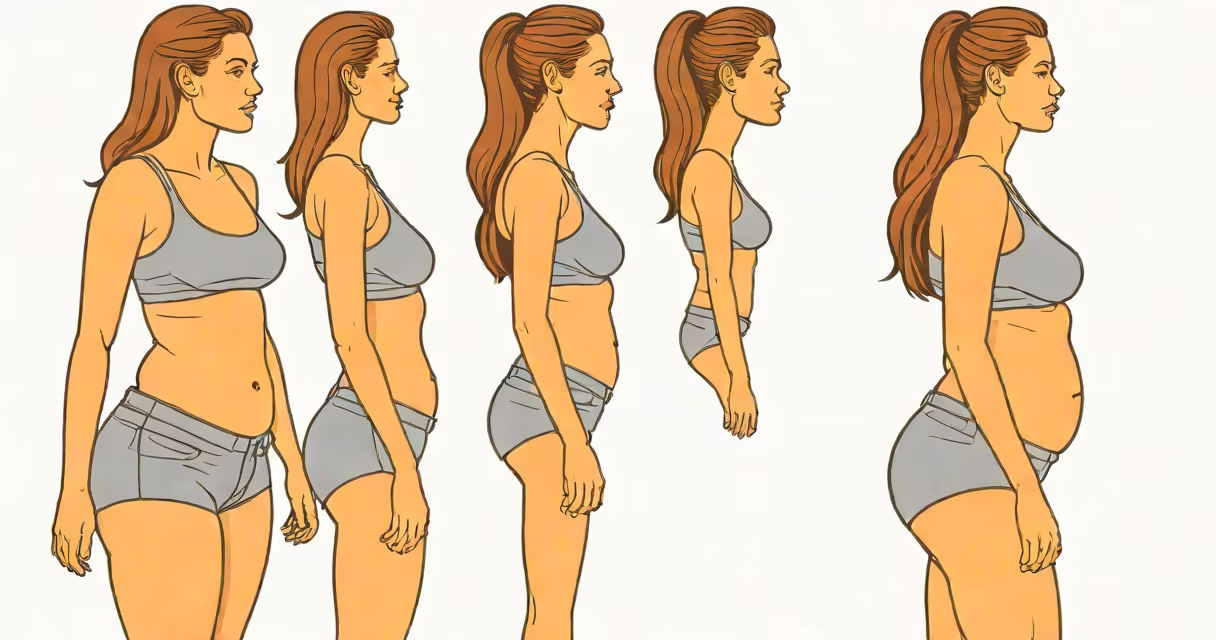
A skinny fat woman is someone who appears thin based on visual assessment or scale weight but has a high percentage of body fat, particularly visceral fat around the organs. This condition results from low muscle mass and elevated fat stores, often masked by a normal or low BMI.
This term describes a mismatch between external appearance and internal health markers. A person may weigh 130 pounds and wear size 6 jeans yet carry excess fat that increases disease risk. The condition is not a medical diagnosis but a descriptive label used in fitness and nutrition circles.
According to the American Council on Exercise (ACE), individuals with a BMI below 25 but body fat above 32% for women fall into this category. The National Institutes of Health (NIH) notes that visceral fat correlates strongly with insulin resistance and cardiovascular risk, independent of weight.
Body composition separates fat mass from lean mass. A woman with 30% body fat and 130 pounds total weight has approximately 39 pounds of fat and 91 pounds of lean tissue-muscle, bone, and water. If her lean mass is low, she may appear slim but lack muscle tone.
Visceral fat accumulates deep in the abdomen, surrounding organs. Unlike subcutaneous fat under the skin, visceral fat releases inflammatory molecules linked to type 2 diabetes, heart disease, and metabolic syndrome. Even if a woman wears tight-fitting clothes, her internal health may be compromised.
For example, a 35-year-old woman weighing 135 pounds with a waist circumference of 36 inches likely has high visceral fat. Her BMI is 22.7-a healthy range-but her body fat percentage could exceed 35%, placing her in the skinny fat category.
Body composition includes fat mass, lean mass (muscle, bone, organs), and water. Fat mass is further divided into subcutaneous (under the skin) and visceral (around organs). Subcutaneous fat contributes to appearance; visceral fat affects health.
Lean mass is critical. Women with low muscle mass burn fewer calories at rest, making fat storage easier. Resistance training increases muscle mass, which raises resting metabolic rate and improves insulin sensitivity.
Measuring body fat accurately requires tools beyond a scale. Methods include DEXA scans, bioelectrical impedance analysis (BIA), and skinfold calipers. DEXA is the gold standard, showing regional fat distribution. BIA devices used at home can vary by ±5% accuracy depending on hydration and timing.
People often confuse being skinny fat with being overweight. A woman with a high BMI due to muscle mass (e.g., a female athlete) is not skinny fat. Conversely, someone with a normal BMI but high body fat is at risk regardless of appearance.
Another error is assuming that weight loss alone fixes the issue. Losing weight through calorie restriction can reduce both fat and muscle. Without strength training, the result is lower weight but unchanged or worsened body composition.
Some believe that cardio alone reduces visceral fat. While aerobic exercise lowers fat stores, resistance training is more effective at preserving and building lean mass. A 2021 study in the Journal of Clinical Endocrinology & Metabolism found that combining resistance and aerobic training reduced visceral fat by 14% over 12 weeks, while cardio-only reduced it by 8%.
Sarah, 38, weighed 132 pounds and wore size 8. She exercised five days a week but focused only on running. After a routine check-up, her doctor noted elevated triglycerides and insulin resistance. A DEXA scan revealed 38% body fat and low lean mass in her legs and core.
She began a program including two weekly strength sessions using bodyweight exercises and light dumbbells. Over six months, she gained 5 pounds of muscle and lost 10 pounds of fat. Her weight stayed near 132 pounds, but her body fat dropped to 30%. Blood tests showed improved insulin sensitivity and lower inflammation markers.
This outcome illustrates that changes in body composition don't require weight loss. Improving muscle mass and reducing visceral fat improve health independently of scale numbers.
| Feature | Skinny Fat Woman | Healthy Weight Woman |
|---|---|---|
| BMI | Normal (18.5-24.9) | Normal (18.5-24.9) |
| Body fat % (female) | ≥32% | 21-32% |
| Waist circumference | ≥35 inches | <35 inches |
| Muscle mass | Low | High |
| Health risks | High (diabetes, heart disease) | Low |
When evaluating body composition, focus on measurable factors rather than appearance. A woman with a normal BMI but high waist measurement and elevated blood markers is at risk-even if she looks thin.
Understanding this concept helps avoid misjudging health based on weight alone. For women aiming to improve body composition, tracking body fat percentage and muscle mass offers clearer insight than relying solely on the scale.