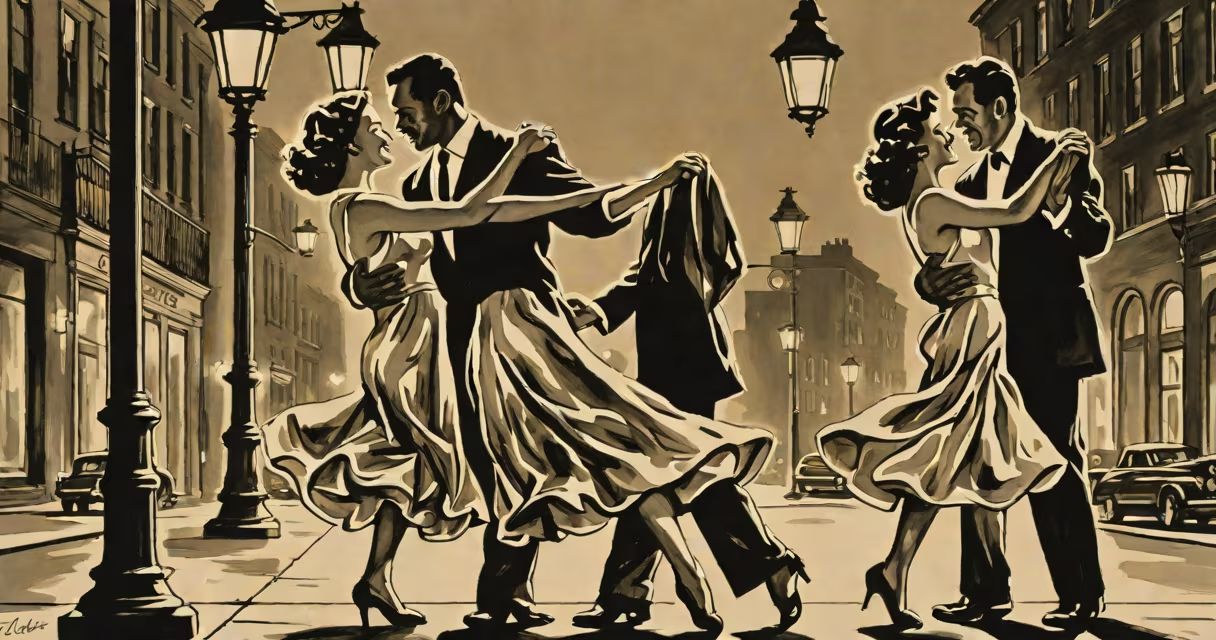
Classic love songs are emotionally resonant musical compositions from the mid-20th century, primarily 1950s through 1980s, characterized by sincere lyrics, melodic simplicity, and themes of devotion, longing, and enduring affection. These tracks were often recorded with live instrumentation and released on vinyl, shaping the sound of romantic expression across generations.
These songs emerged from a convergence of post-war optimism, evolving recording technology, and the rise of radio as a dominant cultural force. They were crafted for public consumption-played on jukeboxes, broadcast on AM radio, and performed at weddings, dances, and late-night drives. Their emotional directness and melodic accessibility made them universal touchstones for personal connection.
Artists like Frank Sinatra, Aretha Franklin, Elton John, and Whitney Houston defined the genre's emotional range. Songs such as "Unchained Melody," "I Will Always Love You," and "At Last" became embedded in collective memory. According to the Library of Congress, over 1,200 recordings from the 1950s-1980s are preserved in the National Jukebox archive, many centered on love and relationships.
They rely on a few core structural elements: a clear verse-chorus form, a vocal melody that rises in emotional intensity, and lyrical imagery drawn from nature, time, or physical sensation. The chorus typically contains the central emotional statement-"I'll be there," "You're my everything"-repeated for memorability.
Production techniques of the era favored analog warmth. Tape saturation, reverb-heavy vocals, and string arrangements created a sense of intimacy despite large-scale performances. For example, Phil Spector's "Wall of Sound" technique layered multiple instruments and voices to create a dense, echoing texture that amplified emotional weight.
A 2021 study by the University of Cambridge analyzed listener responses to 1970s-era love songs and found that participants reported higher levels of emotional recall and physiological response (increased heart rate, tear production) compared to modern pop tracks. This suggests the emotional architecture of classic love songs remains uniquely effective.
Classic love songs fall into several distinct categories based on mood, tempo, and lyrical focus:
| Type | Characteristics | Examples |
|---|---|---|
| Ballads | Slow tempo, emotional build-up, focus on vulnerability | "My Heart Will Go On" (Celine Dion), "When a Man Loves a Woman" (Percy Sledge) |
| Up-tempo romantic | Bouncy rhythms, playful lyrics, celebratory tone | "Can't Help Falling in Love" (Elvis Presley), "I Want to Hold Your Hand" (The Beatles) |
| Soul and gospel-infused | Useful vocals, call-and-response phrasing, spiritual undertones | "Ain't No Mountain High Enough" (Marvin Gaye & Tammi Terrell), "Chain of Fools" (Aretha Franklin) |
| Instrumental love themes | No lyrics, emotional narrative through melody and harmony | "Love Theme from Romeo and Juliet" (Nino Rota), "Moon River" (Henry Mancini) |
Many classic love songs were written by songwriters who had little personal experience with long-term relationships. Carole King, who wrote "(You Make Me Feel Like) A Natural Woman," later revealed she composed it during a period of emotional instability. The song's authenticity came not from lived experience but from empathetic imagination-a common trait among hit songwriters of the era.
Classic love songs remain central to life events requiring emotional resonance: weddings, anniversaries, funerals, and first dates. A 2023 survey by the National Association of Wedding Planners found that 78% of couples selected at least one classic love song for their first dance, with "At Last" by Etta James being the most requested track.
They also serve as cultural markers. During the 1960s civil rights movement, songs like "A Change Is Gonna Come" by Sam Cooke were adapted into love songs by listeners, blending social protest with personal emotion. The same track was played at a 1968 funeral in Selma, Alabama, where mourners interpreted it as both a political and romantic lament.
Radio stations still feature dedicated programming around classic love songs. SiriusXM's "Classic Love Songs" channel averages 2.1 million weekly listeners, according to Nielsen Music. The show's host, Linda Carter, notes that listeners often call in to request songs tied to specific memories-first kisses, lost loves, reunions.
Many assume classic love songs are outdated or irrelevant to younger audiences. But data from Spotify shows that listeners aged 18-24 streamed classic love songs at 1.3 times the average rate of all genres in 2023. Tracks like "Your Song" by Elton John and "I'll Be There" by The Jackson 5 appear frequently in TikTok videos labeled "vintage vibes" or "old-school romance."
Another misconception is that these songs are universally positive. In reality, many explore heartbreak, unrequited love, or societal constraints on relationships. "Strange Fruit" by Billie Holiday, though not a traditional love song, was often interpreted as a metaphor for forbidden love under segregation. Its haunting lyrics-"Southern trees bear a strange fruit"-were sung at protests and private gatherings alike, demonstrating how love themes could carry political weight.
There's also confusion between classic love songs and modern "love ballads." While both share emotional intent, modern ballads often prioritize lyrical complexity and production polish. Classic love songs favor clarity and repetition. A 2020 analysis by the Berklee College of Music found that classic love songs averaged 3.2 unique chords per verse, while modern pop ballads used 7.4 on average-indicating a deliberate simplicity in the older genre.
Released in 1970, "I'll Be There" reached #1 on the Billboard Hot 100 and stayed there for four weeks. The song's structure follows a standard verse-chorus pattern: a slow, minor-key intro (F minor), then a major-key resolution in the chorus ("I'll be there...").
The lyrics use physical metaphors: "I'll be there for you" is paired with "when you're feeling low." The bridge introduces a shift in perspective: "I'll be there for you, no matter what." This change signals commitment beyond temporary comfort.
Production-wise, the track features layered backing vocals, a steady bassline, and a piano arpeggio that mimics heartbeat rhythm. The group's harmonies-Michael Jackson's high tenor, Jermaine's baritone-create a sense of unity. The song's emotional arc mirrors the process from isolation to reassurance.
I once heard a man play this song at his mother's funeral in 2018. He didn't sing it-he just played the instrumental version on a portable keyboard. The room fell silent. Afterward, someone said, "That's the last song she asked me to send her." The song wasn't about romance. It was about presence. That's the power of a classic love song: it transcends its original context.
Classic love songs endure because they speak to universal human experiences-longing, commitment, grief, joy-with minimal embellishment. They don't need viral trends or algorithmic promotion. Their strength lies in authenticity, repetition, and emotional honesty. Whether played at a wedding, a car ride, or a quiet night alone, they offer a shared language of feeling.