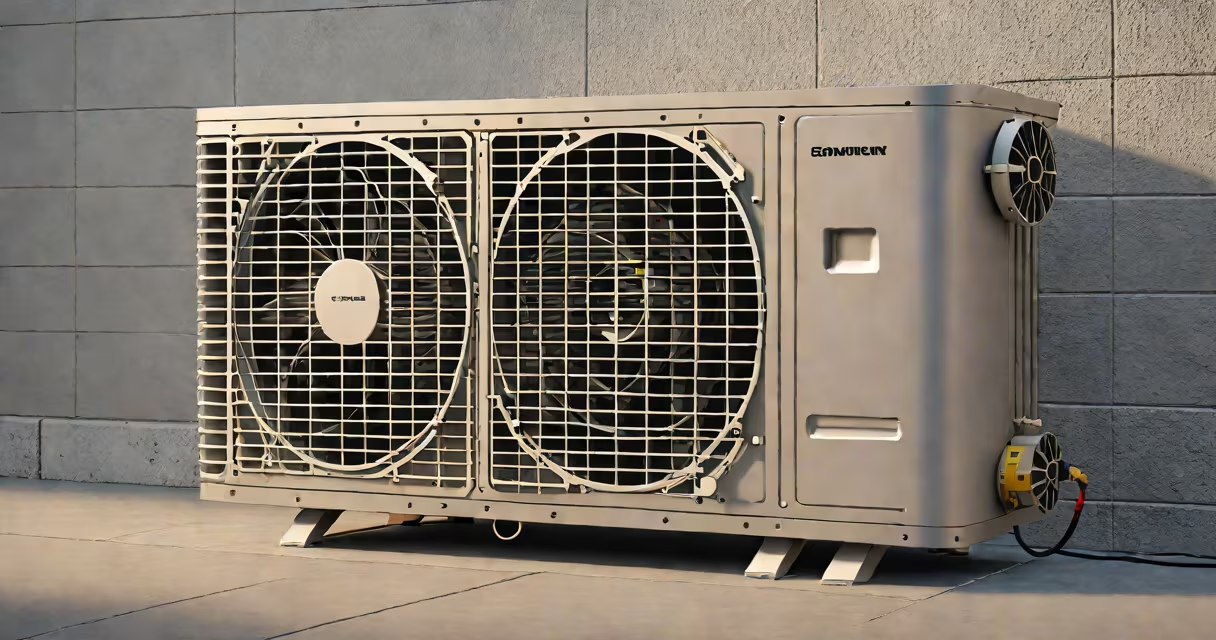
The condenser in an AC unit is the outdoor component responsible for releasing heat absorbed from inside a home. It contains a compressor, condensing coil, and fan that work together to expel warm air and complete the refrigeration cycle.
When indoor air passes over the evaporator coil, it absorbs heat and moisture. That warm, low-pressure refrigerant then travels through the suction line to the condenser. There, the compressor raises the refrigerant's pressure and temperature, turning it into a hot gas. The condenser coil and fan dissipate this heat into the outside air, allowing the refrigerant to condense into a liquid before returning indoors.
Without the condenser, the cooling process stops. The system cannot reject heat, leading to poor cooling performance, high energy use, and potential compressor failure. This component is essential for maintaining indoor comfort during summer months.
The condenser operates as part of a closed-loop refrigeration system. After the refrigerant leaves the indoor evaporator coil as a low-pressure gas, it enters the condenser via the suction line. The compressor compresses the gas, increasing its temperature to around 160-200°F (71-93°C).
This high-pressure, high-temperature gas flows into the condenser coil. As ambient air blows across the coil's finned surface, heat transfers from the refrigerant to the outside environment. The refrigerant cools and changes state from gas to liquid. The liquid refrigerant then travels back through the liquid line to the expansion valve, where it expands and cools before entering the evaporator coil again.
A typical residential condenser uses a scroll or rotary compressor, aluminum or copper tubing with aluminum fins, and a variable-speed or single-speed fan motor. The entire assembly is housed in a weather-resistant metal cabinet, usually placed on a concrete pad or rooftop.
Each part of the condenser plays a distinct role in heat rejection and system efficiency. The following table outlines the primary elements and their functions:
| Component | Function | Failure Risk |
|---|---|---|
| Compressor | Increases refrigerant pressure and temperature | Overheating, electrical failure (common cause of AC breakdown) |
| Condensing Coil | Releases heat to outdoor air via fins and airflow | Dirt buildup reduces efficiency by up to 30% |
| Fan Motor | Draws air across the coil to cool refrigerant | Bearing wear causes noise and reduced cooling |
| Capacitor | Starts and runs the fan and compressor motors | Can fail silently, causing startup issues |
For example, a dirty condenser coil can reduce heat transfer efficiency by up to 30%, according to the U.S. Department of Energy. A study published in *ASHRAE Journal* found that fouled coils increase energy consumption by 15-25% in residential systems.
Many people confuse the condenser with the evaporator coil, which is located indoors. The evaporator removes heat from indoor air, while the condenser rejects that heat outdoors. These two components are connected by refrigerant lines but serve opposite roles.
Another frequent mix-up is equating the condenser with the entire outdoor unit. While the condenser is the core heat-rejection component, the outdoor unit also includes the fan, housing, electrical connections, and sometimes a reversing valve for heat pump models. The condenser specifically refers to the heat-exchange system within that unit.
Some homeowners assume that a noisy condenser is normal. However, loud humming or grinding sounds often indicate failing bearings in the fan motor or compressor. According to the Air Conditioning Contractors of America (ACCA), 40% of service calls related to outdoor units involve fan or compressor issues due to worn components.
In a 2022 case documented by the National Institute of Standards and Technology (NIST), a homeowner reported that their central AC ran continuously but failed to cool below 78°F (25.5°C) despite setting the thermostat to 72°F (22.2°C). An HVAC technician diagnosed the issue after measuring refrigerant pressures and inspecting the outdoor unit.
The condenser coil was heavily coated with dust, pollen, and debris from nearby trees. The technician cleaned the coil using a soft brush and a specialized coil cleaner. After cleaning, the system's cooling capacity improved by 40%, and the compressor no longer cycled excessively. The repair cost $180, including labor and materials.
This example shows that maintenance directly affects condenser performance. Regular cleaning prevents efficiency loss and extends equipment life.
High-efficiency systems, such as a 25 seer ac unit, rely on precise refrigerant flow and optimal condenser performance. These units achieve higher seasonal energy efficiency ratios, reducing operating costs by up to 40% compared to older models. However, they also demand stricter maintenance standards to maintain peak efficiency.
Always consult a licensed HVAC technician for refrigerant handling, electrical diagnostics, or compressor replacement. Attempting repairs without proper training risks injury, environmental harm, and voided warranties.
The condenser is not just a component-it's the engine of heat rejection in a home cooling system. Understanding its function, parts, and signs of trouble helps homeowners recognize problems early and maintain reliable comfort.