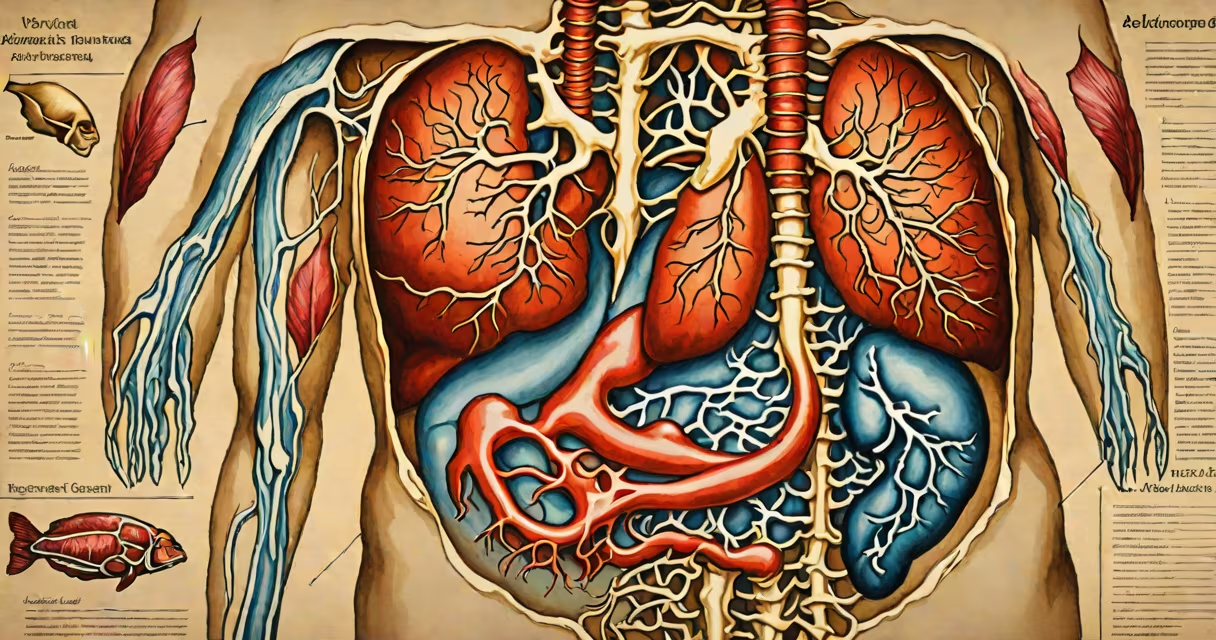
The abdomen contains the primary organs responsible for digestion, nutrient absorption, waste elimination, and metabolic regulation. These include the stomach, small and large intestines, liver, gallbladder, pancreas, spleen, and kidneys.
These organs lie within the abdominal cavity, a space bounded by the diaphragm above and the pelvic floor below. The cavity is lined by the peritoneum, a serous membrane that reduces friction during organ movement. This arrangement allows for coordinated function while protecting delicate tissues.
Abdominal organs work together to process food, filter toxins, regulate fluids, and maintain homeostasis. Disruption in any organ's function can lead to systemic symptoms such as pain, nausea, or fatigue. Understanding their location and role is essential for diagnosing gastrointestinal and metabolic conditions.
The stomach acts as a temporary storage site and mechanical grinder for ingested food. It secretes hydrochloric acid and pepsin to break down proteins, reducing food into chyme before passing it to the small intestine. The stomach's muscular walls contract rhythmically to mix contents, a process known as peristalsis.
The small intestine-divided into duodenum, jejunum, and ileum-is the main site for nutrient absorption. Its inner surface features villi and microvilli that increase surface area by over 600 times. Over 90% of carbohydrate, protein, and fat absorption occurs here, along with water and electrolytes.
The large intestine, or colon, absorbs water and forms feces. It houses trillions of bacteria that ferment undigested fiber into short-chain fatty acids, which contribute to gut health. The appendix, a small pouch attached to the cecum, plays a minor immune role but is not essential for survival.
Organ placement varies across the abdomen's four quadrants. The right upper quadrant holds the liver, gallbladder, and part of the pancreas. The left upper quadrant includes the spleen, part of the pancreas, and the left kidney. The lower quadrants contain loops of the small and large intestines.
A table outlining major abdominal organs by quadrant and function:
| Quadrant | Organs | Primary Function |
|---|---|---|
| Right Upper | Liver, gallbladder, right kidney, parts of pancreas | Bile production, detoxification, glucose storage |
| Left Upper | Spleen, left kidney, part of pancreas, stomach | Immune filtration, blood cell recycling, insulin production |
| Right Lower | Appendix, ascending colon, right ureter | Fiber fermentation, waste transport |
| Left Lower | Descending colon, sigmoid colon, left ureter | Water absorption, stool formation |
The pancreas spans both upper quadrants and lies behind the stomach. It produces digestive enzymes (like amylase and lipase) and hormones such as insulin and glucagon, which regulate blood sugar levels. Dysfunction here leads to diabetes or malabsorption.
Many people assume the heart or lungs are located in the abdomen. They are not. The heart sits in the thoracic cavity, protected by the rib cage. The lungs occupy the chest cavity. Confusing these regions leads to misinterpretation of symptoms like chest pain versus abdominal pain.
Another misconception is that the appendix is purely vestigial. While it lacks a clear evolutionary purpose, research shows it may serve as a reservoir for beneficial gut bacteria. A 2017 study published in *Annals of Internal Medicine* found that individuals without an appendix had a slightly higher risk of recurrent Clostridioides difficile infection, suggesting a protective role in gut microbiome resilience.
Some believe that all abdominal pain stems from the digestive tract. However, conditions like kidney stones or ovarian cysts can cause similar symptoms. For example, a 7 mm stone in the right ureter can mimic appendicitis, leading to unnecessary surgery if imaging is not performed.
In 2022, a 34-year-old woman presented with right upper quadrant pain, fever, and elevated liver enzymes. Initial suspicion was acute cholecystitis. Ultrasound confirmed gallstones and a thickened gallbladder wall. She underwent laparoscopic cholecystectomy and recovered within five days.
This case illustrates how knowing organ locations aids diagnosis. The liver and gallbladder reside in the right upper quadrant. Pain there, especially with fever and jaundice, points toward biliary issues. Without this anatomical awareness, clinicians might misattribute symptoms to gastrointestinal causes.
During my time as a medical student, I assisted in a case where a patient reported bloating and weight loss. Imaging revealed a mass in the transverse colon. Biopsy confirmed adenocarcinoma. Early detection through symptom awareness and proper organ mapping saved the patient's life.
Persistent abdominal pain, unexplained weight loss, blood in stool, or changes in bowel habits require evaluation. Conditions like inflammatory bowel disease, colorectal cancer, or pancreatitis often begin subtly. The American Gastroenterological Association recommends screening for colorectal cancer starting at age 45 due to rising incidence in younger adults.
If fluid accumulates in the abdominal cavity-a condition called ascites-it may signal liver cirrhosis, heart failure, or malignancy. Ascites is diagnosed via ultrasound and paracentesis. Fluid analysis reveals whether it is transudate (low protein) or exudate (high protein), guiding treatment.
Understanding what organs are in your abdomen enables better communication with healthcare providers and informed decisions about testing and treatment. Each organ plays a distinct role in sustaining life, and their interdependence underscores the importance of systemic health monitoring.