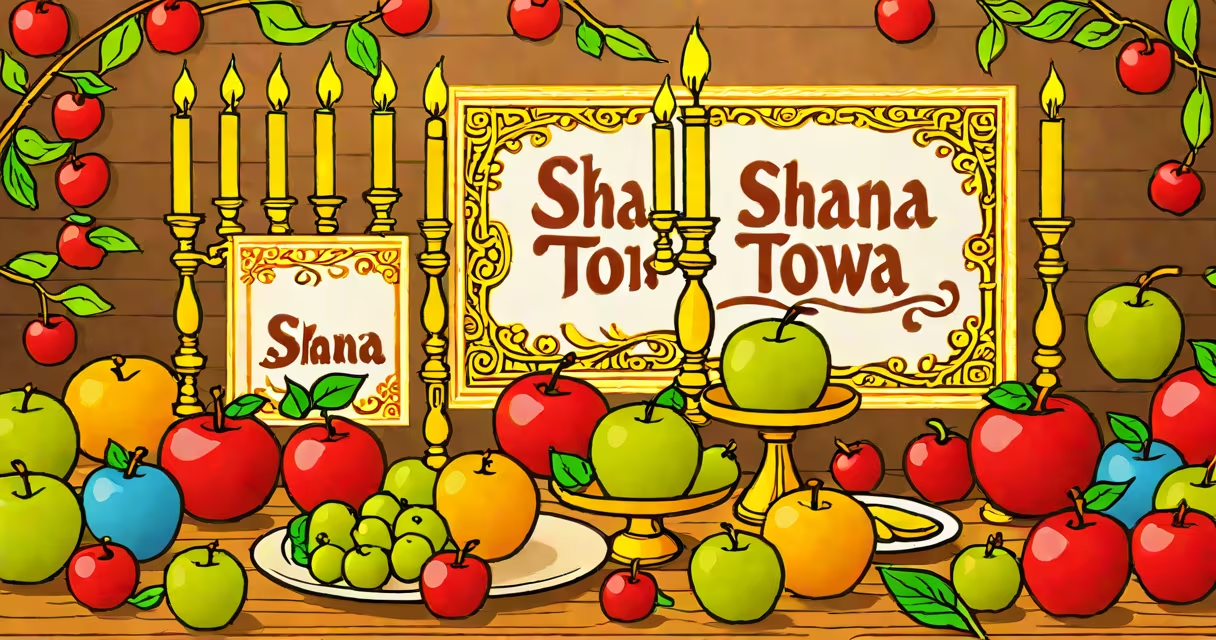
"Shana Tova" means "good year" in Hebrew and is the standard greeting used during Rosh Hashanah, the Jewish New Year. It expresses hopes for health, prosperity, and peace in the coming year.
The phrase is rooted in Hebrew liturgical tradition and is typically spoken between late September and early October, depending on the lunar calendar. It's not a standalone holiday but a central part of the High Holy Days, which include Rosh Hashanah and Yom Kippur.
While often translated as "Happy New Year," "Shana Tova" carries deeper spiritual weight. It's not a casual wish-it's a prayer for a year filled with blessings, forgiveness, and renewal. The term "shana" means "year," and "tova" means "good" or "well." Together, they form a formal blessing used in religious and secular contexts alike.
When someone says "Shana Tova," they're not just offering a seasonal greeting-they're invoking a sacred intention. The phrase is most commonly used during Rosh Hashanah festivities, including synagogue services, family meals, and gift exchanges.
It's customary to respond with "Shana Tova U'Metuka," meaning "A good and sweet year." The addition of "u'metuka" (and sweet) reflects the symbolic eating of apples dipped in honey, a ritual meant to ensure a sweet year ahead. This practice dates back to at least the 13th century, as noted in the *Sefer HaChinuch*, a medieval Jewish ethical treatise.
Outside of religious settings, people use "Shana Tova" in emails, cards, and social media messages. For example, a colleague might send: "Wishing you a Shana Tova filled with joy and success." The phrase functions both as a cultural marker and a personal gesture of goodwill.
"Shana Tova" is composed of two Hebrew words: שָׁנָה (shana), meaning "year," and טוֹבָה (tova), meaning "good." The pronunciation is "shah-nah-toh-vah," with stress on the second syllable of "shana" and the first of "tova."
Hebrew uses a consonantal alphabet, so vowels are indicated through diacritical marks called niqqud. In everyday usage, however, the vowels are inferred from context and common pronunciation patterns. For example, "Tova" is pronounced "toh-vah," not "tō-vah" or "tō-vah." Mispronunciation is common among non-native speakers, especially the final "ah" sound, which is soft and open.
Written in Hebrew script, the phrase appears as שָׁנָה טוֹבָה. The letters are: ש (shin), נ (nun), ה (he), ט (tet), ו (vav), ב (bet), ה (he). The final "he" is silent in pronunciation but written to complete the word's grammatical structure.
Many assume "Shana Tova" is interchangeable with "Happy New Year" in English. That's incorrect. While both express positive wishes for the new year, "Shana Tova" is specifically tied to the Jewish calendar and the High Holy Days. Using it outside that context can feel culturally out of place.
Another misconception is that "Shana Tova" is a command or a prayer to be recited daily. It is not. It's a greeting, not a formal prayer. The full High Holiday prayers are recited in synagogue and include passages from the Torah and prophetic texts. "Shana Tova" is a standalone expression, not part of the liturgy.
A subtle but important correction: "Shana Tova" is not a singular event. It's a recurring phrase used annually. Saying it once in December doesn't carry the same weight as saying it during the actual holiday window. The timing matters because it aligns with the Jewish calendar, which begins in Tishrei-the seventh month of the Hebrew year.
Consider a Jewish family gathering in Brooklyn during Rosh Hashanah. As guests arrive, the host says, "Shana Tova!" to each person. A child responds, "Shana Tova U'Metuka!" The parents smile and pass around apples and honey-dipped challah. This exchange happens in hundreds of homes across North America every year.
In a professional setting, a manager might send a group email on the first day of Rosh Hashanah: "Wishing everyone a Shana Tova-may the coming year bring growth, clarity, and balance." The message is inclusive, respectful, and appropriate for mixed-faith workplaces.
On social media, users post photos of Rosh Hashanah dinners with captions like: "Celebrating Shana Tova with family. May we all have a year of health, connection, and purpose." These posts reflect how the phrase has moved from religious space into public life.
| Aspect | What It Is | What It Isn't |
|---|---|---|
| Language | Hebrew greeting | English phrase |
| Timing | Used during Rosh Hashanah (typically Sept-Oct) | Applicable year-round |
| Context | Religious and cultural celebration | General New Year greeting |
| Formality | Respectful, traditional greeting | Informal or playful expression |
One non-obvious fact: "Shana Tova" is often misused in pop culture. A scene in a TV show might have a character say "Shana Tova" during a winter holiday party. That's inaccurate. The phrase is tied to the Hebrew calendar, which places Rosh Hashanah in the fall, not winter. The confusion arises because many Western audiences associate "New Year" with January 1st.
I once attended a community event in Los Angeles where a guest speaker mistakenly said "Shana Tova" during a Hanukkah celebration. The audience paused. Later, a rabbi corrected the error in a gentle way: "'Shana Tova' is for Rosh Hashanah. For Hanukkah, we say 'Chag Urim Sameach.'" The moment highlighted how precise cultural language matters.
The University of Pennsylvania's Center for Jewish Studies confirms that "Shana Tova" is derived from biblical Hebrew and became widespread in Ashkenazi communities by the 15th century. The phrase appears in early prayer books such as the *Siddur Rashi* and was later codified in the *Mishneh Torah* by Maimonides.
According to the Union for Reform Judaism, "Shana Tova" is not a prayer but a benediction-a blessing offered with sincerity. It's appropriate to say it in both formal and informal settings, but it should not be used lightly or humorously.
Understanding "what Shana Tova means" goes beyond vocabulary. It involves awareness of religious timing, linguistic accuracy, and cultural respect. When used correctly, it becomes more than a phrase-it becomes a bridge between people.