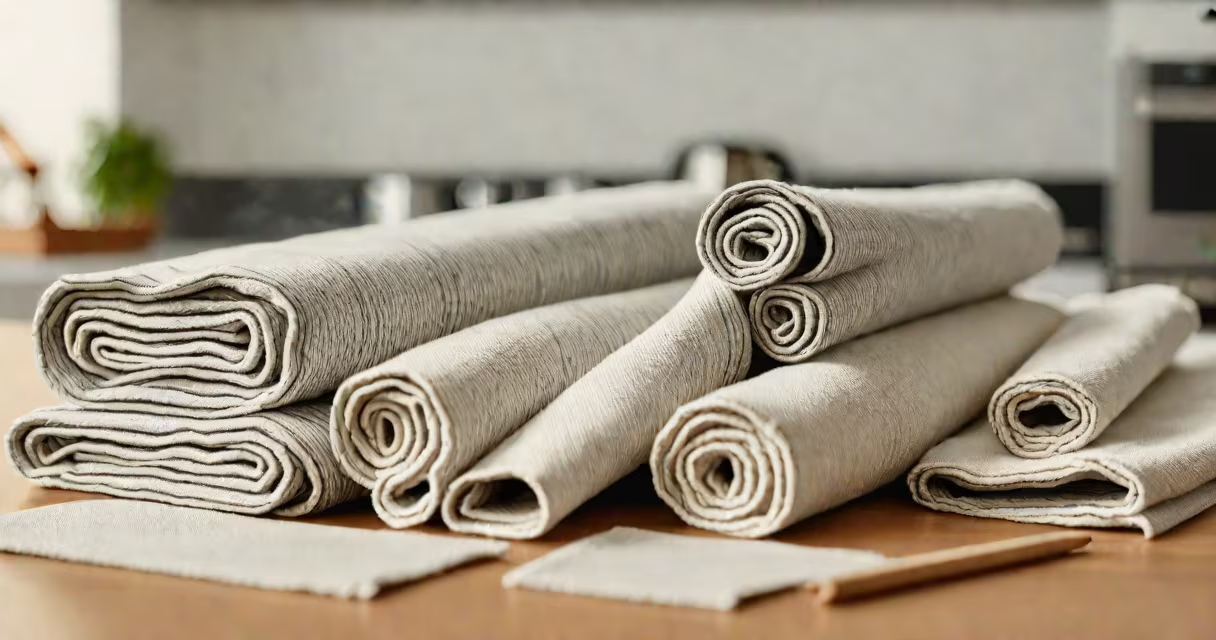
Reusable cloths, microfiber towels, and homemade cellulose wipes replace disposable paper towels while reducing household waste and long-term costs. These alternatives absorb spills, clean surfaces, and dry dishes without contributing to landfill overflow.
Disposable paper towels generate over 16 million tons of waste annually in the U.S., according to the Environmental Protection Agency (EPA). Most end up in landfills where they take years to decompose. Switching to durable, washable substitutes cuts down on resource consumption and supports circular economy principles.
These alternatives aren't just environmentally sound-they outperform paper towels in durability and absorption. A single microfiber cloth can handle 200+ uses before needing replacement, compared to a roll of paper towels lasting only a few hours of daily kitchen use.
Reusable cleaning cloths function through capillary action and high surface area. Their tightly woven fibers trap liquids and particles without shedding lint. Microfiber, made from synthetic polyester and nylon, has fibers thinner than human hair-up to 100 times finer-allowing them to lift dirt and moisture from surfaces.
For example, a standard 12-inch square microfiber cloth absorbs up to 10 times its weight in liquid. This makes it ideal for wiping counters, drying dishes, or cleaning windows. After use, it's rinsed under water and dried, ready for reuse within minutes.
Cellulose-based wipes made from sustainably harvested wood pulp offer a middle ground. They're compostable and biodegradable, breaking down in 90 days under industrial conditions. Unlike paper towels, they're designed for multiple uses and come in sealed packs to prevent drying out.
Each material offers distinct advantages depending on the task:
| Type | Best For | Wash Frequency | Environmental Impact |
|---|---|---|---|
| Cotton flannel cloths | Drying dishes, wiping counters | After each use | Low-biodegradable, renewable |
| Microfiber (synthetic) | Streak-free window cleaning, polishing | Every 5-10 uses | Moderate-long lifespan offsets production impact |
| Bamboo fiber wipes | Quick mess cleanup, bathroom surfaces | After each use | Very low-rapidly renewable, compostable |
| Homemade cellulose wipes | General-purpose cleaning, pet spills | After each use | Near-zero-made from recycled paper and vinegar |
One non-obvious fact: microfiber cloths can shed microscopic plastic particles during washing. A 2021 study published in *Environmental Science & Technology* found that a single wash releases up to 1,900 microfibers into wastewater. To reduce this, use a Guppyfriend washing bag or filter laundry water through a dedicated microplastic trap.
Many brands now label their microfiber products as "microplastic-safe" when they meet standards set by the International Union for Conservation of Nature (IUCN). Look for certifications like Cradle to Cradle or OEKO-TEX to ensure lower environmental risk.
Kitchens are the primary site for replacing paper towels. A 2023 survey by the National Resources Defense Council found that 68% of households using reusable cloths reduced their paper towel usage by 75% or more. The average family spends $150 annually on paper towels-switching to reusable options saves $100+ yearly.
Bathrooms benefit too. A single cotton towel can replace 30 rolls of paper towels per year. For wiping mirrors or cleaning sinks, microfiber cloths leave no streaks and require less product-reducing chemical exposure.
I've used a set of 12 cotton cloths for 18 months in my home kitchen. They've handled everything from pancake batter spills to greasy stove tops. After 50 washes, they still hold color and absorbency. The only maintenance required is washing in cold water and air-drying-no dryer sheets needed.
People often assume all reusable cloths are equal. That's false. Cotton flannel is soft and absorbent but takes longer to dry. Microfiber excels at surface cleaning but doesn't absorb oils well. Bamboo wipes are gentle but degrade faster under heavy use.
Another mistake: reusing a cloth without washing. Bacteria like *E. coli* and *Salmonella* can survive on damp cloths for up to 48 hours. The CDC recommends laundering cloths after each use, especially after handling raw meat or fecal matter.
Some confuse reusable wipes with disposable ones. True reusable wipes are washable and designed for multiple cycles. Disposable "eco" wipes labeled as "biodegradable" may still contain plastic binders and don't break down in home compost systems.
Here's a real-world setup: a family of four replaces 20 rolls of paper towels per year (about 1,200 sheets). They switch to:
They wash the cloths weekly in a cold cycle with mild detergent. The bamboo wipes are rinsed and hung to dry. Total monthly cost: $1.50 for soap and electricity. Over five years, this setup saves $1,200 in paper towel expenses and prevents 1,500 pounds of waste from entering landfills.
For those who prefer DIY, make your own wipes using 100% recycled paper towels cut into 6x6 inch squares. Soak them in a solution of 1 cup water, 1/4 cup white vinegar, and 5 drops of lemon essential oil. Store in a sealed container. They last 2 weeks and break down completely when discarded.
When choosing alternatives, prioritize materials with low environmental impact and high reusability. Avoid products with added fragrances or dyes unless certified safe. Check labels for "phthalate-free," "non-toxic," and "OEKO-TEX Standard 100" to avoid harmful chemicals.
Switching to reusable cleaning cloths isn't just a trend-it's a measurable reduction in household waste. By adopting alternatives to paper towels, homes cut down on resource extraction, energy use, and landfill burden. The shift begins with small changes: one cloth, one wipe, one wash at a time.