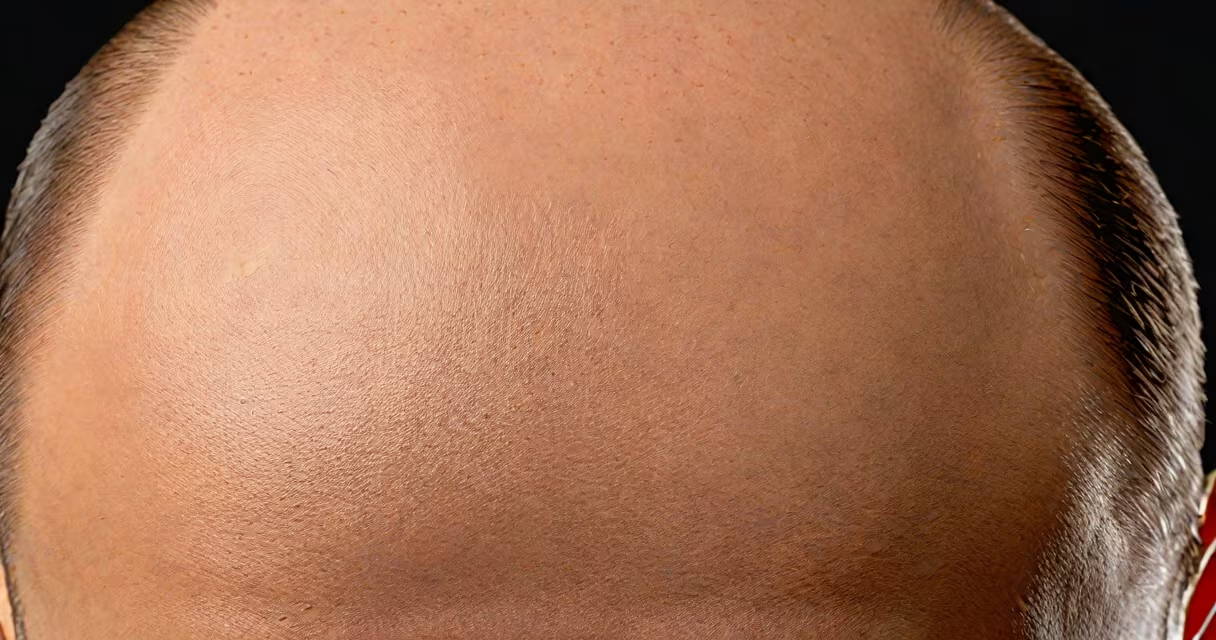
Male pattern baldness results from genetic sensitivity to dihydrotestosterone (DHT), a derivative of testosterone, which shrinks hair follicles over time. Women rarely experience the same pattern due to lower DHT levels and different hormonal regulation.
Androgenetic alopecia-the medical term for male pattern baldness-affects roughly 50% of men by age 50, according to the American Academy of Dermatology. In contrast, only about 10% of women develop noticeable hair thinning due to similar mechanisms. The difference lies not in testosterone itself, but in how the body processes it and how hair follicles respond.
DHT binds to receptors in the scalp's hair follicles. In genetically predisposed men, this binding triggers a process called miniaturization: follicles shrink, produce finer hairs, and eventually stop growing altogether. This cycle begins in the late teens or early twenties and progresses slowly over decades. Women have similar DHT receptors, but their follicles are less sensitive, and circulating DHT levels remain much lower.
Hair growth occurs in cycles: anagen (growth), catagen (transition), and telogen (rest). In men with androgenetic alopecia, the anagen phase shortens. Follicles spend less time producing hair and more time resting. Over time, each cycle produces progressively shorter, thinner strands until the follicle becomes dormant.
This process is driven by DHT, not testosterone directly. Testosterone converts to DHT via the enzyme 5-alpha-reductase. Some men have higher activity of this enzyme in scalp tissue, leading to greater local DHT concentrations. A 2016 study published in *The Journal of Clinical Endocrinology & Metabolism* found that men with severe balding had higher 5-alpha-reductase levels in scalp biopsies compared to controls.
Genetics play a central role. The AR gene on the X chromosome codes for the androgen receptor. Since men inherit one X from their mother, they're more likely to carry the variant linked to increased receptor sensitivity. A 2021 genome-wide association study identified over 200 single nucleotide polymorphisms (SNPs) associated with male pattern baldness, many clustered near the AR gene.
The core components of male pattern baldness are:
Women also produce DHT, but at about 10% of the level seen in men. Their ovaries and adrenal glands generate small amounts, but not enough to trigger widespread follicle miniaturization. Instead, women typically experience diffuse thinning-hair becomes uniformly fine across the scalp-rather than the distinct receding hairline and crown balding seen in men.
A 2019 study in *British Journal of Dermatology* analyzed 1,200 women with progressive hair thinning. Only 12% showed elevated DHT levels. Most cases were linked to thyroid dysfunction, iron deficiency, or autoimmune conditions-not androgen excess.
Many assume baldness is caused solely by stress, poor diet, or shampoo use. These factors may contribute to temporary shedding, but they don't cause the permanent follicle miniaturization seen in androgenetic alopecia. Stress-related hair loss (telogen effluvium) causes sudden shedding, but hair regrows once the stressor ends.
Another myth: "Bald men have higher testosterone." Research shows no correlation between serum testosterone levels and balding progression. A 2017 study in *Endocrine Connections* measured testosterone in 300 men aged 25-65. Balding severity correlated with DHT levels and genetic markers-not total testosterone.
Some believe DHT blockers like finasteride work by reducing testosterone. They don't. Finasteride inhibits 5-alpha-reductase, blocking the conversion of testosterone to DHT. It lowers scalp DHT by up to 70%, slowing or reversing miniaturization in 60-70% of users, according to FDA clinical trials.
Consider a 32-year-old man with a family history of balding. His father began losing hair at 30, and his maternal grandfather was completely bald by 45. By age 28, he notices his hairline receding slightly at the temples. By 32, the recession has widened, and the crown area shows thinning.
A dermatologist confirms androgenetic alopecia through visual assessment and a scalp biopsy. The biopsy reveals shortened anagen phases and smaller follicle size. Blood tests show normal testosterone and DHT levels-within the typical male range-but the scalp tissue shows high 5-alpha-reductase activity.
He begins using finasteride 1mg daily. After 12 months, hair density improves by 23% in the crown region, and further recession halts. The treatment doesn't reverse existing bald patches but stabilizes progression in most users.
Understanding the contrast between sexes requires examining both biology and presentation.
| Feature | Men | Women |
|---|---|---|
| Primary cause | Androgenetic alopecia (DHT-driven) | Diffuse thinning (often hormonal or nutritional) |
| Typical pattern | Receding hairline, crown thinning | Widening part, thinning |
| DHT sensitivity | High in scalp follicles | Low; follicles less responsive |
| Onset age | Teens to 30s | Often post-menopause or during pregnancy |
| Treatment response | Finasteride effective in 60-70% | Finasteride not approved; off-label use rare |
When women do experience androgenic hair loss, it's often due to underlying conditions like polycystic ovary syndrome (PCOS), where elevated androgens lead to facial hair growth and scalp thinning. But even then, the pattern remains different-women rarely lose the frontal hairline entirely.
I once observed a 45-year-old woman with PCOS who presented with increasing scalp thinning. Her bloodwork showed elevated free testosterone and DHEA-S. She responded well to spironolactone, an anti-androgen, but her hairline remained intact. This illustrates how female follicles resist the same DHT effects that cause male-pattern balding.
Baldness in men is not caused by high testosterone-it's caused by follicular sensitivity to DHT. Women have lower DHT levels and less sensitive receptors. This biological difference explains why men go bald and women usually don't.
For men considering medical intervention, prescription options like finasteride or minoxidil are backed by clinical evidence. But they work only because they address the specific hormonal and genetic drivers behind why men go bald and not women.