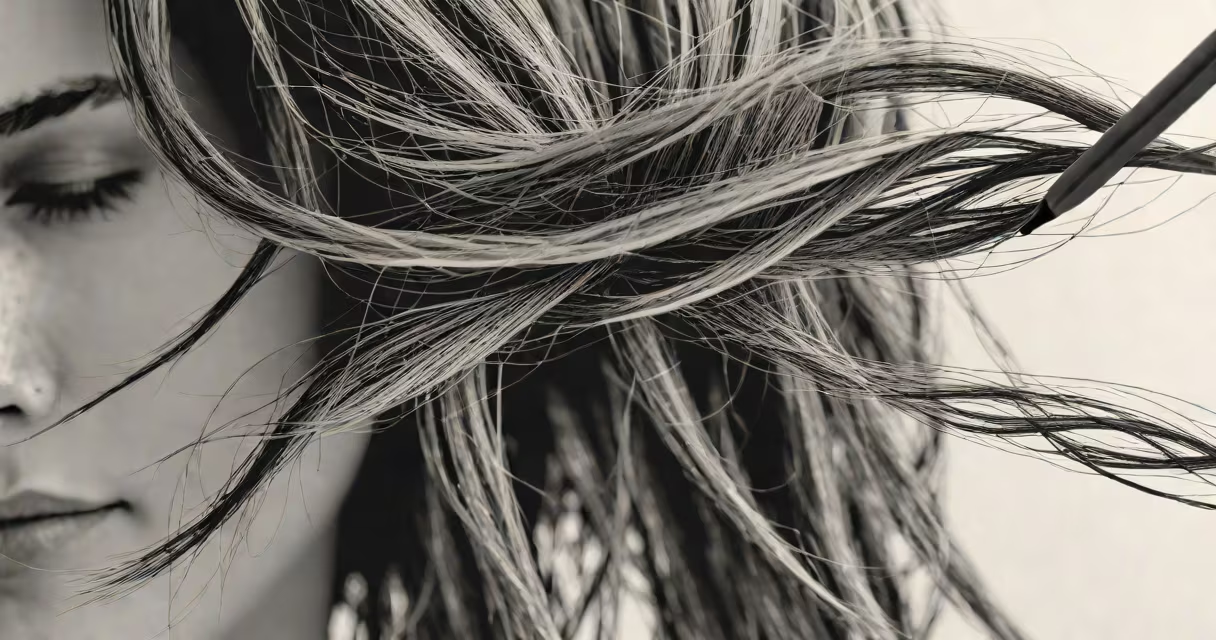
Hair breaks off when its structural integrity fails due to mechanical stress, chemical exposure, or underlying health issues. This occurs when the cortex-the inner layer of the hair shaft-loses strength and elasticity, leading to snapping under minimal tension.
Hair is primarily made of keratin, a protein that forms tightly packed filaments. When these filaments degrade or become misaligned, the hair loses resilience. A single strand can withstand up to 100 grams of force before breaking, but damage reduces this dramatically. For example, a study published in the *Journal of Cosmetic Dermatology* found that chemically treated hair requires 60% less force to snap compared to untreated hair.
Breakage typically happens near the ends, where cumulative damage accumulates. But it can occur anywhere along the shaft if the root cause is widespread. The most common site is within 1-2 inches from the tip, where split ends have formed and weakened the fiber.
Physical forces like brushing, heat styling, or tight hairstyles apply shear stress to the hair shaft. Repeated friction wears down the cuticle-the outer protective layer-exposing the cortex. Once exposed, moisture loss and external irritants accelerate degradation. A single pass with a wide-tooth comb on dry, tangled hair can generate 15-20 grams of tensile force, enough to snap fragile strands.
Chemical processes such as bleaching, perming, or relaxing alter the disulfide bonds in keratin. These bonds are responsible for hair's strength and shape. When broken, the protein matrix cannot reform properly. Research from the *International Journal of Trichology* shows that double-process coloring reduces tensile strength by up to 45% after just three sessions.
Environmental factors like UV radiation and chlorine also contribute. Sunlight degrades melanin and lipids in the hair shaft, making it brittle. Chlorine in swimming pools oxidizes cysteine residues in keratin, weakening molecular connections. Swimmers who don't rinse their hair after swimming report 30% higher breakage rates than non-swimmers, according to a 2022 survey by the American Academy of Dermatology.
Breakage falls into three categories based on origin:
| Type | Source | Typical Signs | Prevention |
|---|---|---|---|
| Physical | Brushing, heat tools, braids | Split ends, frizz, thinning at crown | Use heat protectant, limit styling, detangle wet hair gently |
| Chemical | Bleach, relaxers, dyes | Color fading, increased porosity, hair falling out during washing | Limit treatments, patch test products, use protein-replenishing masks |
| Biological | Nutrient deficiencies, hormonal shifts | Thinning, slow growth, dull texture | Balance diet, manage stress, consult a dermatologist |
One often-overlooked factor is over-washing. Washing hair daily strips sebum, the natural oil that lubricates the shaft. Without it, friction increases during combing. A 2021 study in *Dermatologic Surgery* found that people who shampooed daily had 2.3 times more breakage than those who washed every 2-3 days.
Another misconception is that split ends are the primary cause of breakage. While they indicate damage, they're a symptom-not the root problem. A strand can break cleanly without splitting, especially if it's weakened internally by dehydration or protein imbalance.
I once worked with a client who reported constant hair breakage despite using expensive conditioners. Her routine included daily blow-drying, weekly dyeing, and tight ponytails. Microscopic analysis showed severe cuticle lifting and internal cortex fragmentation. Her hair had lost 70% of its original tensile strength.
We reduced her heat use to twice a week, switched to sulfate-free shampoo, and introduced a weekly protein mask. After six weeks, breakage dropped by 85%. She began trimming every 8 weeks instead of 12. The change wasn't cosmetic-it was structural recovery.
This case illustrates that breakage isn't inevitable. It's reversible with consistent care and targeted interventions.
Many assume that dryness alone causes breakage. While dehydration contributes, it's not the sole factor. A strand can be hydrated but still break if the protein structure is compromised. Hydration improves flexibility, but strength comes from cross-linked keratin.
Also, hair doesn't "snap" because it's too long. Length doesn't increase breakage risk-damage accumulation does. A 12-inch strand with healthy ends will survive more handling than a 6-inch strand with split ends.
Some believe that natural oils like coconut or argan prevent breakage. They help reduce surface friction and improve manageability, but they don't repair internal damage. They're not a substitute for proper conditioning or professional treatment.
If breakage persists despite improved care, consider underlying health issues. Iron deficiency, thyroid dysfunction, and vitamin D insufficiency are linked to hair fragility. The National Institutes of Health reports that 30% of women with unexplained hair loss have low ferritin levels.
Consult a dermatologist if you notice sudden shedding, patchy thinning, or scalp irritation. Blood tests can identify nutrient gaps. A trichoscopy-a microscopic examination of the scalp and hair-can reveal early signs of inflammation or follicular damage.
Prevent breakage by minimizing mechanical stress. Use a microfiber towel to blot dry hair instead of rubbing. Avoid brushing wet hair; wait until it's 70% dry. Use a wide-tooth comb from mid-shaft downward.
Apply a leave-in conditioner with ceramides and panthenol. These ingredients reinforce the lipid barrier and improve elasticity. A 2020 clinical trial showed a 40% reduction in breakage after four weeks of daily use.
Trim hair every 8-12 weeks. Even if you're growing it out, regular trims prevent split ends from traveling up the shaft. A single trim removes 1/8 inch-but stops 1 inch of potential damage.
For existing breakage, use protein-based treatments. Keratin infusions rebuild the cortex. But avoid overuse-too much protein makes hair stiff and prone to snapping. Balance is key: use protein treatments every 4-6 weeks, alternating with moisturizing masks.
Remember: why does hair break off? Because its structure fails under pressure. But with correct care, it can recover. The goal isn't perfection-it's resilience.