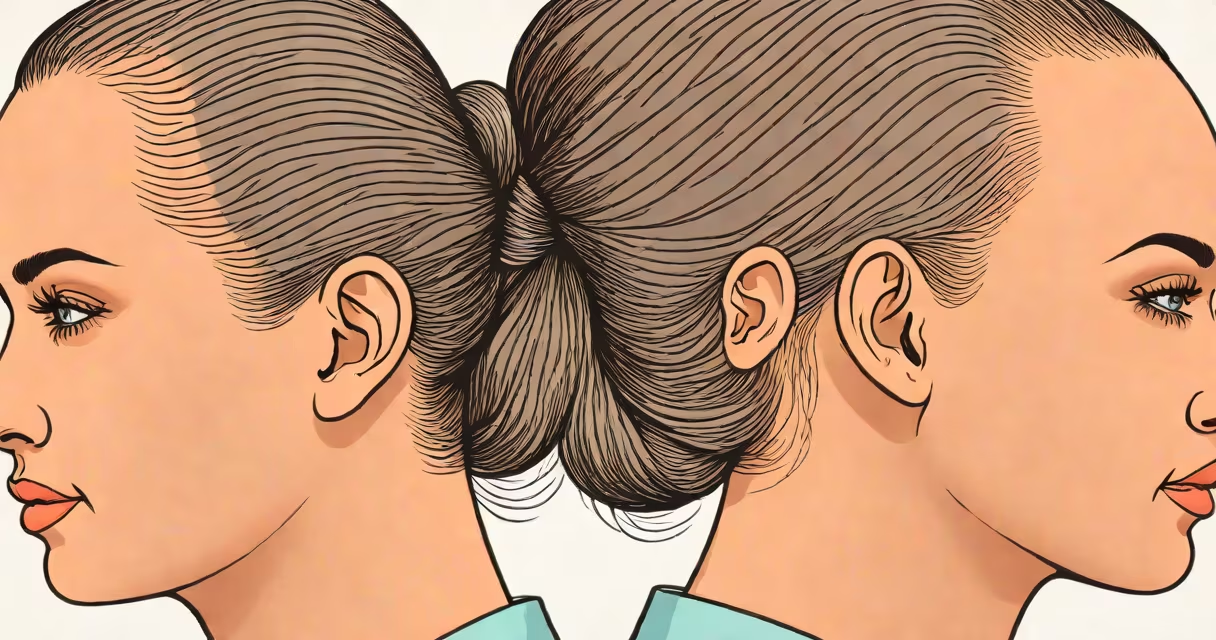
Females rarely experience the complete, patterned baldness seen in males due to lower levels of dihydrotestosterone (DHT), a hormone derivative that shrinks hair follicles. This difference stems from genetics, hormone balance, and follicle sensitivity.
Baldness in men typically follows a predictable pattern-receding hairline, thinning crown-driven by androgenetic alopecia. This condition affects about 50% of men by age 50, according to the American Academy of Dermatology. In contrast, women experience diffuse thinning across the scalp, rarely losing all hair in a single area. The difference lies in how their bodies process male hormones.
Testosterone itself doesn't cause baldness. Instead, it converts into DHT via the enzyme 5-alpha-reductase. DHT binds to receptors in hair follicles, shrinking them over time. Men have higher baseline DHT levels and more sensitive follicles due to inherited genes. Women produce less testosterone and have fewer DHT receptors in scalp tissue, making follicles less vulnerable.
Male-pattern baldness involves progressive miniaturization of follicles, especially at the temples and crown. Over years, follicles shrink until they stop producing visible hair. This process is genetically driven and often begins in the late teens or early twenties.
Female-pattern hair loss (FPHL) presents differently. It usually starts with gradual thinning across the central part of the scalp, not a receding hairline. The hair doesn't disappear entirely-it becomes finer and less dense. A 2021 study in the Journal of Clinical and Aesthetic Dermatology found that 60% of women aged 40-60 report noticeable thinning, but only 10% develop extensive bald patches.
The key distinction is not just hormone levels but receptor distribution. Research from the National Institutes of Health shows that scalp tissues from women have fewer androgen receptors than those from men. This reduces DHT's impact on follicles, preventing the aggressive miniaturization seen in men.
Androgenetic alopecia is polygenic-multiple genes contribute. The AR gene on the X chromosome plays a major role. Since men have one X and one Y chromosome, they inherit their maternal X-linked risk factor directly. Women have two X chromosomes, which dilutes the effect. Even if a woman inherits a high-risk allele, the second copy may compensate.
Estrogen and progesterone protect hair follicles. These hormones promote the anagen (growth) phase and extend follicle lifespan. After menopause, when estrogen drops, hair thinning accelerates-but it still doesn't lead to baldness. A 2019 study in *Endocrinology* showed that postmenopausal women lose about 15% of their hair density over ten years, but none became completely bald.
Some women do experience severe hair loss, but it's usually due to medical conditions like polycystic ovary syndrome (PCOS), thyroid disorders, or autoimmune diseases such as alopecia areata. These are distinct from androgenetic alopecia and require different treatment paths.
Many assume that women can't go bald because they "don't have enough testosterone." That's incorrect. Women produce testosterone-about 10-20 micrograms per day-primarily from the adrenal glands and ovaries. This level is sufficient to support reproductive function but too low to trigger significant DHT production.
Another myth is that stress causes female baldness. While stress can trigger telogen effluvium-temporary shedding-this is reversible. It doesn't lead to permanent baldness. True androgenetic alopecia in women is rare and usually requires both genetic predisposition and hormonal imbalance.
A third misconception is that using certain shampoos or styling products causes baldness. There's no evidence linking daily hair care routines to follicle damage. Products containing DHT blockers like saw palmetto are marketed for hair health, but clinical trials show minimal benefit. The real issue remains hormonal and genetic.
Consider two individuals: a 35-year-old man and a 35-year-old woman, both with a family history of baldness. The man has a receding hairline and thinning crown. His blood test shows elevated DHT levels. His father and paternal grandfather were bald by 40.
The woman reports her mother lost hair after menopause. She notices her part widening slightly. Her labs show normal testosterone and estrogen levels. A scalp biopsy reveals mild miniaturization in the central region but no signs of follicle destruction. She's diagnosed with FPHL-not male-pattern baldness.
She uses minoxidil 5% topical solution twice daily. After six months, her hair density improves by 20%. The man, despite using the same treatment, sees only modest regrowth. His condition is more advanced, and his follicles are already severely damaged.
| Feature | Males | Females |
|---|---|---|
| Typical Pattern | Receding hairline, crown thinning | Diffuse thinning, widened part |
| DHT Sensitivity | High (due to genetics and receptors) | Low (fewer androgen receptors) |
| Hair Loss Progression | Stages 1-7 (Norwood scale) | Stages 1-3 (Ludwig scale) |
| Onset Age | Teens to 30s | 30s to 50s (often post-menopause) |
| Complete Baldness | Common (up to 50% by age 50) | Rare (less than 1% in population studies) |
Understanding why females don't go bald requires looking beyond testosterone. It's about receptor density, hormone balance, and genetic buffering. Women's hair follicles are protected by lower DHT exposure and higher estrogen influence. This biological design prevents the dramatic balding seen in men.
The answer to why don't females go bald lies in evolutionary biology. High DHT levels may have offered survival advantages in men-stronger musculature, dominance signals-but in women, preserving hair density supports reproductive signaling and social bonding. The trait evolved to protect fertility and identity.