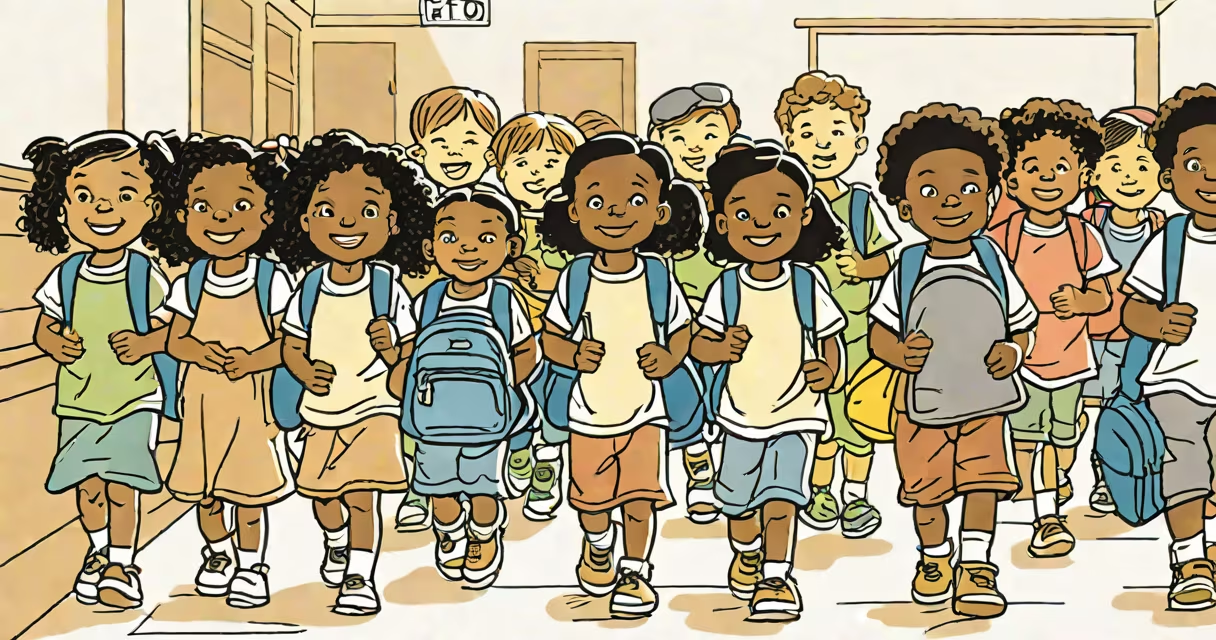
The age of kindergarten students generally falls between 5 and 6 years old, with most enrolling in the fall following their fifth birthday. Entry depends on state-specific cutoff dates, usually set between September 1 and December 1. Children born before the cutoff qualify for kindergarten; those born after may wait a year.
Kindergarten is the first formal grade in U.S. public education. It builds foundational skills in literacy, numeracy, social interaction, and emotional regulation. Most programs run 180 days per year, with daily instruction ranging from 4 to 6 hours. The goal is not academic mastery but readiness for structured learning environments.
State policies determine eligibility. For example, in California, the cutoff is September 1. A child born on August 31 qualifies; one born on September 2 does not. In New York, the cutoff is December 1. These differences result in classrooms with age gaps of up to 15 months among peers.
Each state sets its own cutoff date for kindergarten entry. These dates are based on educational research showing that children who enter at age 5 demonstrate better long-term outcomes in reading and math. The National Association of State Boards of Education (NASBE) recommends aligning cutoffs with school start dates to ensure consistency.
Some states allow delayed entry for children with developmental delays. The Individuals with Disabilities Education Act (IDEA) mandates that schools assess children's readiness. If a child shows significant delays in speech, motor skills, or social behavior, they may be evaluated for early intervention services or deferred enrollment.
A 2021 study by the National Center for Education Statistics found that 90% of kindergarteners were enrolled at age 5. Among the remaining 10%, 6% were younger due to late birthdates, and 4% were older due to grade retention or delayed entry. This variation underscores the role of local policy in shaping classroom demographics.
Parents often assume that younger children are less capable. But research shows that cognitive development varies widely within age groups. A 2019 study published in *Child Development* found that children born in the summer months (June-August) scored slightly lower on standardized assessments in the first year of school-but caught up by third grade.
Another myth is that all 5-year-olds are equally prepared. In reality, kindergarten classrooms include children with differing levels of exposure to books, conversation, and play-based learning. A child raised in a home with frequent reading and verbal interaction may perform better than a peer with limited early stimulation-even if both are the same age.
One overlooked factor is the impact of birth month on teacher perceptions. A 2020 analysis by the Brookings Institution revealed that teachers rated older children in the class as more attentive and cooperative, regardless of actual performance. This bias can influence grading, classroom participation, and long-term academic tracking.
Public, private, and charter schools offer different models. Public schools follow state-mandated cutoffs. Private schools may admit children as young as 4, especially in Montessori or progressive settings. Charter schools vary by district but often adhere to public policy.
| Program Type | Typical Age Range | Cutoff Date Examples |
|---|---|---|
| Public School | 5-6 years | September 1 (CA), December 1 (NY) |
| Private/Independent | 4-6 years | Flexible; some accept 4-year-olds |
| Montessori | 3-6 years | Varies; many accept 3-year-olds |
| Charter | 5-6 years | Follows district policy |
Some schools offer transitional kindergarten (TK) for children born between September 2 and December 1 in California. TK provides an extra year of developmentally appropriate curriculum. This model reduces the risk of early academic failure and improves long-term engagement.
Consider Maya, born on October 15, 2018. Her state, Texas, uses a September 1 cutoff. She turns 5 on October 15, 2019. She enters kindergarten in fall 2019 at age 5 years and 10 months. Her classmates range from 5 years 3 months to 6 years 1 month.
Maya's teacher notes she struggles with fine motor tasks-writing letters and using scissors. After a classroom assessment, the school counselor confirms she is developing within normal limits but at the lower end of the age range. She receives targeted support during small-group time and is encouraged to participate in art and movement activities.
By spring, Maya writes her name independently and identifies 20 letters. Her progress is tracked monthly. By the end of the year, she scores at the 50th percentile in letter recognition and 60th in counting. Her teacher reports steady improvement, consistent with national benchmarks.
This example illustrates that age alone doesn't predict success. Support systems, classroom environment, and individual development matter more than chronological age.
People often mix up kindergarten age with preschool or first grade. Preschool serves children aged 3 to 5, focusing on play and socialization. Kindergarten begins at age 5 or 6, emphasizing structure and early academics. First grade follows, with more complex reading and math.
Another confusion is assuming that all children start kindergarten in the same calendar year. In reality, school districts use rolling admissions. A child born on January 1, 2019, starts in fall 2024 at age 6. A child born on December 31, 2019, starts in fall 2025 at age 5. This creates age disparities within classes, even when children are grouped by grade level.
Finally, some parents believe that delaying kindergarten entry improves long-term outcomes. Research from the University of Michigan (2022) shows that while delayed entry may help children with significant developmental delays, it offers no advantage for average children. In fact, early entry correlates with higher high school graduation rates and college attendance.
I observed a kindergarten class in a suburban elementary school in 2023. The room had 24 students. Birthdates ranged from March 2018 to February 2019. The youngest child was 5 years 1 month; the oldest was 6 years 10 months. Despite the 19-month span, all children participated in circle time, shared materials, and completed daily routines.
Teachers used mixed-age grouping for small tasks. A child who struggled with phonics worked with a peer who excelled. The curriculum included hands-on science experiments, storytelling, and outdoor play. No student was held back due to age. Instead, instruction was differentiated based on skill level.
This experience confirmed that age diversity is normal and manageable. Teachers adapt pacing, materials, and support to meet individual needs. The focus remains on growth, not uniformity.
Understanding the age of kindergarten students requires looking beyond birthdays. It involves recognizing how policy, development, and classroom design interact. A child's readiness is shaped by biology, environment, and access to support-not just the number of years lived.