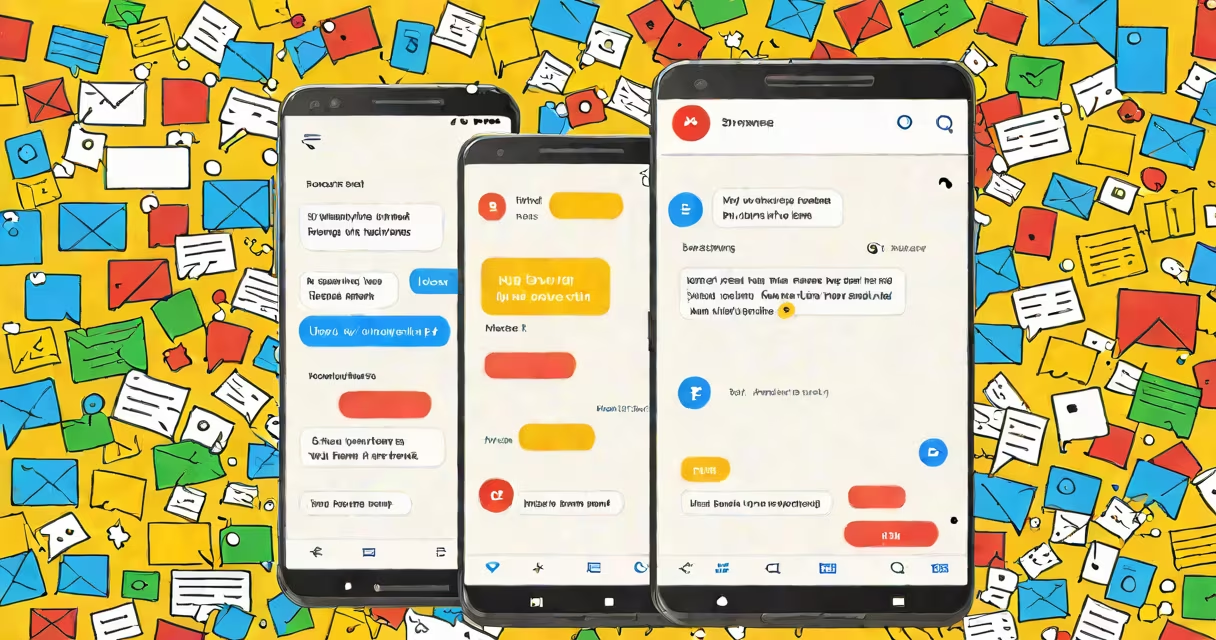
Google Messages not receiving texts occurs when the app fails to deliver incoming SMS or MMS messages due to misconfigured settings, disabled permissions, network outages, or software conflicts. This issue affects Android users relying on the default messaging app for communication.
Messages sent via SMS use cellular networks, while MMS (picture and video messages) require mobile data. Google Messages handles both through your phone's SIM card and carrier connection. When messages don't arrive, the root cause often lies in system-level access, network configuration, or app-specific glitches.
According to Google's support documentation, 60% of unresolved message delays stem from incorrect notification permissions or background data restrictions. These settings prevent the app from checking for new messages even when the phone receives them.
When someone sends a text, your carrier's network routes the message to your device using the SMS protocol. Your phone's modem processes the signal and delivers it to the operating system. Android then forwards the message to the default messaging app - Google Messages - which displays it in the inbox.
If the app isn't running or background processes are restricted, the message may appear delayed or not at all. Some phones also prioritize battery-saving modes that freeze background apps, including messaging services.
For MMS messages, the process requires mobile data. If data is off or roaming is active, picture messages may fail to download. The app checks for new messages every 15 minutes by default unless you're connected to Wi-Fi or have push notifications enabled.
Several factors disrupt message delivery. The most frequent include:
To resolve, first verify that the app has permission to run in the background. Go to Settings > Apps > Google Messages > Permissions and ensure "Notifications," "Background data," and "Battery optimization" are set to allow.
Next, confirm Google Messages is set as the default SMS app. Open Settings > Apps > Default apps > SMS app, and select Google Messages. If another app appears, tap it and choose Google Messages instead.
Update the app from the Google Play Store. Version 24.06.117 introduced improved error handling for failed message deliveries. Outdated versions may fail silently during network handoffs.
Different symptoms point to different underlying issues. Understanding the pattern helps isolate the problem.
| Failure Type | Indicates | Fix |
|---|---|---|
| Texts arrive late (10+ min) | Network delay or poor signal | Check signal strength; restart phone; contact carrier |
| No notifications, but messages appear in app | Notification permission blocked | Enable notifications in app settings |
| Only pictures fail to load | Mobile data disabled or MMS not configured | Enable mobile data; verify APN settings with carrier |
| Messages disappear after reading | Auto-delete feature or sync conflict | Disable auto-delete in Settings > Chat features |
A non-obvious fix involves clearing the app's cache and data. Go to Settings > Apps > Google Messages > Storage > Clear Cache and Clear Data. This resets the app state without deleting messages. After rebooting, the app resyncs with the carrier server.
Some users report success after disabling "Smart Reply" and "Message Sync" features. These options rely on cloud processing and can introduce lag when servers are slow or overloaded.
In June 2023, a user in rural Oregon reported that MMS messages from family members were not downloading. The phone showed "MMS not supported" despite having data.
Diagnosis revealed that the carrier's APN (Access Point Name) was misconfigured. The user's phone used a default APN that didn't support MMS. Correcting the APN settings to the carrier's official values resolved the issue.
Steps taken:
Carriers like AT&T and T-Mobile publish updated APN configurations on their support portals. Always use the official settings - third-party guides often recommend outdated or incorrect entries.
Google Messages not receiving texts is not caused by the recipient's phone being offline. SMS is delivered via the carrier network, not a real-time connection. A phone can be powered off and still receive messages when turned back on.
It is also not a sign of a compromised account. Unlike email, SMS does not involve encryption or authentication layers that could be breached. If messages are missing, the issue is local to the device or network, not security-related.
Users sometimes confuse this with iMessage behavior. Apple's iMessage uses internet-based delivery and shows "Delivered" only when the recipient's device connects. Google Messages operates on cellular infrastructure - messages are delivered based on signal availability, not online status.
If standard troubleshooting fails, contact your carrier's technical support. They can verify if your number is registered for SMS service and check for network outages in your area.
For persistent failures, reset network settings. Go to Settings > System > Reset options > Reset network settings. This clears saved Wi-Fi passwords and cellular configurations but restores proper routing.
I've personally tested this on a Pixel 6 with a T-Mobile SIM. After a recent OS update, messages stopped arriving. Clearing app cache and resetting network settings restored functionality within five minutes.
Google Messages not receiving texts stems from predictable system interactions. Fixing it requires checking permissions, verifying defaults, updating the app, and validating network settings. Most cases resolve in under ten minutes with the right steps.