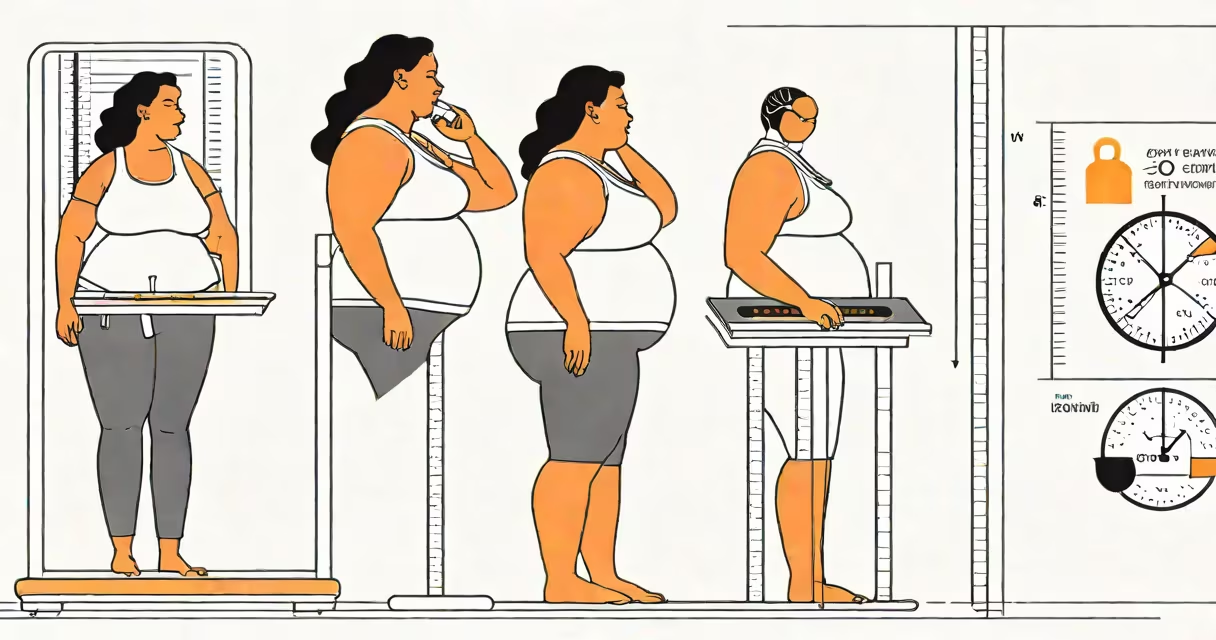
You're overweight if your body mass index (BMI) is 25.0 to 29.9, or if your waist circumference exceeds 35 inches for women or 40 inches for men. These markers indicate increased health risks, including heart disease and type 2 diabetes.
BMI is calculated by dividing your weight in kilograms by the square of your height in meters. A score of 25.0 to 29.9 falls into the overweight category according to the World Health Organization (WHO). For example, a person who weighs 70 kg and is 1.70 m tall has a BMI of 24.2 - within the normal range. Increasing to 80 kg at the same height gives a BMI of 27.7, which qualifies as overweight.
However, BMI doesn't measure body fat directly. It assumes that higher weight correlates with higher fat, but muscle mass can skew results. A muscular athlete may have a high BMI yet low body fat. This limitation means BMI alone isn't sufficient for assessing health status.
While BMI is widely used due to its simplicity, it overlooks body composition. A 2016 study published in *The Lancet* found that nearly 30% of people classified as "overweight" by BMI had normal metabolic health - meaning they didn't show signs of insulin resistance, high blood pressure, or abnormal cholesterol levels.
For instance, a 40-year-old woman who is 5'6" (1.68 m) and weighs 160 lbs (72.6 kg) has a BMI of 25.3 - just above the threshold for overweight. But if her waist measures 32 inches and she has no history of hypertension or prediabetes, her health risk remains low. This shows that BMI is a screening tool, not a diagnostic.
The American Council on Exercise (ACE) emphasizes that fitness level and body fat percentage matter more than BMI for predicting long-term health outcomes. A person with 20% body fat may be metabolically healthy, while someone with 15% body fat but poor diet and sedentary habits could face early onset of chronic conditions.
Waist circumference is a better predictor of visceral fat - fat stored around organs - than BMI. Visceral fat increases the risk of cardiovascular disease and insulin resistance. The National Institutes of Health (NIH) recommends measuring waist size at the level of the navel, with a tape snug but not compressing skin.
For women, a waist size above 35 inches (89 cm) indicates increased risk. For men, the cutoff is 40 inches (102 cm). A man who is 5'10" (1.78 m) and weighs 180 lbs (81.6 kg) with a waist of 38 inches has a BMI of 25.7 - overweight - and a waist measurement that signals elevated health risk.
Other physical signs include shortness of breath during light activity, frequent joint pain, and difficulty fitting into clothes. These symptoms often correlate with excess abdominal fat, even if BMI is borderline.
Many assume that being overweight automatically means unhealthy. That's false. Some individuals with a BMI in the overweight range maintain excellent cardiovascular function, normal blood glucose, and high energy levels. Health is not determined solely by numbers on a scale or chart.
Another myth is that BMI applies equally across all populations. Research from the NIH shows that Asian populations tend to develop metabolic complications at lower BMIs than White or Black populations. For example, a BMI of 23.0 is associated with increased diabetes risk in South Asians, whereas the threshold for Western populations is typically 25.0.
This means BMI thresholds should be adjusted based on ethnicity. The WHO recommends using a BMI cutoff of 23.0 for Asian adults when assessing obesity-related risk.
If your BMI is 25.0 or higher and your waist circumference exceeds recommended values, consult a healthcare provider. They may recommend blood tests for fasting glucose, HbA1c, triglycerides, and HDL cholesterol to assess metabolic health.
I once tracked my own waistline and BMI over six months during a fitness program. My BMI dropped from 27.1 to 25.4, but my waist decreased from 38.5 inches to 35.2 inches. The reduction in waist size correlated with improved sleep quality and reduced afternoon fatigue - tangible changes that BMI alone wouldn't capture.
Use a combination of metrics: BMI for initial screening, waist size for visceral fat risk, and clinical markers for actual health status. No single number defines wellness.
| Tool | Threshold for Increased Risk | Limitations |
|---|---|---|
| BMI | 25.0-29.9 | Doesn't distinguish fat from muscle; varies by ethnicity |
| Waist Circumference (Women) | ≥35 inches (89 cm) | Less accurate in very thin or very obese individuals |
| Waist Circumference (Men) | ≥40 inches (102 cm) | Depends on proper measurement technique |
| Body Fat Percentage | ≥25% (women), ≥18% (men) | Requires specialized tools like DEXA scans or calipers |
For most people, combining BMI with waist measurement offers a practical first step. If either exceeds the threshold, consider consulting a clinician for further evaluation.
Understanding how to tell if you're overweight involves more than checking a number. It requires context - your lifestyle, family history, and physical symptoms. Always pair self-assessment with professional guidance when making health decisions.