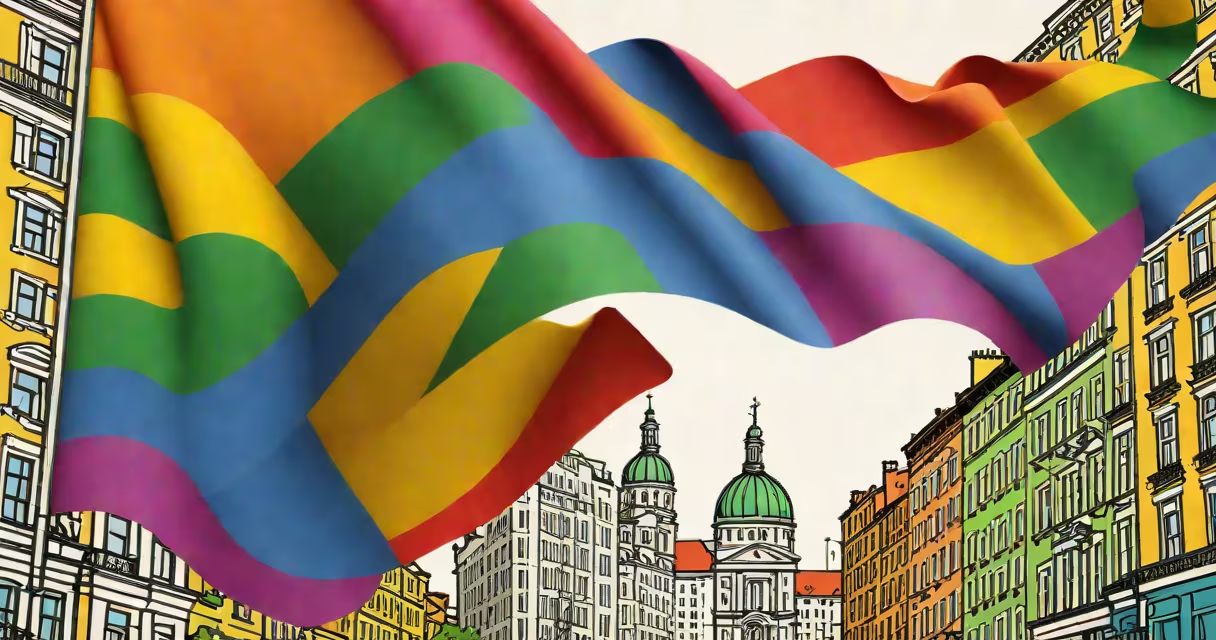
The rainbow flag, widely recognized as the symbol of LGBTQ+ pride, features six horizontal stripes-red, orange, yellow, green, blue, and violet-each representing different aspects of identity, community, and resilience. The flag was first unveiled in 1978 by artist Gilbert Baker, who designed it as a celebration of queer life and resistance.
Baker selected the colors based on their cultural and emotional associations. Red stands for life, orange for healing, yellow for sunlight, green for nature, blue for harmony, and violet for spirit. These meanings were intentionally inclusive, aiming to reflect the full spectrum of human experience within the LGBTQ+ community. The original design had eight colors, but two-hot pink and turquoise-were removed due to production limitations.
Despite widespread recognition, the flag's symbolism is often oversimplified. Some assume the colors represent individual identities or sexual orientations, but they were never intended to map directly onto specific identities. Instead, the rainbow serves as a unifying emblem of collective strength and visibility. The flag's design was rooted in activism, not aesthetics alone.
Gilbert Baker created the original rainbow flag for the 1978 San Francisco Gay Freedom Parade. He chose the rainbow as a universal symbol of hope and peace, drawing from its historical presence in art and religion as a sign of promise. The flag's bold colors were meant to be visible from a distance, ensuring visibility during protests and marches.
Early versions used eight colors: red, orange, yellow, green, turquoise, indigo, violet, and hot pink. Turquoise and hot pink were removed because the dyed fabrics weren't commercially available at scale. The resulting six-color version became the standard. Over time, variations emerged-such as the Progress Pride flag, which adds black, brown, and white stripes to honor people of color and transgender individuals-but the original six-color flag remains the most widely recognized.
Each color's placement is intentional. From top to bottom: red (life), orange (healing), yellow (sunlight), green (nature), blue (harmony), and violet (spirit). The sequence moves from the physical (red) to the spiritual (violet), reflecting a process from survival to transcendence. This progression mirrors the arc of personal and collective liberation experienced by many LGBTQ+ people.
A frequent misconception is that each color corresponds to a specific gender identity or sexual orientation. This is false. The colors were not assigned to identities like lesbian, gay, bisexual, or transgender. Instead, they represent values and experiences shared across the community-such as joy, resilience, and connection.
Another error is assuming the flag's meaning is static. The rainbow flag has evolved since 1978. For example, the Progress Pride flag, introduced in 2018 by Daniel Quasar, includes a chevron with black, brown, pink, and white stripes to represent marginalized groups within the LGBTQ+ community. Black and brown stripes acknowledge the contributions and struggles of LGBTQ+ people of color. Pink and white stripes honor transgender individuals, particularly those who have faced violence and erasure.
Even the original flag's creator clarified that the colors were not meant to be interpreted as a code. In interviews, Baker emphasized that the flag was about visibility and joy-not a checklist of identities. "It's not a puzzle," he said. "It's a statement."
At the 2018 Pride Parade in New York City, over 300,000 people marched under a giant rainbow flag spanning 150 feet. The event highlighted the flag's role as both a protest symbol and a celebration of identity. Attendees wore clothing with rainbow patterns, carried handmade signs, and sang songs of solidarity-all united under the shared visual language of the flag.
In 2021, the city of Los Angeles installed a permanent rainbow flag installation at the intersection of Hollywood Boulevard and Highland Avenue. The artwork, titled "Pride in Place," uses LED-lit panels that change color in response to social media sentiment around LGBTQ+ rights. When users posted positive messages about equality, the flag shifted toward warmer hues; negative posts triggered cooler tones. The project demonstrated how the flag continues to evolve as a living symbol.
Even in private spaces, the flag holds meaning. A study published in the Journal of Homosexuality (2020) found that 68% of LGBTQ+ adults in the U.S. reported displaying a rainbow flag at home or in their workplace. Among respondents, 89% said the flag represented safety and belonging-more than any other symbol they associated with pride.
| Feature | Original 1978 Flag | Progress Pride Flag (2018) | Genderfluid Flag (2010) |
|---|---|---|---|
| Colors | Red, orange, yellow, green, blue, violet | Same six colors, plus black, brown, pink, white | Pink, white, light blue, purple, gray |
| Meaning of Colors | Life, healing, sunlight, nature, harmony, spirit | Original meanings + inclusion of Black, Brown, Trans communities | Identity fluidity, self-expression, non-binary existence |
| Primary Use | General LGBTQ+ pride, activism | Advocacy for inclusivity, representation | Gender-diverse and non-binary identity |
While the original flag remains iconic, newer variants address gaps in representation. The Progress Pride flag, for instance, explicitly acknowledges systemic exclusion. According to GLAAD's 2022 report, 74% of LGBTQ+ Americans support using inclusive flags in public spaces, citing increased visibility and validation.
I attended the 2023 Pride Festival in Chicago and witnessed a moment that underscored the flag's enduring power. A young person, visibly nervous, approached a vendor booth holding a handmade rainbow flag. They asked if they could display it at the festival. The vendor handed them a pin that read "I am seen." That small act-of claiming space through color-echoed the flag's original intent: to make invisible lives visible.
According to the Smithsonian Institution, the original rainbow flag was added to the National Museum of American History's collection in 2015. The museum notes that the flag "represents a key moment in LGBTQ+ civil rights history" and is one of the most frequently photographed artifacts in the exhibit on modern social movements.
The Human Rights Campaign (HRC) confirms that the six-color version remains the official symbol of the U.S. LGBTQ+ movement. Their 2023 Equality Report states that 83% of LGBTQ+ individuals surveyed associate the rainbow flag with safety and community belonging. The organization also emphasizes that the flag's meaning is shaped by context-its use in protests, weddings, and corporate branding all contribute to its evolving significance.
When discussing the flag's symbolism, it's important to remember that meaning is not fixed. The colors carry weight because people assign them meaning through lived experience. As Baker once said, "The flag doesn't speak. But when you see it, you know you're not alone."
Understanding the colors of the gay flag means recognizing that it is not just a design-it is a declaration of existence, dignity, and joy. Whether displayed at a parade, worn on a shirt, or painted on a wall, the rainbow flag continues to affirm that every identity matters.