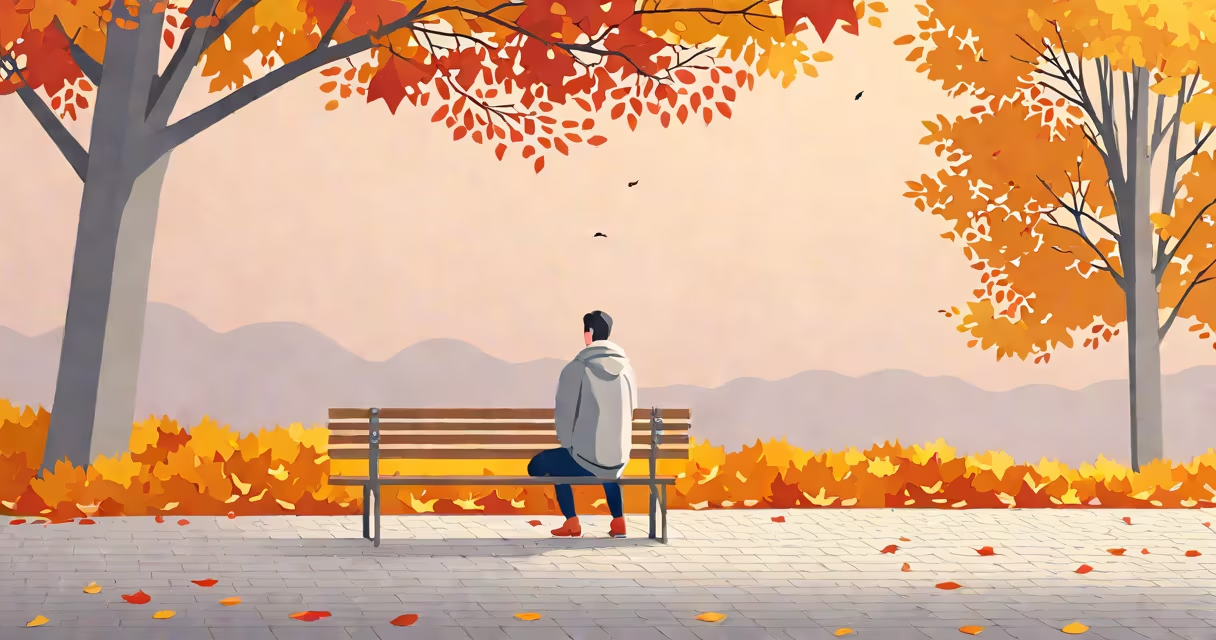
Melancholy is a profound, introspective sadness marked by quiet reflection, often tinged with beauty or nostalgia. It differs from acute grief or clinical depression, existing as a mood rather than a disorder. The term originates from ancient humoral theory, where it described an excess of black bile, believed to cause brooding and sorrow.
The word entered English via Latin *melancholia*, itself derived from Greek *melankholia*-from *melas* (black) and *kholē* (bile). This medical structure shaped early understandings of temperament. Today, melancholy appears in literature, music, and personal expression as a detailed emotional state, not a diagnosis.
According to the Oxford English Dictionary, melancholy denotes "a feeling of pensive sadness," especially one associated with thoughtful contemplation. It's not simply being sad-it's sadness with depth, often tied to art, memory, or solitude. A person experiencing melancholy may feel drawn to quiet places, old photographs, or slow music.
Unlike transient sadness, melancholy persists without overt distress. It's not disruptive to function but alters perception. People report heightened awareness of light, sound, or silence during melancholic states. This sensitivity makes melancholy central to artistic expression.
In literature, melancholy shapes tone and character. Shakespeare's Hamlet exhibits melancholy-not as madness, but as intellectual and emotional depth. His soliloquy "To be, or not to be" reflects melancholy's blend of existential doubt and poetic introspection. The National Library of Medicine notes that melancholy was historically linked to creativity, with artists like Van Gogh and writers like Poe often described in these terms.
Modern usage retains this nuance. A film critic might describe a scene as "hauntingly melancholy," not because it's depressing, but because it evokes a quiet ache. Music genres such as indie folk or lo-fi hip-hop frequently channel melancholy through minor keys and layered textures. The song "Holocene" by Bon Iver uses sparse instrumentation and whispered vocals to create a sense of melancholy that feels both intimate and universal.
While not formally categorized, melancholy manifests in distinct patterns based on context and trigger:
| Type | Description | Example |
|---|---|---|
| Existential | Reflective sadness about life's impermanence or meaning. | A person staring at a sunset, thinking about time passing. |
| Nostalgic | Sorrow tied to memories of people, places, or times lost. | Hearing an old song and feeling a wave of longing. |
| Aesthetic | Emotional response to beauty perceived as fleeting or tragic. | Watching a film where a character dies in peace, leaving viewers moved. |
These forms aren't mutually exclusive. A nostalgic melancholy might arise while reading a letter from childhood, blending memory, loss, and quiet acceptance. The key distinction lies in the absence of anger or urgency-melancholy is inward-turning, not reactive.
Many equate melancholy with depression. They are not the same. Depression involves persistent low mood, fatigue, and impaired functioning. Melancholy, by contrast, can coexist with joy. A person may feel melancholy while watching a wedding video, not because they're unhappy, but because they recognize the passage of time.
Another error is treating melancholy as inherently negative. Historically, it was seen as a sign of sensitivity and intelligence. In 18th-century Europe, melancholy was admired in poets and philosophers. The Romantic movement celebrated it as essential to authentic experience. Today, brands like Aesop and Uniqlo market products with "melancholy" aesthetics-soft fabrics, muted tones, minimal design-suggesting cultural value in the mood.
Melancholy is not synonymous with "sadness." Sadness is a reaction to loss. Melancholy is a state of being. One can be sad about a broken phone; one is melancholy when reflecting on how quickly time passes and how little remains unchanged.
Consider the 2016 film *Manchester by the Sea*. Lee Chandler (Casey Affleck) lives in a state of unresolved grief after losing his children. He doesn't speak much. He moves through routines mechanically. His interactions are brief, often awkward. Yet, moments of stillness-like standing at a window, watching snow fall-carry a deep melancholy.
He doesn't cry. He doesn't rage. He exists in a quiet, heavy sadness. The film's cinematography emphasizes empty spaces-hallways, parking lots, cold kitchens. These settings don't signal despair; they reflect internal stillness. The audience feels the weight not through dialogue, but through absence. That is melancholy: not loud, not dramatic, but deeply felt.
This example shows how melancholy functions beyond language. It's conveyed through pacing, lighting, silence. The Academy Awards recognized the film's emotional precision, not for its plot, but for its portrayal of enduring sorrow without melodrama.
I once spent a winter evening alone in a small apartment, listening to a vinyl record of Nick Drake's *Five Leaves Left*. The room was dim. Outside, snow fell silently. I didn't feel upset. I didn't want to change anything. There was a stillness in the air that felt like belonging. That was melancholy-not sadness, but a kind of recognition. The music wasn't about pain; it was about presence.
That night, I wrote a short poem. Not to fix anything. Just to mark the feeling. Melancholy doesn't demand action. It invites attention.
One non-obvious point: melancholy is not passive. It requires engagement. You don't "get over" melancholy-you sit with it. It's not something to be cured. As philosopher Alain Badiou noted, "The melancholic is not someone who suffers; he is someone who stays."
Also, melancholy is not gendered. While often associated with male poets in Western tradition, it appears in women's writing too. Virginia Woolf's *Mrs Dalloway* features moments of melancholy in Clarissa's reflections on her past choices. Her sadness isn't dramatic-it's woven into everyday decisions, like choosing flowers for a party.
Finally, avoid using "melancholy" as a synonym for "depression." Doing so diminishes both conditions. Depression is a medical condition requiring treatment. Melancholy is a human experience, not a pathology. Using them interchangeably erases the richness of emotional language.
For comparison, abuse refers to harm inflicted intentionally. Melancholy is not harm. It's not violence. It's not power imbalance. The two words belong to different emotional categories.
Melancholy is not a flaw. It's a mode of being. It's the quiet ache behind a well-loved book, the pause between notes in a song, the space between words in a letter you never sent. Understanding what does the word melancholy mean opens space for deeper feeling, not less.