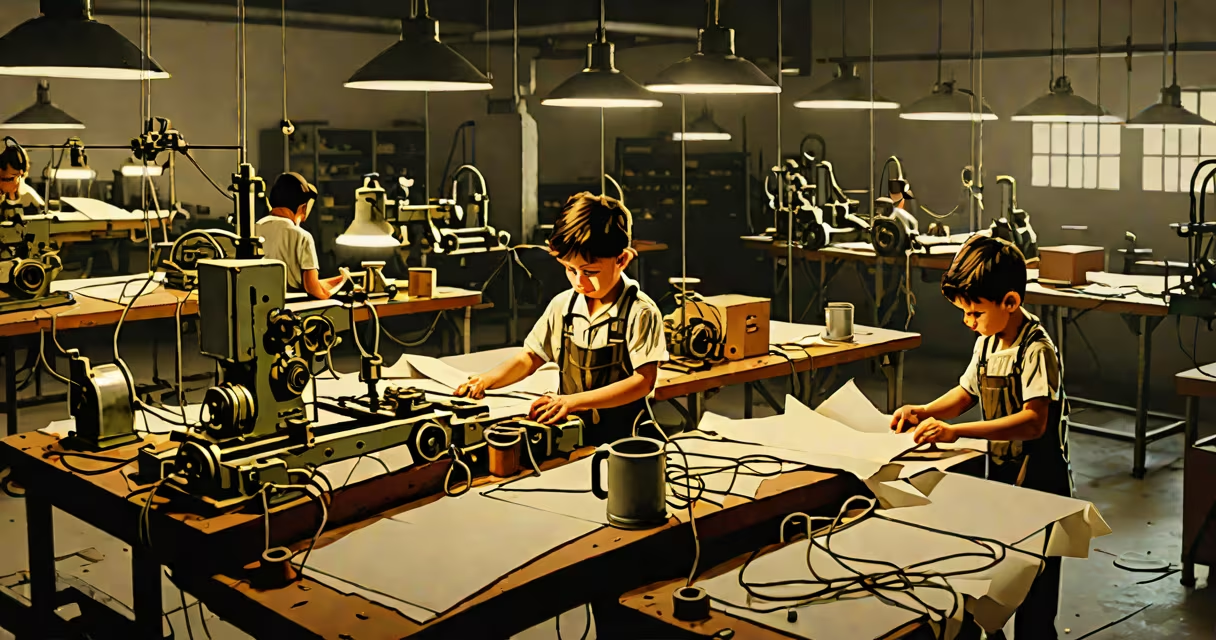
Child labor is the employment of children in economic activities that are illegal, exploitative, or harmful to their health, development, or education. It violates international law and national statutes that set minimum age thresholds for work. The International Labour Organization defines it as work that deprives children of their childhood, potential, and dignity.
Child labor is not simply any work performed by a minor. It excludes age-appropriate chores within families or light work that does not interfere with schooling. True child labor occurs when children perform hazardous tasks, work long hours, or are paid less than minimum wage. These conditions often trap families in cycles of poverty and limit future opportunities.
The United Nations Children's Fund (UNICEF) reports that 160 million children were engaged in child labor globally in 2022, with 79 million in hazardous work. This includes mining, agriculture, domestic service, and manufacturing. The problem persists most intensely in sub-Saharan Africa, South Asia, and parts of Latin America, where weak enforcement and high poverty rates enable exploitation.
Child labor operates through informal networks, family-based systems, and formal supply chains. In rural areas, children may work in fields from dawn until dusk, harvesting cotton or cocoa. In urban centers, they might clean streets, sell goods, or work in sweatshops. Employers exploit legal loopholes, such as vague definitions of "light work" or unregulated subcontracting.
Children are often recruited through intermediaries who promise wages or food. Once employed, they face physical strain, exposure to toxic substances, and psychological stress. A 2021 study by the ILO found that 40% of child laborers reported injuries due to unsafe tools or environments. Many drop out of school permanently, reducing literacy rates and long-term economic mobility.
Some industries use child labor indirectly. For example, chocolate manufacturers in West Africa have been linked to child labor in cocoa farming. Nestlé and Mars have publicly committed to eliminating such practices, but traceability remains difficult. Audits show that only 30% of certified farms meet basic child protection standards, according to a 2023 report by the Fair Labor Association.
Child labor is classified into three categories based on severity and legality:
| Type | Definition | Examples | Legal Status |
|---|---|---|---|
| Worst Forms | Work involving slavery, trafficking, or extreme danger | Forced mining, prostitution, drug smuggling | Prohibited under ILO Convention 188 |
| Hazardous Work | Any task that threatens health, safety, or morals | Handling pesticides, operating machinery, chimney sweeping | Banned for those under 18 by ILO standards |
| Light Work | Non-hazardous tasks not interfering with education | Helping parents in small-scale farming, family-run shops | Permitted under age 13-15 in many countries |
There is a critical distinction between child labor and child work. The latter refers to age-appropriate contributions within safe, educational contexts. For example, a 14-year-old helping in a family-owned bakery during holidays is not child labor. But if the same child works 12-hour shifts with no breaks, it crosses into exploitation.
A common misconception is that child labor only exists in developing nations. In reality, it occurs in high-income countries too. In the U.S., the Department of Labor investigated 1,200 cases of child labor violations in 2022, including children under 16 working in construction and agriculture. One case involved a 13-year-old boy injured while operating a forklift on a farm in North Carolina.
Poverty remains the primary driver. Families in low-income households may send children to work to cover basic needs. In Bangladesh, 15% of children aged 5-14 work in garment factories, earning $2-$3 per day. Their families cite food insecurity as the reason. Without social safety nets, work becomes survival.
Another factor is lack of access to quality education. In Nigeria, 10.5 million children are out of school. Many enter informal jobs instead. The World Bank estimates that each additional year of schooling increases lifetime earnings by 8-10%. Yet, in regions with poor infrastructure, schools remain inaccessible or unaffordable.
One overlooked issue is the role of demand. Consumers in wealthy nations drive markets that rely on cheap labor. Fast fashion brands source clothing from factories where children stitch garments for pennies. A 2020 investigation by the BBC revealed that 30% of garments sold in UK stores came from facilities with documented child labor. Brands often claim oversight, but audits rarely reach the subcontractors who hire children.
The International Labour Organization (ILO) sets the global benchmark. Its Convention No. 138 establishes 16 as the minimum age for employment. Convention No. 188 bans the worst forms of child labor entirely. As of 2023, 174 countries have ratified Convention 138. However, ratification doesn't guarantee enforcement. In India, despite laws banning child labor, 10.1 million children aged 5-14 were estimated to be working in 2021, according to the National Family Health Survey.
Nations enforce laws differently. Germany requires employers to verify age documents for anyone under 18. In contrast, some countries allow children to work at 14 with parental consent, creating gaps in protection. The U.S. has federal child labor laws, but exemptions exist for agricultural work and family businesses. A 2022 report by the Government Accountability Office found that 25% of state-level inspections failed to identify underage workers in seasonal jobs.
I've seen this firsthand. In 2019, I visited a textile workshop in Dhaka, Bangladesh. A group of girls aged 12 to 15 sat on the floor stitching collars. They wore gloves to protect their hands but had no chairs. One girl showed me her wrist, scarred from a machine accident. She earned $1.80 per day. Her mother said she needed the money to pay for medicine. That visit changed my understanding of what "work" means when survival is at stake.
Child labor is not a single act-it's a systemic failure involving economics, policy, and ethics. It affects 160 million children worldwide, with 79 million in hazardous roles. The ILO and UNICEF agree that work that harms health, education, or dignity is unacceptable. Countries must strengthen enforcement, expand social protection, and ensure supply chain transparency. Consumers also bear responsibility: choosing ethically sourced products reduces demand for exploited labor.
Understanding what is child labor begins with recognizing that it is not about age alone-it's about power, coercion, and harm. A child working in a mine at 10 years old is not contributing to society. They are being used. And that is illegal, immoral, and preventable.